

Reading time: 10 minutes
If you have grown up in or joined a Greek, Serbian, Romanian, or Russian Orthodox parish in the English-speaking world, you have likely encountered the topic of the evil eye — perhaps through a grandmother's prayer, a blue glass pendant hanging in a family home, or a conversation with a priest. For many English-speaking converts, it is one of the most confusing aspects of Orthodox popular tradition: Is the evil eye real? What does the Church actually teach? And what is the difference between the blue Nazar charm and genuine Orthodox spiritual protection? This guide answers all of these questions from the Orthodox theological tradition.
What is Vaskania (the Evil Eye) in the Orthodox tradition?
Vaskania (βασκανία) is the Greek classical and liturgical term for the evil eye. In the Orthodox tradition, it is defined not as folklore or popular superstition but as a spiritual phenomenon connected to envy (phthonos — φθόνος) — one of the seven deadly sins.
As the Rev. Fr. George C. Papademetriou, Ph.D., writing for the Greek Orthodox Archdiocese of America, explains: "Vaskania is recognized by the Church as the jealousy and envy of some people for things they do not possess, such as beauty, youth, courage or any other blessing. The Church essentially rejected Vaskania as contradicting the concept of Divine Providence. The prayers of the Church to avert the evil eye are, however, a silent recognition of this phenomenon as a morbid feeling of envy."
The Athonite tradition goes further: the monks of Mount Athos emphasise that intense envy can open the door to demonic forces. St Porphyrios Kavsokalyvitis of Mount Athos taught that "evil thoughts travel like waves and can cause suffering in others." St Basil the Great and St John Chrysostom connect vaskania with demonic attacks that exploit human passions. The Bible speaks of envy from the very beginning: Cain killed Abel out of envy (Genesis 4). In the New Testament, Christ warns about the eye as the window of the soul: "If your eye is unhealthy, your whole body will be full of darkness" (Matthew 6:23).
Evil eye jewellery and the Orthodox faith: what does the Church say?
In recent years, the blue evil eye symbol has become one of the most popular fashion accessories in the English-speaking world — worn by celebrities, sold by high street retailers, printed on phone cases and tote bags. For Orthodox Christians — and for seekers exploring Orthodoxy — a clear theological question arises: Is the evil eye jewellery compatible with Orthodox faith?
The answer from the Orthodox Church is unambiguous: amulets are forbidden, including the blue Nazar/evil eye charm. The Annunciation Greek Orthodox Church of Missoula states it plainly: "The Church firmly opposes such rituals, labeling them as unholy and encouraging individuals to focus on prayer and faith to combat feelings of envy and jealousy." The blue eye charm is a pre-Christian and non-Christian protective symbol — it has no place in Orthodox piety.
The Athonite Fathers are equally direct: "True protection does not come from amulets, which are forbidden as superstition, but from life in the sacraments, from the Jesus Prayer, and from the holy cross." For an Orthodox Christian, the baptismal cross worn since baptism is the sign of Christ's protection — it replaces every amulet. Wearing a blue eye charm alongside a cross is a syncretism the Church does not accept.
The Orthodox Church's position on the evil eye
The Orthodox Church takes a nuanced and theologically precise position on vaskania:
- It acknowledges the spiritual reality of the phenomenon — vaskania is not denied, but understood as the effect of envy and the demonic activity that can follow from it
- It provides official prayers — the Euchologion (the book of official liturgical prayers of the Orthodox Church) contains specific prayers against vaskania, read by the priest
- It forbids magical practices — recourse to "readers", healers, fortune-tellers, or other practitioners of magical rituals is formally forbidden by the Orthodox Church
- It directs the faithful to the sacraments — confession, Holy Communion, holy unction, and the prayer of the priest are the sacramental remedies the Church recommends above all
The Greek Orthodox Church recognises the xematiasma (the popular ritual of lifting the evil eye) insofar as it is rooted in faith in God rather than magic. The Annunciation Greek Orthodox Church notes that "the description of secret rituals to avert the Evil Eye, often involving olive oil and water, reflects the blend of traditional beliefs with religious practices" — but that the Church's primary direction is always toward prayer, confession, and the sacraments.
The Orthodox prayer against the evil eye — liturgical text
The official prayer against vaskania is part of the Orthodox Euchologion. It is normally read by a priest on behalf of the faithful person who requests it. Here is the text of the prayer attributed to St Basil the Great, one of the most widely used canonical forms in the Greek Orthodox liturgical tradition:
O Lord our God, King of the ages, All-powerful and Almighty, Who created all things and transformed them by Your will alone; Who turned the seven-times-seven fold flames of the Babylonian furnace into dew, and protected and saved the three Holy Children; You, the Physician of souls and bodies, You Who heal every ailment and every infirmity: look upon Your servant (Your servant, N.). Banish from him (her) every operation and every harm of the evil eye from the mouths of corrupt men. Have mercy on him (her) with Your mercies, O Lord; guard him (her) with the strength of Your arm from every illness and weakness. You Who hate iniquity, drive far from him (her) every evil and unclean spirit, whether the evil eye or jealousy: and free him (her), O Lord, from every evil and every bodily affliction, through Your grace and gifts.
Prayer against vaskania, attributed to St Basil the Great — Orthodox Euchologion
St Arsenios the Cappadocian (canonised by the Ecumenical Patriarchate in 1986 on the recommendation of St Paisios the Athonite) also left a specific prayer against vaskania, widely used in Greek Orthodox parishes in the UK and USA:
"In the name of the Father and of the Son and of the Holy Spirit. Amen. Holy God, Holy Strong, Holy Immortal, have mercy on us (thrice). All Holy Trinity have mercy on us. Lord, forgive our sins. Master, pardon our transgressions. Holy One, visit and heal our infirmities, for the glory of Your name." [followed by the Lord's Prayer and Psalm 90 (91): "He who dwells in the shelter of the Most High will abide in the shadow of the Almighty..."]
Prayer of St Arsenios the Cappadocian against vaskania
Psalm 90 (91) — protection against the evil eye and the powers of evil
Psalm 90 (numbered 91 in most English Bibles) is the preeminent prayer of protection in the Orthodox tradition. Recited since the origins of Christianity as a shield against the powers of evil, it stands at the heart of the Orthodox liturgical typikon and the hesychast practice. In the Slavic tradition it is called the "Living Shield" (Zhivyi v pomoshchi in Church Slavonic) and is recited daily in evening prayers. The Athonite Fathers recommend it specifically for protection against vaskania. Its opening verse is the most famous protective declaration in all of Scripture: "He who dwells in the shelter of the Most High will rest in the shadow of the Almighty."
How to protect yourself from the evil eye according to Orthodox tradition
Protection from vaskania in the Orthodox tradition is above all sacramental and liturgical — not magical. Here are the means recognised by the Church:
1. Frequent confession and Holy Communion
The first and most effective remedy against any demonic influence, including vaskania, is the purification of the soul through regular confession and reception of Holy Communion. The Athonite Fathers insist: whoever lives in the sacraments is naturally protected.
2. The priest's prayer
Asking the priest to read the official prayer against vaskania (from the Euchologion) is the canonical path recommended by the Church. This prayer can be requested at a pastoral meeting or during a special service. Most Orthodox priests in Greek, Antiochian, OCA, and ROCOR parishes in the UK and USA are familiar with this prayer and willing to offer it.
3. Veneration of icons and the sign of the cross
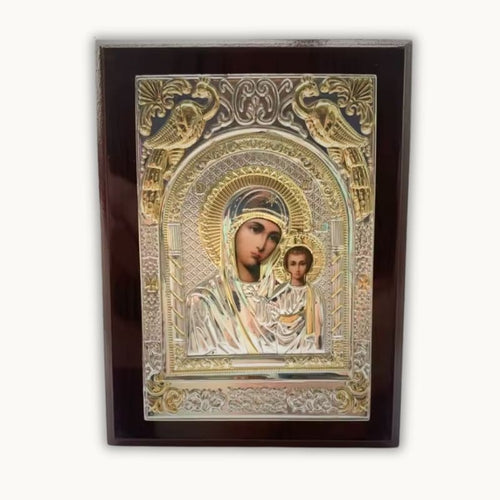
Daily veneration of an icon — particularly of the Theotokos, the supreme protectress — and frequent making of the sign of the cross provide lasting protection. Orthodox spiritual fathers recommend making the sign of the cross over infants after every contact with strangers.
4. Wearing the Orthodox cross
The Orthodox cross worn on the body since baptism is the sign of Christ's protection. In Slavic and Greek tradition, the baptismal cross is specifically blessed to protect its wearer. It is never removed after baptism — and it replaces every amulet.
5. Holy water (aghiasma)
Theophany holy water — blessed by the priest at the Orthodox Epiphany feast — is used to sprinkle people, children, homes, and workplaces. In Greek and Serbian Orthodox communities in the UK and USA, holy water is sprinkled regularly over family members and rooms to drive away evil.
6. The Jesus Prayer
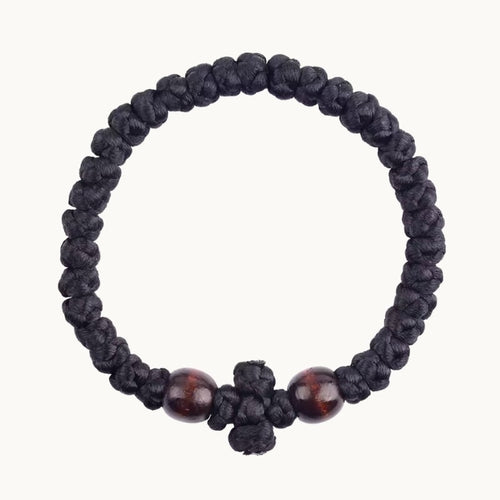
The continuous recitation of the Jesus Prayer — "Lord Jesus Christ, Son of God, have mercy on me, a sinner" — with the prayer rope (komboskini) is the deepest and most constant form of spiritual protection recommended by the Athonite Fathers.
Signs of the evil eye — how to recognise vaskania
In the Orthodox tradition, the following symptoms are classically attributed to vaskania:
- Unexplained sudden exhaustion, especially after a social gathering
- Intense headaches arising without physical cause
- In infants: inconsolable crying, restlessness, refusal to feed after a visit
- A run of unusual accidents or obstacles in daily life
- A feeling of spiritual heaviness or inability to pray
The xematiasma — the Greek popular diagnostic ritual — consists of dropping a few drops of olive oil into a bowl of water: if the drops spread and merge with the water (instead of remaining as separate beads), vaskania is diagnosed. A prayer is then recited. The Orthodox Church tolerates this popular ritual when carried out in a spirit of faith in God rather than as a magical practice. The Annunciation Greek Orthodox Church notes it "reflects the blend of traditional beliefs with religious practices" — acceptable when faith-centred, problematic when treated as magic.
Vaskania and the Theotokos — the protection of the Mother of God
In the Greek Orthodox tradition and across Orthodox communities in the English-speaking world, the Theotokos is the supreme protectress against the evil eye. Prayers to the Virgin Mary against vaskania are numerous and transmitted orally within families across generations. The icon of the Theotokos in the home — particularly above the cradle of newborns — is considered the most effective protection against the envious gaze. In many Greek Orthodox homes in the UK and USA, the first act upon bringing a newborn home is to present the child before the icon of the Theotokos and recite a short prayer of protection. This act has nothing to do with magic: it is an act of faith in the protection of the Mother of God.
FAQ — Frequently asked questions about vaskania and the Orthodox evil eye prayer
What is vaskania in Orthodoxy?
Vaskania is the Greek Orthodox term for the evil eye — the negative spiritual influence caused by one person's intense envy toward another. The Orthodox Church recognises it as a real spiritual phenomenon linked to the sin of envy and the demonic activity that can arise from it. It is not considered mere superstition, but a spiritual reality for which the Church holds official prayers and sacramental remedies.
Does the Orthodox Church really recognise the evil eye?
Yes — the Euchologion (the official prayer book of the Orthodox Church) contains specific prayers against vaskania, read by the priest. The Greek Orthodox Church recognises the xematiasma as a legitimate practice in a context of faith. It firmly opposes, however, treating it as magic and forbids recourse to readers, healers, and other practitioners of magical rituals. As the Rev. Fr. Papademetriou writes for the GOARCH: "The Church forbids people to go to 'readers' or other individuals for use of magical rituals to overcome the evil eye."
Is the evil eye jewellery (blue eye charm / Nazar) compatible with Orthodox faith?
No — the Orthodox Church forbids amulets, including the blue Nazar/evil eye charm. The Annunciation Greek Orthodox Church of Missoula states clearly that the Church "firmly opposes such rituals, labeling them as unholy." True protection comes not from a glass amulet but from the baptised life in Christ: wearing the baptismal cross, receiving the sacraments, and praying. For an Orthodox Christian, the cross replaces every charm.
What is the best Orthodox prayer against the evil eye?
The official prayer against vaskania from the Euchologion (attributed to St Basil the Great) is the canonical form. Psalm 90 (91) is the most universally recommended protective prayer from Orthodox spiritual fathers. The prayer of St Arsenios the Cappadocian is widely used in Greek Orthodox parishes in the UK and USA. These prayers are read by the priest on the request of the faithful person.
Can I say the evil eye prayer myself?
The official liturgical prayers against vaskania are normally reserved for the priest. However, all the faithful can and should recite Psalm 90, the Jesus Prayer, and other daily protective prayers. The most effective path is to ask your parish priest to pray officially — completed by a confession and Holy Communion.
How do you protect a baby from the evil eye in Orthodoxy?
The Orthodox tradition recommends: baptism as soon as possible (which confers permanent spiritual protection), wearing the baptismal cross, presenting the child before the icon of the Theotokos, regular sprinkling with holy water, and recitation of Psalm 90 over the cradle. In Greek Orthodox families, it is traditional to avoid excessive praise of a newborn without immediately adding a protective prayer or blessing.
Is the evil eye the same in all Orthodox traditions?
The phenomenon is recognised universally across Orthodoxy under different names: vaskania (Greek), deochi (Romanian), uroki or sglaz (Slavic), malocchio (Italian), Nazar (Arabic/Turkish). Popular practices vary by country, but the Church's theological position is consistent across all traditions: envy opens the door to evil — and prayer, the sacraments, and the cross provide the protection.