

Reading time: 10 minutes
Orthodox baptism is one of the most important sacraments of the Eastern Christian faith. Whether it is the baptism of a baby, a child, or an adult, this rite marks the entry into the Orthodox Church community and is a moment of profound celebration for the entire family.
In this article, discover how an orthodox baptism unfolds, what the traditions are across different Orthodox Churches (Russian, Greek, Serbian), and how to choose the perfect gift for the occasion.
What is Orthodox Baptism?
In the Orthodox Church, baptism is far more than a welcoming ceremony or a social rite of passage. It is a real spiritual birth — a participation in the death and resurrection of Christ himself. Drawing on St. Paul's letter to the Romans (6:3-5), the Church teaches that in entering the water the baptized person mystically "dies" with Christ to sin, and in emerging from it "rises again" to a new life in him.
For the Orthodox Church, baptism is not symbolic: it is an ontological event. The baptized person does not represent their death to sin — they participate in it mystically. They are not promising to follow Christ — they are genuinely grafted onto him, as a branch is grafted onto a vine. The sacrament confers forgiveness of sins and the grace of new life in the Holy Spirit. This is why Orthodox baptism is called a mystery (from the Greek mysterion), not merely a rite.
The Three Sacraments of Christian Initiation
One of the most striking features of Orthodox baptism — especially for visitors from Western Christian traditions — is that three sacraments are celebrated together in a single ceremony, even for newborns:
- Baptism — by triple full immersion in blessed water
- Chrismation — anointing with the Holy Chrism, the Orthodox equivalent of Confirmation, administered immediately after immersion
- First Communion — the baptized person receives the Eucharist on the very day of their baptism, regardless of age — including newborn infants
This unity of the three sacraments is not a liturgical shortcut — it is a fidelity to the practice of the early Church, which never separated Christian initiation into stages spread across years. The infant who receives communion on the day of their baptism is not receiving a reward for intellectual maturity: they are receiving the bread of the new life that has just been given to them in the water. God's action in baptism is real, and it calls immediately to be nourished.
Before the Ceremony: the Name-Giving and the 40th Day
The Name-Giving (8th day after birth)
In the Orthodox tradition, baptism does not begin on the day of the ceremony. On the eighth day after birth — recalling the circumcision of Christ on the eighth day — the priest receives the child in the church narthex and makes the sign of the cross over its forehead, lips, and chest, pronouncing for the first time the child's Christian name. This name must be the name of an Orthodox saint, who becomes the child's personal heavenly patron. From this day on, the child will celebrate their name day — the feast of their patron saint — every year, often more solemnly than their birthday.
The 40th Day Presentation
On the fortieth day after birth — recalling the Purification of the Virgin Mary (Luke 2:22) — the mother brings the child to church for the first time. The priest takes the child in his arms, makes the sign of the cross with it before the altar, and presents it to God with prayers of blessing. The baptism itself typically takes place around this same period, ideally within the first forty days of life.
How Does an Orthodox Baptism Work?
Orthodox baptism follows a precise ritual, passed down since the earliest centuries of Christianity. It comprises several distinct steps, celebrated in the presence of the family, the godparents, and the priest.

The Main Steps of the Baptismal Rite
- The exorcism and preparatory prayers — in the church narthex (vestibule), the priest recites exorcism prayers and drives away the forces of evil. The godfather and godmother, holding the baptismal candle, recite the Creed three times in the child's name and pronounce the solemn renunciation of Satan, symbolically blowing toward the west before turning east — the direction of the light of Christ.
- The blessing of the water — the water in the baptismal font is consecrated by the priest with a solemn prayer. He pours a few drops of Holy Chrism into it to sanctify it.
- The first anointing — the priest anoints the child with blessed olive oil on the forehead, chest, back, ears, mouth, hands, and feet — consecrating each of these members to the service of Christ.
- The triple immersion — the baptized is plunged three times into the holy water, each immersion accompanied by a distinct invocation:
Each immersion is a gesture of death and resurrection: the entire body disappears under the water and rises again — three times, as Christ remained three days in the tomb before rising. This is what is known as orthodox baptism by immersion."The servant of God [name] is baptized in the name of the Father. Amen. And of the Son. Amen. And of the Holy Spirit. Amen."
- The chrismation — immediately after the baptism, the priest anoints the baptized with the holy chrism on the forehead, eyes, nostrils, mouth, ears, chest, hands, and feet, saying at each anointing: "The seal of the gift of the Holy Spirit." This sacrament confers the personal gift of the Holy Spirit.
- The tonsure — the priest cuts a few locks of the child's hair — on the forehead, the nape, and each side of the head — forming a cross. This gesture, inherited from antiquity where it signified entering the service of a master, here means the consecration of the child to Christ — their first offering to God.
- The procession and first Communion — the priest, godfather, and godmother walk three times around the baptismal font singing the baptismal hymn from Galatians: "As many as have been baptized into Christ have put on Christ." The baptized then receives their first Communion at the same liturgy — even if they are a newborn infant.
- The return to the mother — at the end of the ceremony, the godmother hands the child back to the mother with these traditional words, which summarize the entire mystery of the sacrament:
"I received a pagan; I return to you a Christian."
The ceremony generally lasts between 45 minutes and 1.5 hours, depending on the parish's tradition. It is chanted in Old Slavonic, Greek, Arabic, or the local language depending on the Church.
The Ablution — six days later
Six days after the baptism, the child is brought back to the church for the ablution prayer: the priest sprinkles water over the child's garments — symbolically washing away the last traces of the Chrism anointing — and cuts a few more locks of hair. This rite formally closes the baptismal week.
The Holy Chrism: an Oil That Unites the Whole Church
The Holy Chrism used in Chrismation is an extraordinarily complex oil, combining dozens of aromatic resins and herbs. It is prepared and solemnly consecrated by the Patriarch of each mother-Church on Holy Thursday, then distributed to parishes around the world. This centralisation symbolises the profound unity of the Orthodox Church: every Chrismation performed anywhere in the world uses the same oil that the Patriarch consecrated in Constantinople or Moscow. Every baptized Orthodox Christian is thus physically linked, through this Holy Chrism, to the whole Church.
What Is the Difference Between Orthodox and Catholic Baptism?

While both sacraments share the same Christian origins, several key differences set them apart:
- Immersion vs. sprinkling — in the Orthodox Church, baptism is performed by triple full immersion. In the Catholic Church, water is generally poured or sprinkled over the head.
- Immediate chrismation — the equivalent of the Catholic confirmation is administered on the very day of the Orthodox baptism, not years later.
- Communion from baptism onwards — even an infant receives the Eucharist at their Orthodox baptism, which is not possible in the Catholic rite before the age of reason.
- The role of the godparents — in the Orthodox tradition, the godfather or godmother holds the child in their arms throughout the entire ceremony, symbolising an active spiritual commitment, not merely an honorary one.
- A saint's name is mandatory — the child receives the name of an Orthodox calendar saint, whose feast they will celebrate every year.
- Mutual recognition — the Orthodox Church generally recognises the Catholic and most Protestant trinitarian baptisms. A convert may be received by Chrismation alone rather than a new baptism.
Orthodox Baptism for a Baby, Child, or Adult: Are There Any Differences?
The Orthodox baptismal rite is fundamentally the same regardless of the age of the baptized. However, a few practical adaptations exist:
- Baby Orthodox baptism — the ceremony ideally takes place within the first 40 days following birth. The baby is plunged three times into the baptismal font by the priest, held by the godfather or godmother.
- Child Orthodox baptism — the rite is identical. The child can actively participate in the readings and prayers depending on their age.
- Adult Orthodox baptism (catechumen) — a period of catechesis of several months to a year is required before the baptism. The adult personally recites the Creed and makes the renunciation of Satan. They receive their first Communion at the same liturgy.
Russian, Greek, or Serbian Orthodox Baptism: What Are the Specificities?
The Orthodox tradition is common to all Churches, but certain cultural practices vary depending on national origin:
- Russian Orthodox baptism — the liturgy is chanted in Old Slavonic. The baptismal fonts are often adorned with icons. The family celebration that follows is particularly festive. Godparents traditionally give a gold cross and a white garment.
- Greek Orthodox baptism — the ceremony is conducted in Byzantine Greek. It is common for the child to be given the name of their patron saint. The godfather (nounós) plays a central role. Guests wish the parents "Να σας ζήσει" (long life to your child).
- Serbian Orthodox baptism — the Krsno Ime (the family patron saint feast) is often linked to baptismal traditions. The family of the kum (godfather) and the kuma (godmother) maintains a lasting spiritual relationship with the child's family. This bond — the kumstvo — was historically considered as sacred as biological kinship: marriage between descendants of the same kum was traditionally forbidden.
- Romanian Orthodox baptism — the 40th day is particularly important. The godmother plays a central role and returns the child to the mother with the traditional formula.
The Role of the Godfather and Godmother in Orthodox Baptism
In the Orthodox Church, the godfather and godmother are far more than symbolic figures. They are the spiritual guarantors of the child throughout their entire life: they commit to raising them in the faith should the parents pass away, to praying for them regularly, and to passing on Orthodox Christian values.
In practice, the godfather or godmother holds the child during the immersion, wraps them in the white cloth, holds the baptismal candle, and pronounces the renunciation of Satan in the child's name. This active role is not symbolic — it means that the godparents engage their own faith to welcome this child into the Church. This spiritual bond (called kumstvo in the Slavic tradition) is considered sacred in many Orthodox communities.

What Gift to Offer for an Orthodox Baptism?
Choosing a gift for an orthodox baptism is a mark of respect for the faith and traditions of the family. Here are the most appreciated gifts:
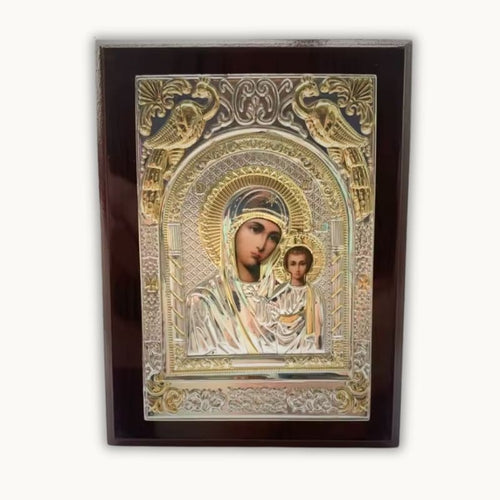
- An orthodox icon — the most symbolic gift of all. An icon of Christ, the Virgin Mary (Theotokos), or the child's patron saint will be treasured for a lifetime.

- An orthodox cross or pendant — available in silver or gold finish, to be worn around the neck. The orthodox cross is distinguished by its three horizontal bars.

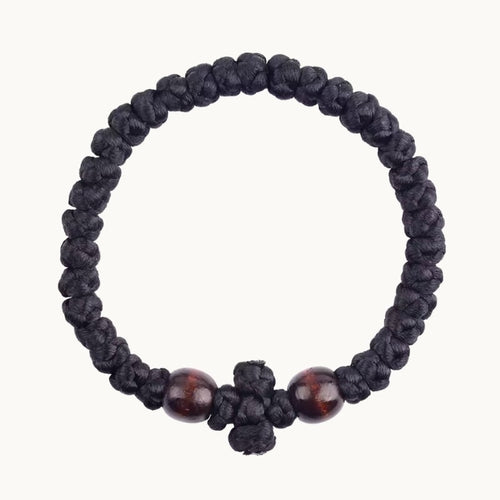
- An orthodox prayer rope (Chotki) — hand-knotted in wool, used for the Jesus Prayer.

- A prayer book or illustrated Bible — ideal for a child or a newly baptized adult.
Our specialized store offers a carefully curated selection of icons, Orthodox cross pendants, orthodox prayer ropes and devotional objects, suited to all orthodox traditions (Russian, Greek, Serbian, Romanian…).
How to Prepare an Orthodox Baptism?
Organizing an orthodox baptism requires a few practical preparations to plan ahead:
- Contact the priest of the nearest orthodox parish to set the date and learn about the requirements of the local Church.
- Choose the godfather and godmother — they must themselves be baptized and confirmed Orthodox Christians.
- Prepare a white garment for the baptized, symbolizing purity and spiritual rebirth.
- Bring a large white candle, virgin olive oil, and a white cloth to wrap the child after the immersion.
- For an adult baptism, plan several months of catechesis in advance.
Frequently Asked Questions about Orthodox Baptism
At what age should a child be baptised in the Orthodox tradition?
Ideally within the first forty days after birth, in reference to the forty days of the Purification of the Virgin Mary. In practice, the timing varies by family and national tradition — some Greek parishes celebrate baptism between the 40th and 80th day, while Slavic practices allow shorter or longer delays.
Must the godparents be Orthodox?
Yes, in the vast majority of Orthodox Churches. The godfather or godmother must be a practising Orthodox Christian in communion with the Church, genuinely able to assume the spiritual responsibility they are taking on. A Catholic or Protestant may sometimes be accepted as a "witness" but normally cannot hold the liturgical role of godparent.
Why does the infant receive communion at baptism?
Because in Orthodox tradition, the three sacraments of Christian initiation — baptism, chrismation, and Eucharist — are inseparable and must be celebrated together, as in the ancient Church. Communion is not a reward for intellectual maturity but the bread of the new life received in baptism.
What is the tonsure in Orthodox baptism?
The tonsure is the cutting of a few locks of hair — on the forehead, nape, and each side — forming a cross. Inherited from antiquity where it signified entering the service of a master, it here means the consecration of the newly baptised to Christ. It is their first concrete offering to God, performed immediately after chrismation.
What is the kumstvo in the Serbian tradition?
The kumstvo is the spiritual bond between the godfather (kum) and the child's family, formed at baptism in the Serbian and Slavic tradition. This bond was historically considered as sacred as biological kinship — marriage between descendants of the same kum was traditionally forbidden. Today, kumstvo remains a bond of great spiritual and social importance in Orthodox families of Slavic origin.
Is Orthodox baptism recognised by the Catholic Church?
Yes. The Catholic Church recognises Orthodox baptism as valid, since it is performed by triple immersion in the name of the Trinity. Conversely, the Orthodox Church generally recognises Catholic and most Protestant baptisms — in which case, a convert is received by Chrismation alone rather than a new baptism.
Can you be a godparent to more than one child?
Yes, in principle. In some local popular traditions, informal restrictions may exist, but these are not general canonical rules of the Orthodox Church. A person can perfectly well be godparent to multiple godchildren.
Conclusion
Orthodox baptism is far more than a rite of passage: it is a complete spiritual birth, uniting baptism, chrismation, and Eucharist in a single celebration. Whether you are preparing your child's baptism, becoming a godparent for the first time, or looking for a meaningful gift for a loved one, we hope this article has provided you with all the answers you needed.