

Reading time: 10 minutes
His name in Hebrew poses a question that is in reality a proclamation: Mikha'el — "Who is like God?" No one. No creature is like God — and it is precisely the Archangel Michael who, at the moment of Lucifer's fall, proclaimed this truth with thunderous clarity: "Let us be attentive! Let us stand aright! Let us stand with fear!" These words, still repeated today in the Divine Liturgy by the deacon before the Gospel reading, are the battle cry of the Archangel against all rebellion against God — and the foundation of his mission of protecting the faithful.
Who is Archangel Michael in the Orthodox tradition?
In the Orthodox tradition, Archangel Michael is the first and highest of all the angels — a Seraph of the first angelic order, one of the "seven spirits who stand before the throne of God" (Rev 1:4; 4:5). The term "archangel" is a generic designation indicating that he is a leader — but his proper title in Orthodox tradition is Archistrategos (αρχιστράτηγος — Supreme Commander of the Armies).
The Hebrew name Mikha'el (מִיכָאֵל) means "Who is like God?" — a rhetorical question that is in reality a proclamation of divine incomparability. According to the tradition of the Fathers, this name expresses the Archangel's fundamental mission: to proclaim the absolute transcendence of God before any creature that might claim to equal him. This is why Michael is the adversary of Lucifer — for Lucifer is precisely the one who said "I will be like the Most High" (Isa 14:14).
The Hebrew tradition names seven archangels: Michael, Gabriel, Raphael, Uriel, Jehudiel, Selatiel, and Barachiel. The Orthodox Church honours all seven on 8 November at the Synaxis of the Bodiless Powers — with Michael always named first as their leader.
The Archistrategos — the Orthodox title of St Michael
The title Archistrategos (αρχιστράτηγος) is the Orthodox title par excellence of Archangel Michael. It means "Supreme Commander of the Armies" — the heavenly armies, the legions of angels that serve God. This title is attested in the Old Testament: in Joshua 5:14, Michael appears as "Commander of the Army of the Lord."
At the fall of Lucifer, Michael rallied the faithful angels and cried out: "Let us be attentive!" — a call to watchfulness, humility, and service that is still repeated today in the Orthodox Divine Liturgy by the deacon before the Gospel reading. This cry of Michael has become the cry of the entire Church: let us be attentive, let us stand upright, let us acknowledge our status as creatures before God. OrthodoxWiki describes him as "the greatest of all the angels and archangels, since he has the greatest of names, being called after the ineffable name of God himself."
The Orthodox feasts of Archangel Michael
- 6 September — Commemoration of the Miracle at Chonae (Colossae) in Phrygia: Archangel Michael saves the church and its guardian Archippos by halting a flood caused by pagans.
- 8 November — Synaxis of the Archistrategos Michael and all the Bodiless Heavenly Powers — the principal feast. Synaxis means "assembly" — it is the liturgical gathering of the entire Church in honour of all the archangels and angels. This is the most important date in the Orthodox calendar for Archangel Michael, and the name day of all Michael, Mikhail, Mihail, and Michelle in the Orthodox world.
- 8 May — Apparition of Archangel Michael at Monte Gargano (Apulia, southern Italy) in 492 — the event that inaugurates the oldest Christian angelic shrine in the Western world, a UNESCO World Heritage Site since 2011.
For English-speaking Orthodox Christians, it is worth noting that Michael is venerated in the Anglican, Lutheran, and Catholic traditions on 29 September (Michaelmas). The Orthodox 8 November feast and the Western 29 September both honour the same Archangel — the different dates reflect distinct liturgical traditions rooted in the same ancient veneration.
The Troparion and Kontakion — liturgical text
Troparion (Tone 4):
O Commanders of the Heavenly Hosts,
we who are unworthy beseech you,
by your prayers encompass us beneath the wings
of your immaterial glory,
and faithfully preserve us who fall down and cry to you:
Deliver us from all harm,
for you are the commanders of the Powers on high.Troparion of the Synaxis of the Archangels — 8 November, Tone 4
Kontakion (Tone 2):
O Commanders of God's armies and ministers of divine glory,
princes of the bodiless angels and guides of mankind,
ask for what is good for us, and for great mercy,
as Commanders of the Bodiless Hosts.Kontakion of the Synaxis of the Archangels — 8 November, Tone 2
Orthodox prayer to Archangel Michael — text and meaning
Beyond the liturgical Troparion and Kontakion, the Orthodox tradition has transmitted several prayers of personal devotion to Archangel Michael. Here is the form most widely used in English-speaking Orthodox parishes:
O Holy Michael the Archangel, Archistrategos of the Heavenly Armies, defender of faithful souls, terror of demons, guardian of the universe: be my protection this day (this night) and in all the battles of my life. Through your holy intercession before God, drive far from me and from all those dear to me every visible and invisible enemy. You who cried out to the faithful angels, "Let us be attentive!" — teach me this spiritual watchfulness. You who are the servant of divine glory, present my prayer before the throne of the Most High, and obtain for me the grace of repentance, humility, and peace. Amen.
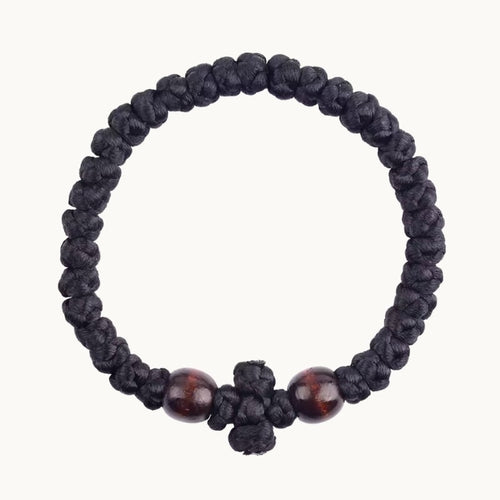
This prayer may be said daily, especially at the evening prayer rule, with the prayer rope, before the icon of Archangel Michael in the prayer corner.
Many English-speaking Orthodox faithful are familiar with the famous Prayer to St Michael attributed to Pope Leo XIII (1886) — widely used in Catholic tradition. While this prayer is not part of the Orthodox liturgical tradition, the Orthodox faithful have their own ancient prayer tradition to the Archangel, rooted in the Troparion and the Euchologion, that is far older and theologically richer.
The miracles of Archangel Michael
The Miracle at Chonae (Colossae, Phrygia)
One of the most celebrated miracles of Archangel Michael in the Orthodox tradition is his intervention at Chonae (the ancient Colossae of St Paul, in Phrygia, modern Turkey). Archippos, guardian of a church consecrated to the Archangel, had prayed there for decades at a place of miraculous healing. Pagan Greeks diverted two rivers to flood and destroy the church. As Archippos prayed, Archangel Michael appeared, struck the ground with his staff — and the rock opened, swallowing the waters. The church was saved. This miracle is commemorated on 6 September.
The Apparition at Monte Gargano (492)
On 8 May 492, Archangel Michael appeared to Bishop Lorenzo Maiorano at Monte Gargano (Apulia, southern Italy) and requested the consecration of a cave in his honour. This apparition is the origin of the Sanctuary of Monte Sant'Angelo — the oldest Christian angelic shrine in the Western world, a UNESCO World Heritage Site since 2011. The cave is considered "consecrated by God himself" and has no human dedication ceremony — a theologically fascinating detail for both Orthodox and Catholic pilgrims.
Biblical appearances
In the Bible, Michael is named in Daniel (10:13; 10:21; 12:1) as "the great prince who protects your people," in Jude (v. 9) during his dispute with the devil over the body of Moses, and in Revelation (12:7–9): "And there was war in heaven: Michael and his angels fought against the dragon." The OCA notes he is "the most renowned of all the Archangels" and that "he has appeared more than any other angel."
The icon of Archangel Michael
Archangel Michael is depicted in Orthodox iconography in two main forms:
- Standing Archistrategos — in the armour of a heavenly warrior, holding a flaming sword in one hand and a sphere crowned with a cross in the other, with a grave and serene gaze. This is the most common form in personal devotional icons.
- Michael slaying the dragon — after Revelation 12:7–9: Michael standing over the defeated dragon, brandishing his sword or lance. This form is particularly widespread in Slavic iconography.
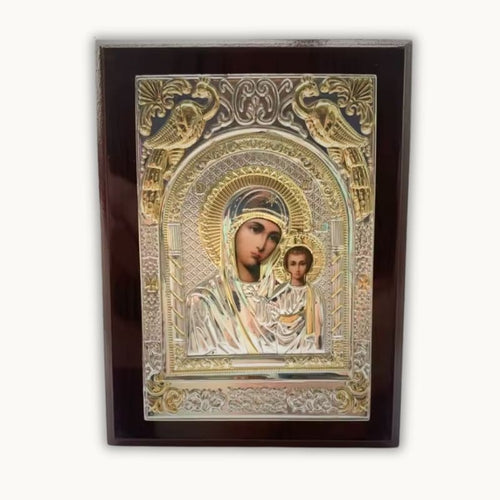
An icon of Archangel Michael is one of the most gifted protective icons — for homes, cars, and children. It is especially meaningful as a name day gift for those bearing the names Michael, Mikhail, Mihail, or Michelle, whose name day is celebrated on 8 November.
FAQ — Frequently asked questions about the Orthodox Archangel Michael
Who is Archangel Michael in Orthodoxy?
In the Orthodox tradition, Archangel Michael is the Archistrategos — the Supreme Commander of the Heavenly Hosts, the first of the angels, protector of the Church and every faithful soul. His Hebrew name means "Who is like God?" — a proclamation of divine transcendence against any creature claiming equality with God.
When is the feast of Archangel Michael in Orthodoxy?
The Orthodox Church celebrates Archangel Michael on three dates: 6 September (Miracle at Chonae), 8 November (principal Synaxis — the most important), and 8 May (Apparition at Monte Gargano). The 8 November feast is the great name day of all Michael/Mikhail/Mihail in the Orthodox world.
What is the difference between the Catholic Michaelmas and the Orthodox feast?
The Catholic Church celebrates St Michael on 29 September (Michaelmas), together with Gabriel and Raphael. The Orthodox Church celebrates the Synaxis of Archangel Michael and all the Bodiless Powers on 8 November (21 November by the Julian Calendar). Both traditions venerate the same Archangel — the dates and liturgical scope of the feast differ. The Leo XIII Prayer to St Michael (1886) is a Catholic devotional prayer; the Orthodox equivalent is the ancient Troparion and the Euchologion prayer.
Who are the seven archangels in the Orthodox tradition?
The seven archangels honoured by the Orthodox Church at the 8 November Synaxis are: Michael (Archistrategos), Gabriel, Raphael, Uriel, Jehudiel, Selatiel, and Barachiel — the "seven spirits who stand before the throne of God" (Rev 1:4).
How do I pray to Archangel Michael in the Orthodox tradition?
Orthodox prayer to Archangel Michael begins ideally with the official liturgical Troparion. It can be supplemented by personal devotional prayers and is ideally accompanied by lighting a candle before the saint's icon. The prayer may be said daily, especially at the evening prayer rule or in moments of danger or spiritual attack.