

Reading time: 11 minutes
Giving a Christmas present to an Orthodox friend, relative or godchild is a little more than choosing a beautiful object. In Orthodoxy, the Nativity of Christ is one of the Twelve Great Feasts of the year: it is lived first of all in church and prepared by a time of fasting. This guide explains Christmas customs in different countries, what really pleases, what is better avoided, and how to wish someone a merry Orthodox Christmas in their own language.
When to give an Orthodox Christmas gift
All Orthodox Churches celebrate the Nativity on 25 December, but not on the same calendar. Those that follow the Revised Julian calendar (Constantinople, Greece, Romania, Bulgaria, Antioch…) celebrate it on 25 December. Those that keep the Julian calendar (Russia, Serbia, Georgia, Jerusalem, Mount Athos…) celebrate it on 7 January. Before giving a present, simply ask: "Do you celebrate Christmas on the 25th or the 7th?"
The feast is preceded by the Nativity Fast, forty days without meat or dairy for those who keep it strictly. Depending on the country, presents are not always exchanged on Christmas Eve: Saint Nicholas (6 December, or 19 December on the Julian calendar) and New Year are often the gift days, especially for children. See our article on Saint Nicholas in the Orthodox Church.
Christmas traditions in Orthodox countries
- Russia: Christmas Eve is called Sochelnik (Сочельник). Many fast until the first star, then share kutia or sochivo, wheat with honey and poppy seeds. Presents come mostly at New Year with Ded Moroz, "Grandfather Frost".
- Serbia: on Christmas Eve (6 January) the badnjak, an oak branch, is burned, and straw is spread in the house in memory of the manger. On Christmas Day the family shares the česnica, a bread with a coin hidden inside.
- Greece and Cyprus: children sing the kalanta from door to door. Families bake christopsomo, "Christ's bread". Presents arrive on 1 January, the feast of Saint Basil, with the vasilopita, which hides a coin.
- Romania: children go singing colinde at the neighbours' and receive nuts, fruit, cakes or a few coins.
For the feast itself, read our guide to the Nativity of Christ, Orthodox Christmas.
An icon, the Orthodox gift par excellence
An icon is not a decoration: it is a window onto Christ, the Mother of God or the saints, before which one prays every day. Three tips for choosing well:
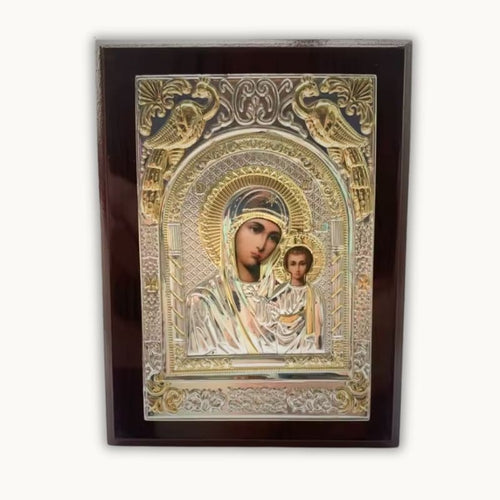
- The subject: for Christmas, the Mother of God with the Child speaks directly of the mystery of the feast. Christ Pantocrator is the central icon of every prayer corner: ideal if the person does not have one yet.
- The patron saint: an icon of the saint whose baptismal name the person bears is a very personal gift. Our article on the name day explains how to find it.
- The style: choose an icon in the traditional Byzantine or Russian style, with the saint's name written on it. A Western-style devotional picture is not an icon in the Orthodox sense.
 Orthodox icon of the Virgin Mary in wood and gilded metal
35,90€
View product
 Golden Orthodox Icon of Christ Pantocrator, Byzantine Style
From 30,90€
View product
An icon can be blessed by a priest before it is given, or by the person who receives it, in their own parish.
For the prayer corner: candles and incense
Every Orthodox home has its prayer corner, the "beautiful corner" (krasny ugol) where the icons are gathered. Beeswax candles and incense get used up: they are gifts that will really be used, especially during the feasts. On Christmas Eve, many families cense the house before the meal.
 Orthodox Beeswax Candles from Jerusalem — 3 Bundles of 33 Candles Blessed at the Holy Sepulchre, 24 cm
64,90€
View product
 Gold-Color Orthodox Incense Burner with Cross Cutouts — 15.5cm, Optional Incense Pot
From 28,90€
View product
A cross or medallion to wear
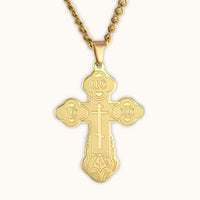
An Orthodox Christian receives their cross at baptism and wears it for life. Giving a new one is a strong gesture for an adult who has lost theirs or for a new convert. The best-known shape is the three-bar Orthodox cross. If the person has Serbian, Greek or Russian roots, a cross from their own tradition will touch them more: see our Orthodox crosses, sorted by tradition.
 Orthodox Cross Pendant with 3 Bars in Gold Finish
33,90€
View product
More discreet, IC XC NIKA medallions ("Jesus Christ conquers") are easy to wear and suit men and women alike.
 "IC XC NIKA" Medallion Gift Idea, Gold Plated
18,40€
View product
An Orthodox prayer rope (chotki)
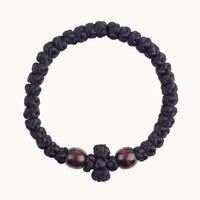
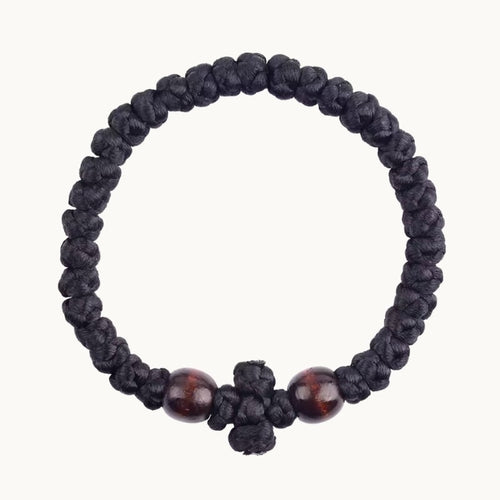
The Orthodox prayer rope, chotki in Russian, komboskini in Greek, is made of woollen knots. It is used to say the Jesus Prayer: "Lord Jesus Christ, Son of God, have mercy on me, a sinner". A simple and deep gift that suits the time of fasting very well. The 100-knot rope is the one most used at home; the 33-knot one slips into a pocket.
 100 Knot Orthodox Prayer Rope
30,90€
View product
A book to nourish faith
For someone discovering Orthodoxy, an introduction to the faith is the best choice; for a practising Christian, a prayer book, a psalter or a life of a saint. The Orthodox Way by Metropolitan Kallistos Ware is a classic that explains the faith clearly.
 The Orthodox Way — Book by Metropolitan Kallistos Ware on Orthodox Faith and Life, Paperback
65,90€
View product
Our full selection is in the Orthodox books collection.
Gifts money cannot buy
- Have the person commemorated at the Liturgy: you can give the priest a note with baptismal names, which are read during the preparation of the Holy Gifts. Saying "I had you remembered at the Christmas Liturgy" is a rare gift.
- Give alms in their name: the Nativity Fast is also a time of almsgiving. A donation to a monastery, a parish or a charity in the person's name is full of meaning.
- Take them to church: for an elderly or lonely relative, picking them up for the Christmas Liturgy is often the most beautiful present.
- A handwritten card with the Christmas greeting in their language (see below).
Giving food: mind the fast
If you give a present before Christmas, the person may be in the middle of the fast: choose honey, tea, dried fruit, jam or dark chocolate without milk. Monastery products are much appreciated. Cheese, cured meats and butter cakes can wait for the feast: give them on the day itself, or say "for after the fast". The fast ends with the Christmas Liturgy.
For a child or godchild
Choose a sturdy object of the right size, which the child can keep near their bed. A small icon of the Virgin and Child is a very gentle first gift of faith, ideal from a godfather or godmother, who has accompanied the child in the faith since their baptism. Illustrated books about the Nativity are another good idea.
 Small Golden Orthodox Icon of the Virgin Mary and the Child Jesus
23,90€
View product
For a priest or a parish
In many parishes, the priest is thanked at the feasts. A discreet envelope for the parish, a book or incense are always well received. If the faithful club together for a liturgical object, first ask the priest what the church needs, to avoid duplicates.
 Orthodox Censer with 12 Bells — Gold and Silver Finish Available
81,00€
View product
For a monk or nun, keep it simple: incense, candles, tea or a donation to the monastery are better than a decorative object.
Gifts to avoid
- Religious statues: the Orthodox Church venerates icons and generally does not use statues for prayer.
- The Catholic rosary (decades of beads with a crucifix): it is used for the Rosary, a Catholic prayer. The Orthodox prayer rope is made of knots.
- Non-fasting food given during the fast, without saying it is for after the feast.
- Objects presented as lucky charms: a cross or an icon is not a talisman but a sign of faith.
- A gift that arrives too late: check the delivery time on each product page; order in early December for 25 December, mid-December for 7 January.
How to wish a merry Orthodox Christmas
The greeting shared by all Orthodox Christians is "Christ is born!", and the answer is "Glorify Him!". Written on the card in the person's own language, it is sure to please.
- Greek: Χριστός γεννᾶται! — Δοξάσατε! or Καλά Χριστούγεννα! (Kala Christougenna)
- Russian: Христос рождается! — Славите! or С Рождеством Христовым! (S Rozhdestvom Khristovym)
- Serbian: Христос се роди! — Ваистину се роди! (Hristos se rodi! — Vaistinu se rodi!)
- Romanian: Hristos se naște! — Slăviți-L! or Crăciun fericit!
- Bulgarian: Честито Рождество Христово! (Chestito Rozhdestvo Hristovo)
After Christmas comes Theophany (6 or 19 January), when blessed water is brought home: a small bottle is an inexpensive gift idea.
 Holy Water Bottle 100ml with Gold Cross — Flip-Top Pouring Cap
14,90€
View product
FAQ — Frequently asked questions about Orthodox Christmas gifts
What gift should I give an Orthodox Christian for Christmas?
The most appreciated is an icon: the Mother of God with the Child, Christ or the person's patron saint. A cross, a prayer rope, beeswax candles or a spiritual book are also very good choices.
Do Orthodox Christians give presents at Christmas?
Yes, but Christmas remains first of all a religious feast. Depending on the country, presents are given rather on Saint Nicholas' Day, at New Year (Russia) or on 1 January, Saint Basil's Day (Greece, Cyprus).
Do Orthodox Christians celebrate Christmas on 25 December or 7 January?
Both: 25 December for Churches on the Revised Julian calendar (Greece, Romania, Bulgaria…), 7 January for those on the Julian calendar (Russia, Serbia, Georgia, Jerusalem…).
Can I give chocolates during the Nativity Fast?
Yes, if you choose sweets without milk, eggs or butter (dark chocolate, dried fruit, honey), or say they are for after the feast.
How do you wish someone a merry Orthodox Christmas?
You say "Christ is born!", and the answer is "Glorify Him!".