


-
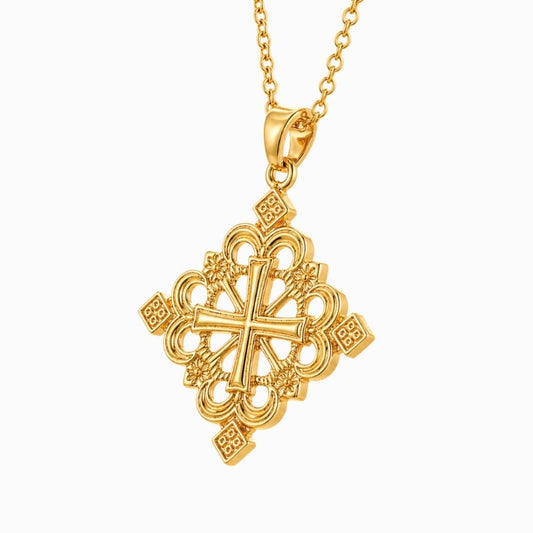
Ethiopian Cross Pendant in Gold Finish
Regular price 28,90€Regular price 28,90€ Sale priceUnit price per -
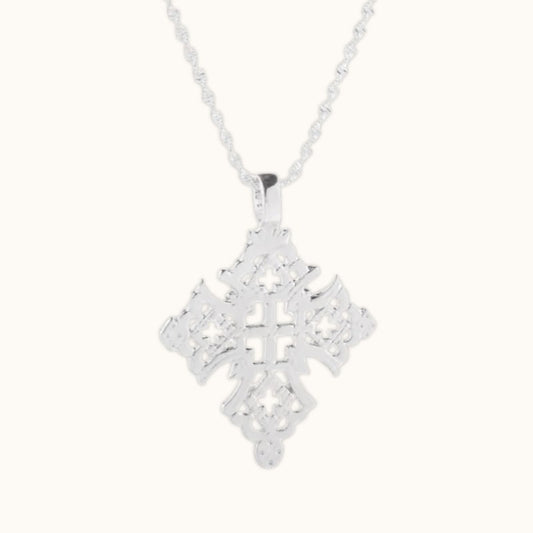
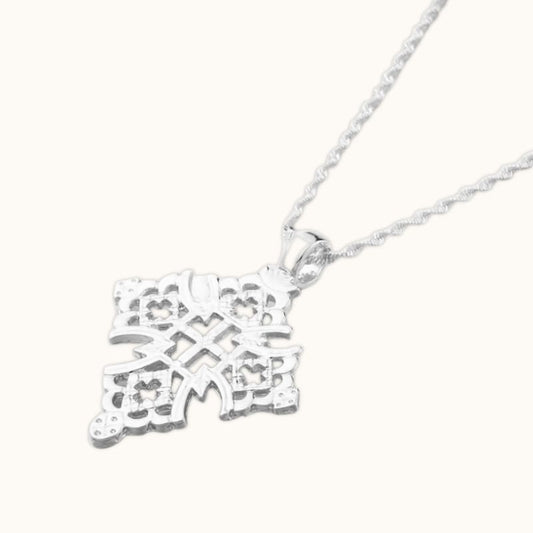
Ethiopian Cross Pendant in Silver
Regular price 28,90€Regular price 28,90€ Sale priceUnit price per -
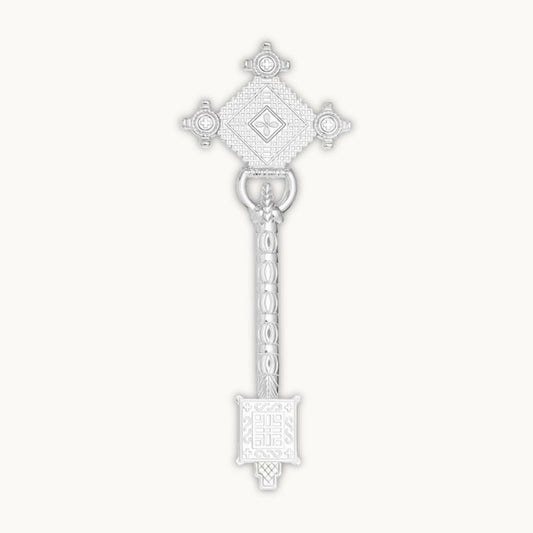
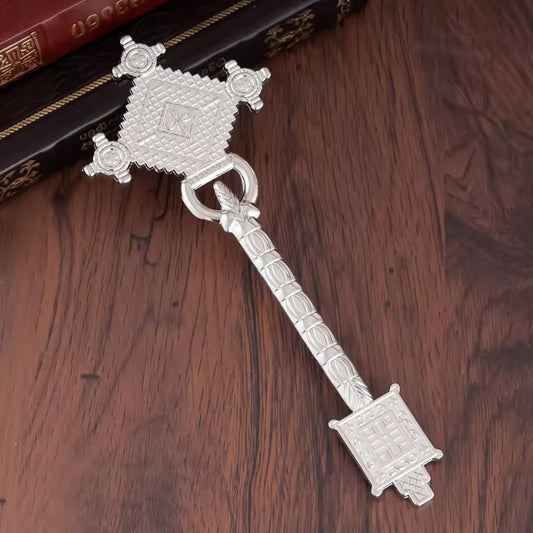
Ethiopian Orthodox Blessing Cross
Regular price 38,90€Regular price 38,90€ Sale priceUnit price per -
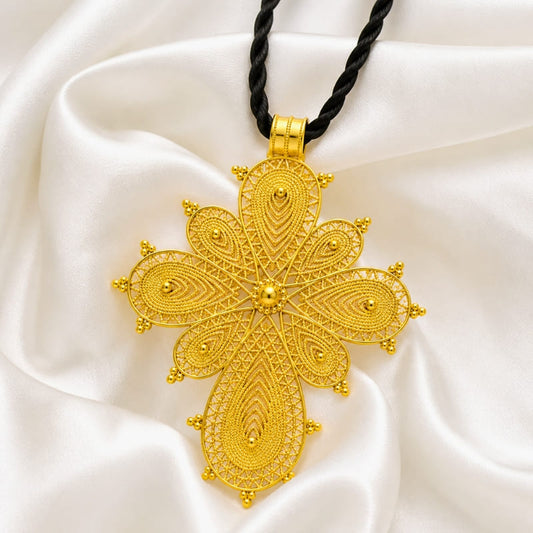
Golden Ethiopian Orthodox Cross Pendant with Floral Design
Regular price 33,90€Regular price 33,90€ Sale priceUnit price per -
Ethiopian Cross Jewelry Set, Habesha Necklace Earrings and Ring, Gold Color
Regular price 28,90€Regular price 28,90€ Sale priceUnit price per -
Ethiopian Big Cross Jewelry Set, Habesha Pendant Earrings and Ring, Gold Color
Regular price 24,90€Regular price 24,90€ Sale priceUnit price per -
Ethiopian Twisted Cross Necklace, Large Gold Color Pendant
Regular price 34,90€Regular price 34,90€ Sale priceUnit price per -
Ethiopian Filigree Cross Necklace, Gold Rosette Pendant
Regular price 34,90€Regular price 34,90€ Sale priceUnit price per -
Ethiopian Cross Necklace with Medallion, Large Gold Color Pendant
Regular price 34,90€Regular price 34,90€ Sale priceUnit price per -
Ethiopian Medallion Jewelry Set, Habesha Necklace Earrings and Ring, Gold Color
Regular price 24,90€Regular price 24,90€ Sale priceUnit price per









Introduction to the Ethiopian Cross
Origin and spiritual significance
The Ethiopian cross — also called the Ethiopian Coptic cross — is much more than a religious object: it represents the faith, identity, and spiritual heritage of the Ethiopian people. Ethiopia is one of the first kingdoms in the world to have adopted Christianity as its state religion, under King Ezana of Axum around 330 AD — predating most European Christian traditions by decades. Rich in ornamentation and complex geometric patterns, the Ethiopian Orthodox cross is distinguished by its unique aesthetic that combines biblical symbolism with centuries of artisanal craftsmanship.
Each motif — whether interlacing patterns, solar shapes, or geometric forms — carries a sacred message. Wearing an Ethiopian cross necklace is an affirmation of faith while connecting with a millennia-old tradition of one of the world's oldest Christian churches.
Its role in the Ethiopian Orthodox Church
In the Ethiopian Orthodox Tewahedo Church, the cross holds a central place. It is used in liturgies, religious processions, and major feasts such as Timkat (Epiphany). Priests and deacons carry large, richly decorated processional crosses — also called pectoral crosses — blessing the faithful and symbolising the divine presence within the community.
Unlike the more understated crosses of the West, the Ethiopian Orthodox cross is characterised by its visual richness and communal use. It accompanies every stage of spiritual life: baptism, marriage, blessings, and funeral ceremonies.
The Different Ethiopian Crosses
The Lalibela Cross
The Lalibela cross is undoubtedly the most famous Ethiopian cross outside of Ethiopia. It takes its name from the holy city of Lalibela, renowned for its eleven monolithic churches carved into basalt rock in the 12th century. Richly decorated, it features interlaced motifs representing infinity and the union of heaven and earth. The Lalibela cross necklace is the most sought-after model among the Ethiopian diaspora and collectors of African Christian art alike.
The Gondar Cross
Originating from the former imperial capital of Ethiopia, the Gondar cross testifies to the golden age of local religious art. Distinguished by its complex, sometimes openwork geometric forms — reminiscent of the region's architecture — it embodies the power of the Orthodox faith and the royal heritage of Christian Ethiopia.
The Axum Cross
The Axum cross takes its name from the ancient city of Axum, the cradle of Ethiopian civilisation and a major centre of Christianity in Africa. Renowned for its refined style that blends Coptic and Byzantine influences, it is the most ancient of the major Ethiopian cross styles — a symbol of unity and continuity of Africa's oldest Christian tradition.
The Ethiopian Rasta cross
The Ethiopian Rasta cross has become a powerful symbol of identity within the Rastafarian movement, which considers Ethiopia a sacred land and Emperor Haile Selassie a messianic figure. Inspired by traditional Orthodox crosses, it is worn as a sign of faith, spiritual resistance, and connection to African roots — and is widely sought by the Habesha diaspora and Rastafarian communities worldwide.
Choosing Your Ethiopian Cross
Ethiopian cross in gold
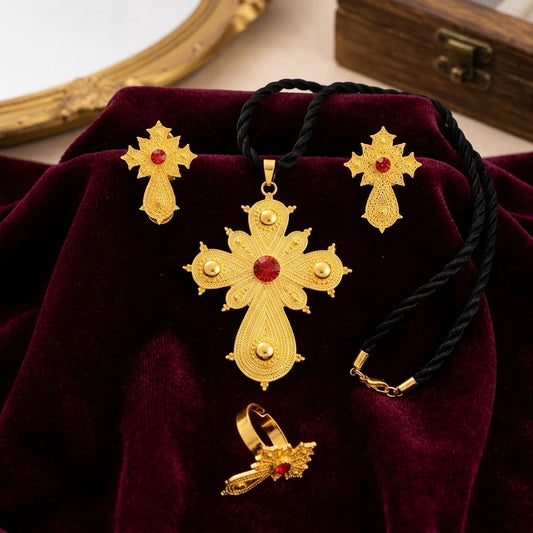
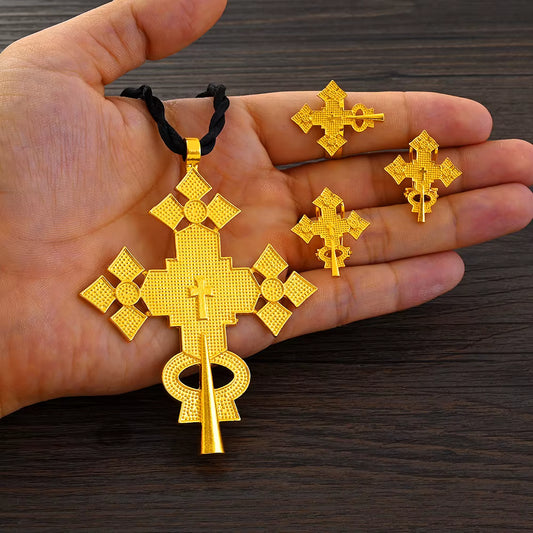
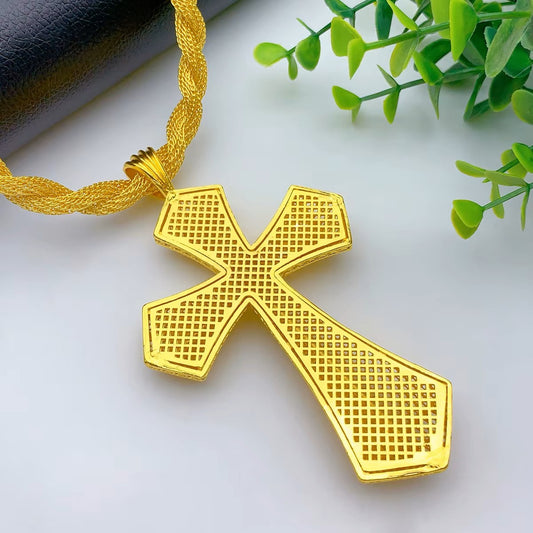
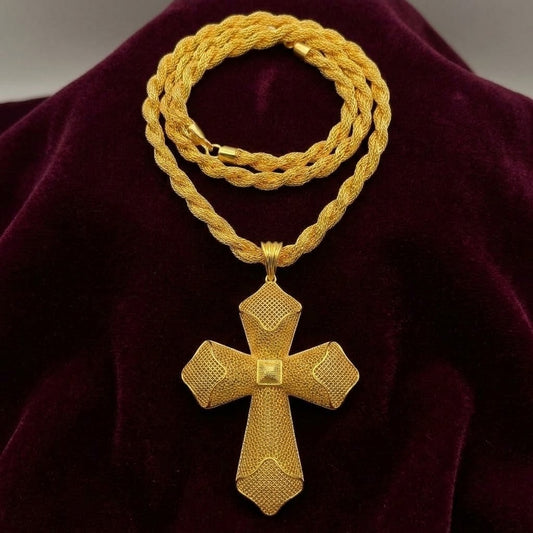
The Ethiopian cross in gold is a prestigious and timeless choice. Our models are made from stainless steel with a PVD gold finish — more durable than solid gold for everyday wear, hypoallergenic, and low-maintenance. It embodies divine light and is traditionally given as a gift at major religious celebrations such as baptisms, weddings, and Timkat. Chain included.
Ethiopian silver Coptic cross
The Ethiopian silver cross pendant is widespread both in Ethiopia and among the diaspora. Our mirror-polished stainless steel finish does not tarnish or oxidise — unlike solid 925 sterling silver, which darkens in air. Silver, a metal associated with purity and wisdom, highlights the geometric motifs and interlacing patterns typical of these crosses. Chain included.
Ethiopian hand cross and other styles
The Ethiopian hand cross (or pectoral cross) is a larger form, held in the hand during prayer or placed on a home altar. Used by priests of the Ethiopian Orthodox Church to bless the faithful during ceremonies, it is also kept in households as a protective symbol. Beyond pendants, Ethiopian crosses are also crafted in wood, brass, or steel — each piece telling a unique story of faith and culture. Discover also our complete Orthodox cross collection.
How to Wear an Ethiopian Orthodox Cross
A spiritual and protective everyday jewel
The Ethiopian Orthodox cross is not only a religious symbol, but also a true protective talisman. The faithful consider it a protection against evil and a source of blessing in daily life. Our stainless steel models are water- and sweat-resistant — they can safely be worn in the shower without oxidising or causing allergies.
Ethiopian cross for men, women, and family tradition
The Ethiopian cross is often passed down through generations, marking important moments such as baptism or marriage. Men frequently wear larger silver or steel models with a strong symbolic presence. Women sometimes prefer finer versions with refined details. In many Ethiopian Orthodox families, giving a cross to a child symbolises their entry into the faith and their belonging to an ancient spiritual community.
Giving an Ethiopian Cross as a Gift — for Which Occasions?
- Ethiopian baptism: the Ethiopian cross in gold is the classic baptism gift — a symbol of entry into the Tewahedo faith and divine protection for life.
- Timkat (19 January): the Ethiopian Epiphany is the most important religious feast in the Ethiopian Orthodox calendar — an ideal date for a meaningful Ethiopian jewelry gift.
- Genna (7 January): Ethiopian Christmas according to the Julian calendar — the traditional occasion for spiritual gifts in Ethiopian Orthodox families.
- Enkutatash (11 September): the Ethiopian New Year, celebrated by the diaspora as a moment of renewal and cultural transmission.
- Wedding or engagement: an Ethiopian Orthodox cross given to the couple is a symbol of home blessing and divine grace upon their union.
Why Buy Your Ethiopian Cross From Our Store?
- Iconographic authenticity: every design respects the visual codes of Ethiopian Christian art — interlacing patterns, solar motifs, openwork forms. No generic crosses passed off as Ethiopian.
- Complete range: gold and silver pendants, elaborate floral designs, hand cross — our collection covers all uses, from everyday jewellery to prayer objects.
- Durable stainless steel: PVD gold finish or mirror-polished silver, resistant to water, sweat, and oxidation. Hypoallergenic, maintenance-free.
- Chain included: every pendant is delivered with its matching chain, ready to wear or give as a gift.
Frequently Asked Questions
What is the meaning of the Ethiopian cross?
The meaning of the Ethiopian cross is both spiritual and cultural. Its interlacing patterns symbolise the tree of life and eternity; its geometric motifs represent divine light and Christ's victory over death. Culturally, it embodies the identity of the Ethiopian Christian people for over seventeen centuries — one of the oldest Christian traditions in the world.
What is the difference between an Ethiopian cross and a Coptic cross?
The term Coptic cross refers to crosses from the Christian churches of north-eastern Africa — Egypt (Coptic Church) and Ethiopia (Tewahedo Church). The Ethiopian Coptic cross is a variant specific to Ethiopia, recognisable by its interlacing plant patterns and complex openwork forms — more ornate than Egyptian Coptic crosses.
Are your Ethiopian crosses made of solid gold?
No. Our Ethiopian jewelry in gold finish is made from stainless steel with a PVD gold coating — more durable for everyday wear than solid gold, hypoallergenic, and maintenance-free. For a solid gold Ethiopian cross, expect to pay several hundred dollars at a specialist jeweller.
What is an Ethiopian hand cross?
The Ethiopian hand cross (also called a pectoral cross) is a larger cross held in the hand during prayer or placed on a home altar. It is used by priests of the Ethiopian Orthodox Church to bless the faithful during ceremonies — and is kept in many Ethiopian homes as a protective symbol. It is the most spiritually significant gift for a believer of Tewahedo tradition.