

Reading time: 12 minutes
"The most important and difficult aspect of morning prayers is not which prayers are said, but getting up on time!" This direct observation from an Orthodox priest captures a deep truth with gentle humour: the Orthodox morning prayer is first of all a decision — the decision to give God the first minutes of the day, before the phone, before the coffee, before the commute. Everything else — the texts, the postures, the length — comes after.
What is the Orthodox morning prayer rule?
The prayer rule (pravilo in Russian, κανόνας in Greek) is the structured set of prayers an Orthodox Christian commits to saying each morning and evening. It is not a law imposed from outside — it is a freely chosen framework, ideally established in consultation with one's spiritual father, to anchor the day in prayer.
People either imagine it as an intimidating wall of ancient Slavonic text, impossible for a beginner to enter, or as something vague and undisciplined — just talking to God whenever you feel like it. The real tradition sits precisely between those two extremes: structured enough to anchor the day, simple enough to begin today, and deep enough to sustain a lifetime.
The standard morning prayer rule for Orthodox laity is codified in the official prayer books of the major Orthodox churches — the Jordanville Prayer Book (Russian/ROCOR tradition), the OCA St Tikhon's Press edition, and the prayer books of the Antiochian and Greek Patriarchates. All are available in English. The structure is essentially the same across all jurisdictions; minor variations exist in specific troparia.
The structure of the morning prayers
The Orthodox morning prayer rule follows a precise sequence:
- The sign of the Cross and beginning — "In the Name of the Father and of the Son and of the Holy Spirit. Amen."
- A moment of silence — standing still, waiting until all the senses are calmed
- The Opening Prayers — Glory to You our God, Heavenly King, Trisagion, Holy Trinity, Lord's Prayer
- The morning troparia — "Having risen from sleep, we fall down before You..."
- The morning psalms — traditionally Psalms 51, 63, and 143
- The morning prayers proper — the series of prayers from the holy Fathers
- The Jesus Prayer — on the prayer rope
- Commemoration of the living and departed — personal list of names
- The closing prayer and dismissal
It is a pious custom to do these prayers at home, to consecrate the beginning and the end of the day as prayerfully as possible. During Great Lent, Monday through Friday, the rule also includes the Prayer of Saint Ephraim the Syrian — with prostrations — one of the most profound penitential prayers of the Orthodox tradition.
The Opening Prayers — Trisagion and Lord's Prayer
The Trisagion Prayers open Orthodox Matins, Vespers, Compline, and most other services. They are the standard beginning for private morning and evening prayer. Orthodox Christians are taught to begin all prayer with this sequence. The Opening Prayers consist of:
- "Glory to You, our God, glory to You" — the initial doxological act
- The Heavenly King — the prayer to the Holy Spirit; unique in Christian tradition as it directly addresses the third Person of the Trinity: "O Heavenly King, Comforter, Spirit of Truth, everywhere present and filling all things..."
- The Trisagion (three times) — "Holy God, Holy Mighty, Holy Immortal, have mercy on us" — with the sign of the cross and a bow at each repetition
- Glory to the Father / Now and ever — the Trinitarian doxology
- Holy Trinity prayer — "Most Holy Trinity, have mercy on us..."
- The Lord's Prayer — the prayer Christ himself gave us, at the heart of every prayer rule
Saying these prayers unites us clearly to the Orthodox Church, since they so epitomize the Church's life of prayer.
The morning psalms
The morning psalms are central to the monastic rule — and recommended for laypeople. The three psalms traditionally associated with morning prayer are:
- Psalm 51 (50) — "Have mercy on me, O God" — David's great psalm of contrition; the psalm of repentance par excellence, which acknowledges human weakness at the start of each day
- Psalm 63 (62) — "O God, You are my God; early I will seek You" — the psalm of longing for God in the morning; "my soul thirsts for You"
- Psalm 143 (142) — "Lord, hear my prayer" — the morning supplication, asking for the strength to live the day in God's will
Laypeople who cannot say all three psalms in the morning may limit themselves to Psalm 51 alone — regarded by the Fathers as the minimum recommended for the morning prayer of active people.
The morning prayers proper
The morning prayers proper are a series of prayers composed by the holy Fathers of the Church — gathered in the standard Orthodox Prayer Book. The main prayers include:
- Prayer of St Macarius of Egypt — thanksgiving for having passed the night in peace and a request for protection through the day
- Prayer of St Basil the Great — a longer prayer consecrating the day to God, with intercession against evil
- Prayer of St John Chrysostom — a series of short invocations for each hour of the day
- Prayer to the Guardian Angel — invoking the holy guardian angel to protect and guide through the day
- Prayer to the Theotokos — intercession of the Mother of God for the day
The Jesus Prayer in the morning rule
The Jesus Prayer — "Lord Jesus Christ, Son of God, have mercy on me, a sinner" — is at the heart of Orthodox hesychast spirituality. It is integrated into the morning rule in several ways:
- As the initial opening prayer upon waking
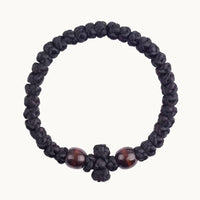
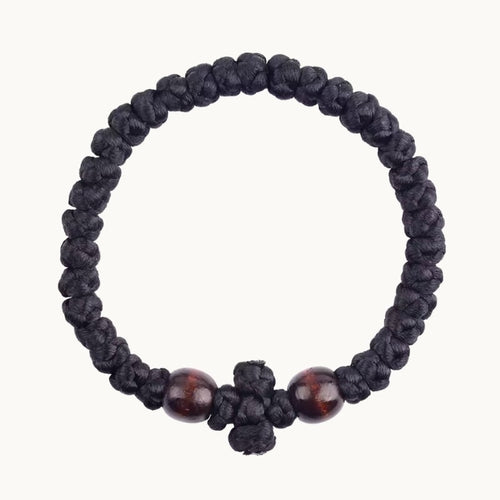
- As a personal prayer repeated on the prayer rope (komboskini) — traditionally 33, 50, or 100 repetitions, according to the rule established with one's spiritual father
- As a background prayer during prostrations
The full form carries the complete theological weight: it confesses the Lordship of Christ, his identity as the Son of God, and the truth about the one praying (a sinner in need of mercy). Every word is doing theological work. Praying it attentively is a continuous act of faith. Hold the prayer rope in one hand. At each knot, say the Jesus Prayer once.
How long should morning prayers take?
The length of the morning prayer rule varies according to one's level of practice, available time, and life circumstances. The Eastern Church offers three practical frameworks:
The 5-minute rule — for beginners
The sign of the Cross, the Heavenly King prayer, the Trisagion, the Lord's Prayer, the Jesus Prayer (33 times on the prayer rope), a short prayer to the Theotokos. This is the recommended minimum — consistency over length is the foundational principle.
The 15-minute rule — standard lay rule
The complete Opening Prayers, one psalm (Psalm 51), the morning prayers proper from an Orthodox Prayer Book, the Jesus Prayer (50 times). This is the rule recommended by most priests for active faithful.
The 30-minute rule — enriched rule
The Opening Prayers, all three morning psalms, the complete morning prayers, the Jesus Prayer (100 times), the full commemoration of the living and departed. Recommended for those who have established a stable practice and wish to deepen it.
Practical tips for establishing a prayer rule
- Start small and be consistent — five minutes every morning without exception is better than thirty minutes twice a week
- Consult your spiritual father — the prayer rule is ideally discussed with your confessor, who adapts it to your life circumstances
- Wake up five minutes earlier — having good intentions to pray for five minutes every morning will bear no fruit if you don't wake up at least five minutes earlier every morning
- Turn off the phone — do not check notifications before morning prayer
- Stand upright — standing is the Orthodox liturgical position for prayer par excellence; prostrations are made at the appointed moments
- Pray slowly — attentiveness is more valuable than speed; it is better to say fewer prayers with attention than many distractedly
- Do not be discouraged after an interruption — simply begin again the following morning
The physical setting — the prayer corner
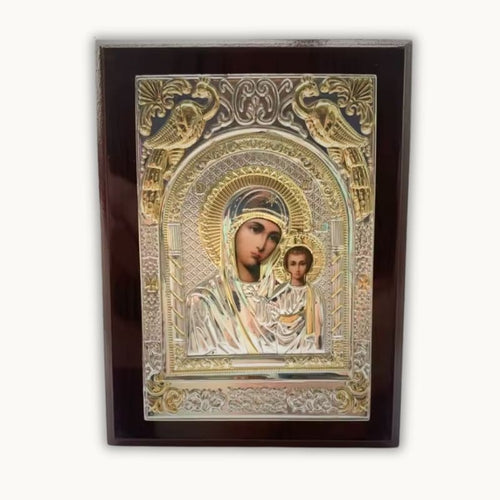
The Orthodox tradition recommends saying morning prayers before the icons of the home prayer corner. Most Orthodox Christians pray twice a day, morning and evening. You find a quiet spot — many people set up a small icon corner at home — light a candle, and begin. Our guide to the Orthodox prayer corner explains how to set one up. The physical setting — icons, candle, censer — helps orient attention toward God and distinguish the time of prayer from the rest of the day.
FAQ — Frequently asked questions about Orthodox morning prayer
What is the Orthodox prayer rule?
The Orthodox prayer rule is the structured set of prayers an Orthodox Christian says each morning and evening. It includes Opening Prayers (Trisagion, Lord's Prayer), psalms, prayers of the holy Fathers, and the Jesus Prayer on the prayer rope. It is established in consultation with one's confessor and adapted to each person's life circumstances.
How do I start Orthodox morning prayers?
Orthodox morning prayers always begin with the sign of the cross and the Trinitarian formula: "In the Name of the Father and of the Son and of the Holy Spirit. Amen." This is followed by a moment of silence, then the Opening Prayers: Glory to You our God, the Heavenly King, the Trisagion, the Holy Trinity prayer, and the Lord's Prayer.
How long do Orthodox morning prayers take?
Duration varies according to the established rule. A beginner's rule may take 5 minutes. The standard lay rule takes 15–20 minutes. An enriched rule may take 30 minutes or more. The essential is daily regularity, not length.
What is the difference between the Greek and Russian morning prayer traditions?
Both traditions share the same basic structure (Opening Prayers, psalms, Fathers' prayers, Jesus Prayer). The main differences are in specific troparia. The Russian tradition (Jordanville Prayer Book, OCA) is slightly longer; the Greek tradition slightly more concise. Both are valid — follow the tradition of your own parish jurisdiction.
Where can I find Orthodox morning prayers in English?
The most widely used English editions are: the Jordanville Prayer Book (Holy Trinity Publications); Orthodox Christian Prayers edited by Fr John Mikitish (St Tikhon's Monastery Press, 2019), available on oca.org as a free PDF; and the Antiochian Archdiocese morning prayers at antiochian.org. Ancient Faith Radio also offers audio recordings of the morning prayer rule.
Do I have to say all the morning prayers every day?
No — the prayer rule is adapted to each person in consultation with their confessor. In case of illness, travel, or family emergencies, the rule may be shortened. The tradition teaches that consistency matters more than length — a short, stable rule is better than a long, irregular one.