


-
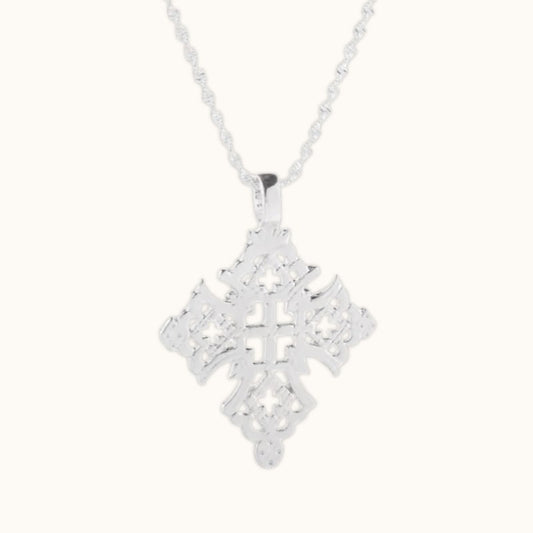
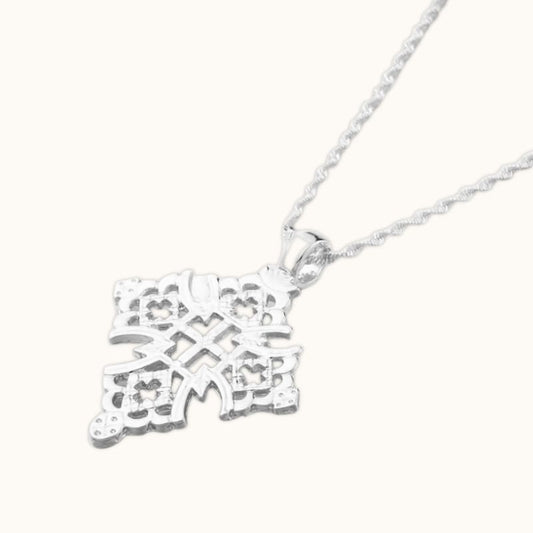
Ethiopian Cross Pendant in Silver
Regular price 28,90€Regular price 28,90€ Sale priceUnit price per -
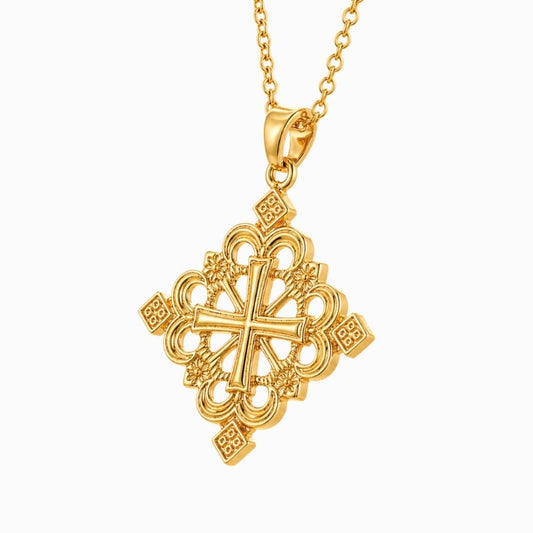
Ethiopian Cross Pendant in Gold Finish
Regular price 28,90€Regular price 28,90€ Sale priceUnit price per -
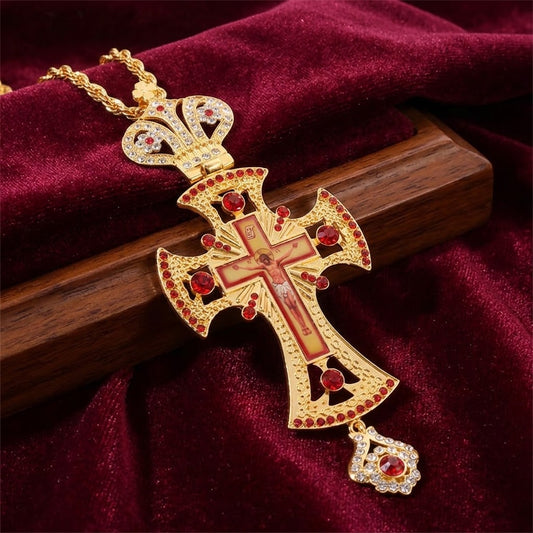
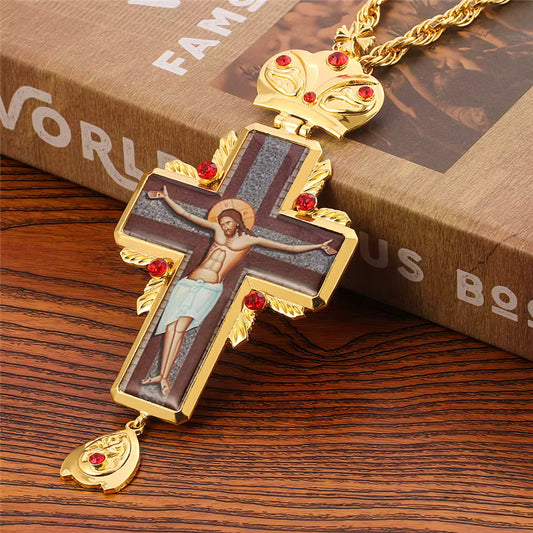
Long Pendant Necklace, Gold-Tone Pectoral Cross — Crucifixion, Red Stones, Worn Low
Regular price 54,90€Regular price 54,90€ Sale priceUnit price per -
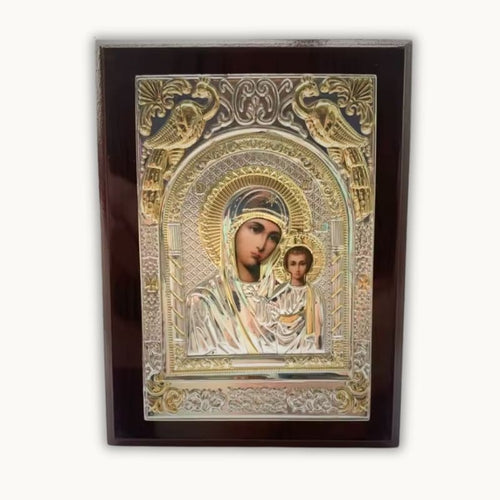
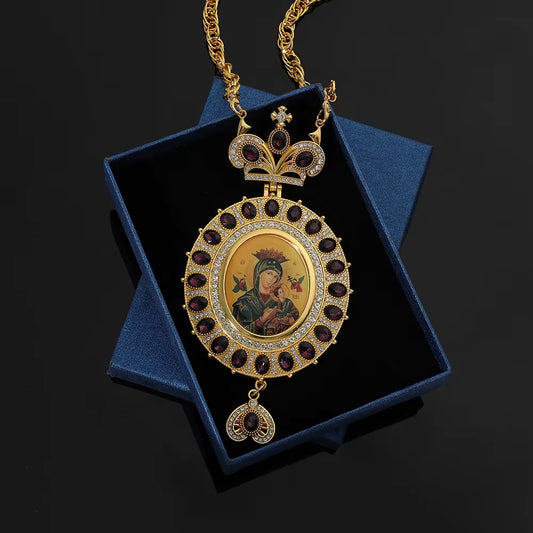
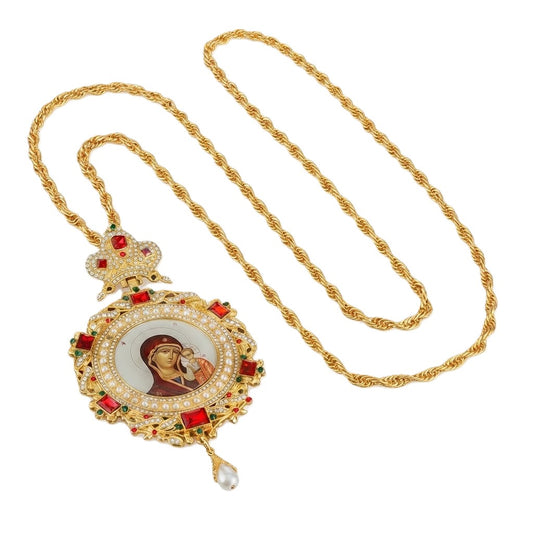
Icon Medallion Pendant of the Virgin Mary — Gold-Tone with Stones
Regular price 34,90€Regular price 34,90€ Sale priceUnit price per -
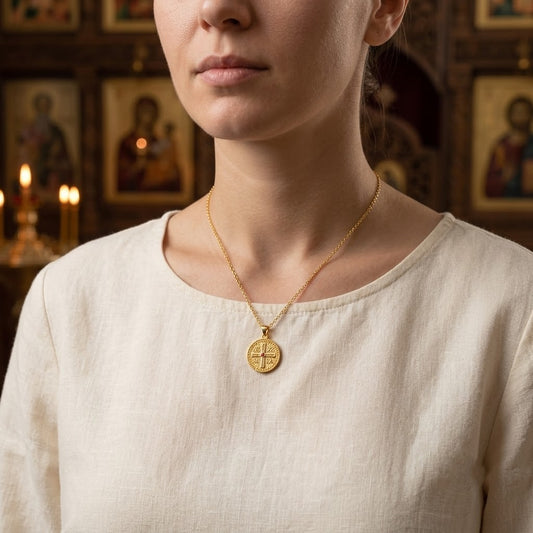
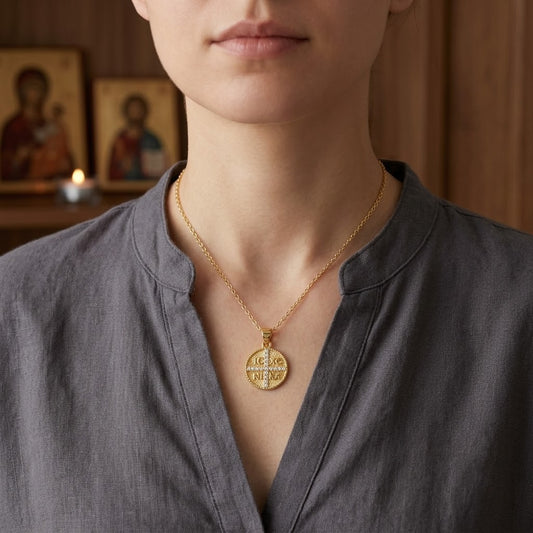
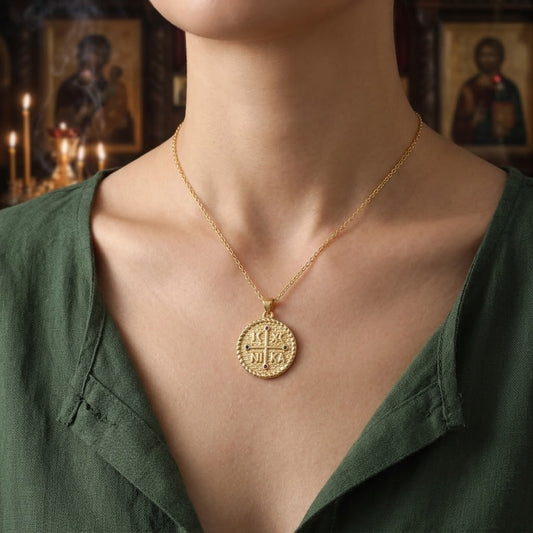
"IC XC NIKA" Medallion with Central Red Stone, Gold Plated
Regular price 15,90€Regular price 15,90€ Sale priceUnit price per -
Ethiopian Medallion Jewelry Set, Habesha Necklace Earrings and Ring, Gold Color
Regular price 24,90€Regular price 24,90€ Sale priceUnit price per -
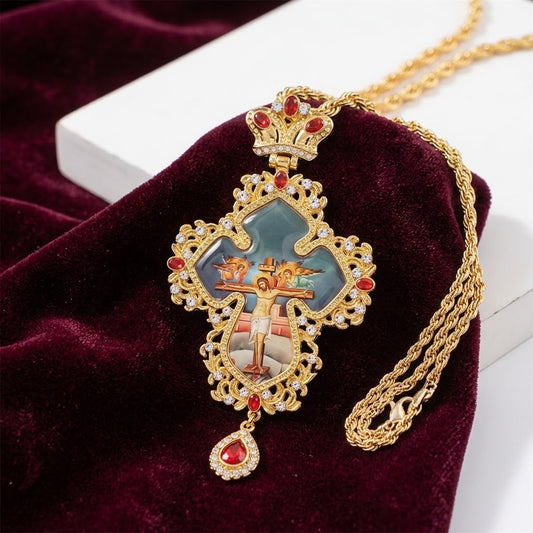
Long Pendant Necklace, Gold-Tone Pectoral Cross — Crucifixion with Mourning Angels, Red Stones, Worn Low
Regular price 54,90€Regular price 54,90€ Sale priceUnit price per -
Long Pendant Necklace, Gold-Tone Pectoral Cross — Winged Crucifixion, Red Stones, Worn Low
Regular price 54,90€Regular price 54,90€ Sale priceUnit price per -
Panagia Pendant Necklace, Gold-Tone — Theotokos, Pearls and Red Stones
Regular price 28,90€Regular price 28,90€ Sale priceUnit price per -
Pectoral Cross Pendant Necklace, Silver-Tone — Crucifixion, Turquoise Stones, Long Chain
Regular price 54,90€Regular price 54,90€ Sale priceUnit price per -
Pectoral Cross Pendant Necklace, Silver-Tone — Theotokos, Blue Enamel, Long Chain
Regular price 52,90€Regular price 52,90€ Sale priceUnit price per -
Pectoral Cross Necklace with Icon, Gold-Tone — Byzantine Style, Long Chain
Regular price 54,90€Regular price 54,90€ Sale priceUnit price per -
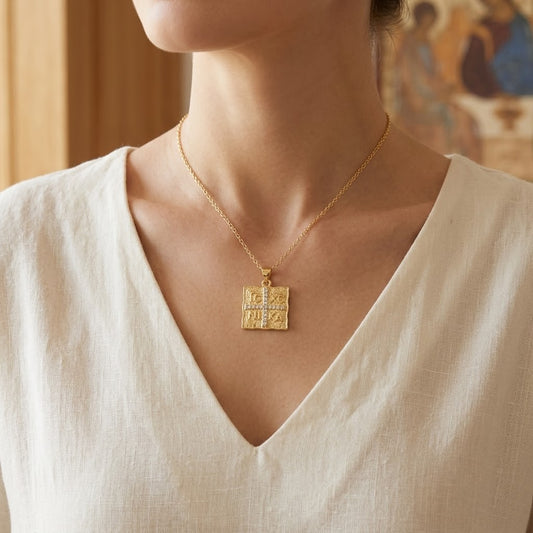
"IC XC NIKA" Medallion with Pavé Cross, Gold Plated
Regular price 15,90€Regular price 15,90€ Sale priceUnit price per -
"IC XC NIKA" Medallion with Central White Stone, Gold Plated
Regular price 16,90€Regular price 16,90€ Sale priceUnit price per -
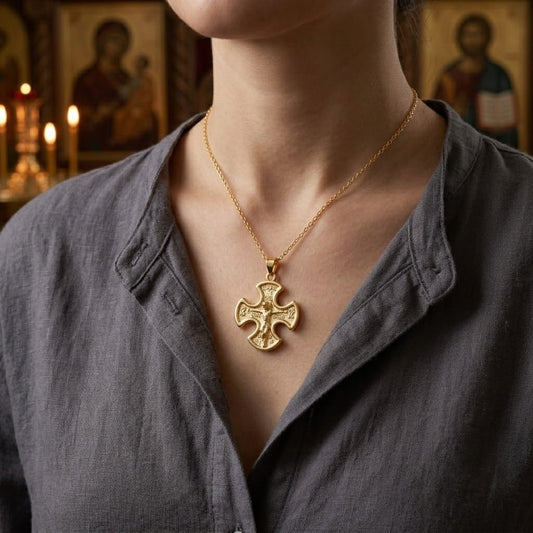
Detailed Cross Pattée Crucifix, Gold Plated
Regular price 16,40€Regular price 16,40€ Sale priceUnit price per -
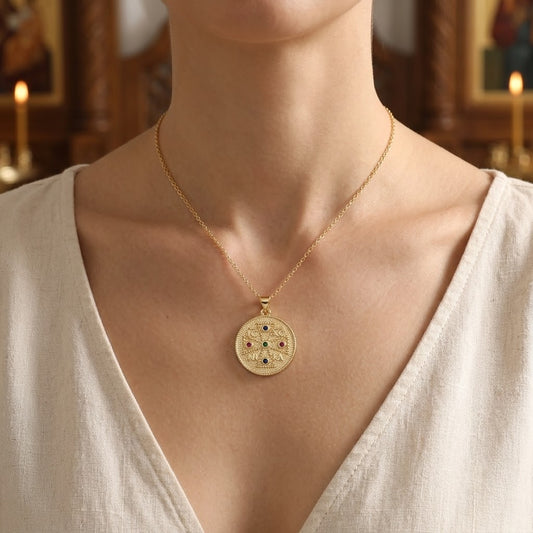
"IC XC NIKA" Medallion with Colored Stones, Gold Plated
Regular price 16,90€Regular price 16,90€ Sale priceUnit price per -
"IC XC NIKA" Medallion Gift Idea, Gold Plated
Regular price 16,40€Regular price 16,40€ Sale priceUnit price per -
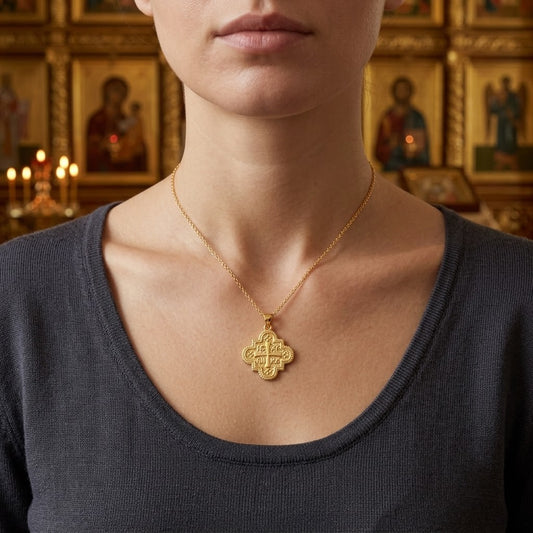
Quatrefoil-Shaped "IC XC NIKA" Medallion, Gold Plated
Regular price 16,40€Regular price 16,40€ Sale priceUnit price per -
Small "IC XC NIKA" Medallion for Layering, Gold Plated
Regular price 16,90€Regular price 16,90€ Sale priceUnit price per -
Byzantine Cross Medallion Gold Plated
Regular price 15,90€Regular price 15,90€ Sale priceUnit price per -
Byzantine Cross Medallion "IC XC NIKA" Gold Plated
Regular price 16,90€Regular price 16,90€ Sale priceUnit price per


















Orthodox Necklaces: Meaning, Tradition and Buying Guide
What is an Orthodox necklace?
An Orthodox necklace — also called an Orthodox pendant, Byzantine necklace, or icon necklace — is a piece of religious jewellery worn by Orthodox Christians as a sign of faith, protection, and identity. Unlike a simple cross necklace (which represents only the form of the cross), an Orthodox pendant often depicts a sacred person or image: Christ Pantocrator, the Theotokos (Virgin Mary), a patron saint, an angel, or a sacred monogram such as IC XC (the Greek abbreviation for Jesus Christ) or IC XC NIKA (Jesus Christ Conquers).
The tradition of wearing a sacred image around the neck goes back to the earliest centuries of Christianity. In the Byzantine Empire, devotional pendants — called enkolpia (from the Greek en kolpō, "on the chest") — were worn by clergy and laity alike as acts of personal devotion. The pectoral cross of an Orthodox bishop is itself the continuation of this tradition. For the faithful today, wearing an Orthodox necklace is a gesture of that same devotion: carrying one's prayer permanently on the body.
Orthodox necklace for men and women
Orthodox jewellery carries no gender distinction in its sacred meaning — men and women carry the same faith. In practice, styles vary. Men often prefer larger pendants in oxidised silver, stainless steel, or wood, frequently depicting the Pantocrator or the Russian Orthodox three-bar cross. Women often choose more delicate designs in 925 sterling silver or gold-plated finishes, depicting the Theotokos, guardian angels, or patron saints. Our collection includes designs suited to both, as well as unisex pieces that work for all wearers.
Choosing an Orthodox necklace as a gift
An Orthodox necklace is one of the most meaningful gifts in the Eastern Christian tradition. It is the traditional godparent gift at baptism — the godfather or godmother places the necklace around the child's neck immediately after the triple immersion in the baptismal font. It is also a precious gift for a name day, a wedding, a religious anniversary, or simply as an expression of love and blessing.
For a baptism gift, consider choosing an icon pendant depicting the newly-baptised child's patron saint. A Theotokos pendant is universally appreciated and suited to any occasion. IC XC NIKA medallions are popular for men. For a personal touch, look for models that can be engraved on the back.
Materials: silver, gold, wood
- 925 sterling silver — the most traditional material for religious jewellery in the Orthodox world. Durable and suited to all occasions.
- Gold-plated silver — the warmth of gold combined with the solidity of solid silver; a valued choice for gifts and special occasions.
- Wood — olive wood from the Holy Land carries its own particular sacred resonance; wooden necklaces have a beautiful natural humility.
- Stainless steel — modern, hypoallergenic, and durable for everyday wear.
Byzantine jewellery: a living tradition
The Byzantine aesthetic — intricate metalwork, sacred inscriptions, iconographic imagery — runs through every authentic piece of Orthodox jewellery. A Byzantine necklace is not a historical curiosity but a living expression of an unbroken tradition of faith, from the courts of Constantinople to the Orthodox family homes of today. To wear one is to connect with that tradition and to carry it forward.
The Three Families of Orthodox Necklaces
Pectoral cross pendants — the liturgical heritage worn at the neck
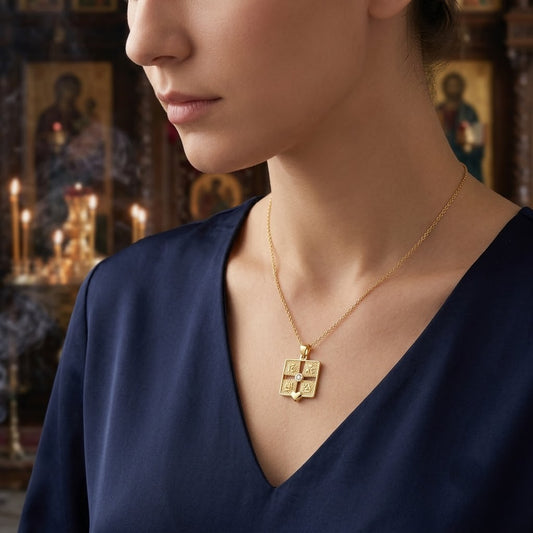
The Orthodox pectoral cross — called engolpion in the Byzantine tradition — is originally a liturgical insignia of bishops and priests, worn on the chest during divine services. Our models draw directly on this tradition: large pendants adorned with red, blue, or turquoise stones, enamelled in deep Byzantine tones, with depictions of the crucified Christ, angels, or the Crucifixion. Wearing a pectoral cross pendant in daily life is a way of affirming a strong and visible faith, rooted in the great Greek, Russian, and Byzantine Orthodox tradition.
Panagia pendants — the icon of the Theotokos worn close to the heart
The Panagia pendant — from the Greek Παναγία, "All-Holy" — depicts the Virgin Mary Theotokos, Mother of God, in traditional Byzantine iconography. Worn on the chest as a sign of protection and intercession, the Panagia pendant is one of the most spiritually charged pieces of Orthodox jewellery across all Eastern Christian traditions — Greek, Russian, Serbian, and Romanian. Our models present the Theotokos in her most venerated iconographic form, surrounded by pearls and golden stones faithful to the tradition of Byzantine sacred goldsmithing.
IC XC NIKA medallions — the victory of Christ as jewellery
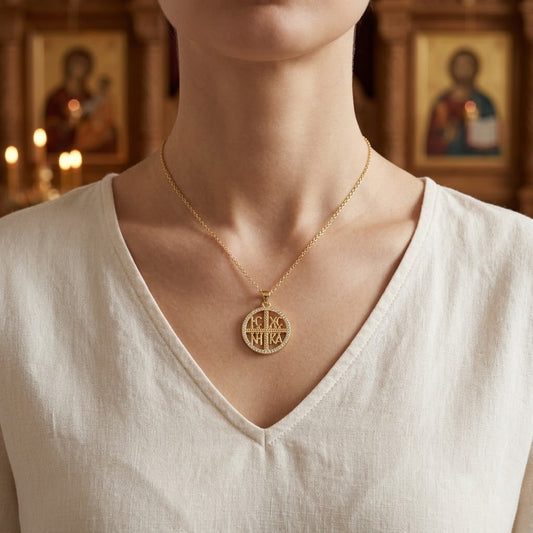
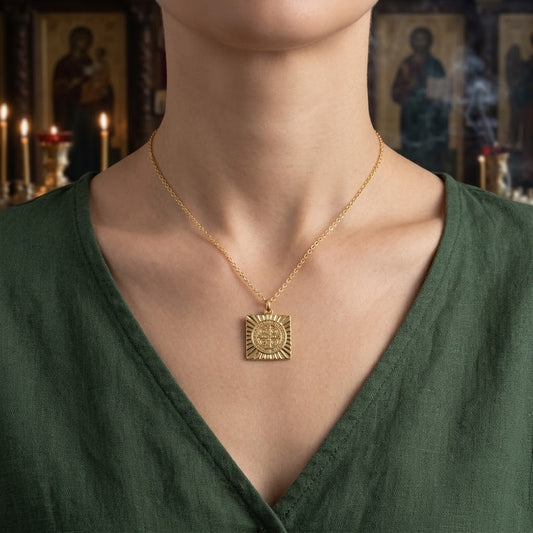
IC XC NIKA medallions carry the most sacred inscription of Byzantine iconography: IC XC (Greek abbreviation for "Jesus Christ") and NIKA ("Conquers" — Christ's victory over death and sin). Our gold-plated IC XC NIKA medallions present this iconography in several forms — round and square medallions, cross pattée, quadrilobe shape — all in quality gold plating. Light and versatile, they suit both discreet daily wear and a baptism or religious feast gift.
Frequently Asked Questions
What does IC XC NIKA mean on Orthodox medallions?
IC XC are the Greek abbreviations for "Jesus Christ"; NIKA means "Conquers" in ancient Greek. Together, IC XC NIKA means "Jesus Christ Conquers" — the proclamation of Christ's victory over death and sin, at the heart of the Orthodox faith for centuries.
What is a Panagia pendant?
The Panagia — "All-Holy" in Greek — is one of the names of the Virgin Mary in the Orthodox tradition. A Panagia pendant depicts the Theotokos (Mother of God) in traditional Byzantine iconography. It is one of the most venerated pieces of Orthodox jewellery in the Greek, Russian, and Serbian traditions.
Is this Orthodox jewellery suitable for all Orthodox traditions?
Yes. Byzantine iconography — IC XC NIKA, Theotokos, Christ Pantocrator — is shared by all Orthodox Churches: Greek, Russian, Serbian, Romanian, Bulgarian. Our Orthodox necklaces are for all believers of the Eastern Christian tradition, whatever their Church of belonging.
What is the best Orthodox baptism gift among jewellery?
A Theotokos pendant is universally appreciated for baptisms across all Orthodox traditions. For a boy, an IC XC NIKA medallion or an Orthodox cross in silver or gold are classic choices. For a personal gift, choose a pendant depicting the child's patron saint.