

Reading time: 10 minutes
For many English-speaking people encountering Eastern Christianity for the first time, the name day is one of the most striking and distinctive features. As The Eastern Church website puts it: "One of the most immediately striking features of Eastern Christian culture for Westerners who encounter it is the name day — the annual celebration of the feast of the saint whose name you bear." In Greek, Russian, Serbian, Romanian, and most other Orthodox cultures, the name day is typically celebrated with more festivity than a birthday — and for good reason. This guide explains why, and how.
What is an Orthodox patron saint?
In the Eastern Christian tradition, every baptised Christian receives at baptism the name of a saint from the liturgical calendar. This saint becomes their Orthodox patron saint — a personal intercessor in the communion of saints, a model of Christian life, and a heavenly protector for the whole of their earthly life.
The patron saint is not a symbolic or folkloric figure — they are a theological reality. The Orthodox Church teaches that the saints are alive in God, that they pray for the living, and that their intercession is effective. To receive the name of a saint at baptism is to enter a personal and lasting relationship with them: they pray for you, you address your prayers to them, and you celebrate the same feast together every year.
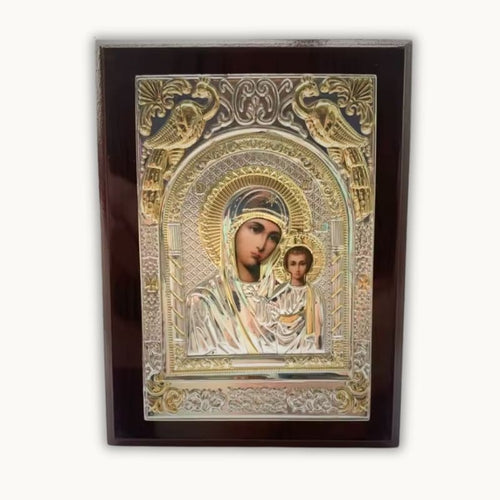
This relationship begins at baptism and lasts a lifetime. The icon of the patron saint is often the first gift given to a newborn at their baptism — placed in the prayer corner of the home, it watches over the child into adulthood. Our guide to the Orthodox icon explains why the saint's icon is far more than a picture — it is a presence.
Why is the Orthodox name day more important than a birthday?
In traditional Orthodox cultures — Greek, Russian, Serbian, Romanian, Bulgarian — the name day occupies a place the birthday does not hold, or holds less. The Greek Orthodox Archdiocese of America explains it this way: the name day is "to focus on the Saint" — his or her icon is prominently displayed in the home, and "whoever comes to visit wishes 'Happy Name Day' to the celebrant."
The birthday celebrates entry into the physical world. The Orthodox name day celebrates entry into the life of the Church through baptism — and the relationship with the patron saint that flows from it. It therefore has a spiritual dimension the birthday does not. Saint John the Evangelist Orthodox Church in California puts it plainly: "A Name Day is essentially the day on which an Orthodox Christian celebrates the feast of his or her patron saint. Just like any feast in the life of the Church, it is an important part of the spiritual life. As such, it should become part of the life of your home, the rhythm of routine as you all work together toward salvation."
One practical peculiarity of the Orthodox name day: in the Orthodox tradition, it is the celebrant who receives visits — not the other way around. They do not send invitations; others come to them. The Greek Orthodox Archdiocese of America notes: "Favors or token gifts can be part of the day, but with a significant difference — it is the celebrant who gives to the guests, not the other way around." This inversion — where the honouree gives rather than receives — reflects the theology beautifully: it is the saint who is being honoured, and the celebrant acts as his or her host.
Name day vs birthday: the Orthodox perspective
For converts to Orthodoxy and for English-speaking Orthodox Christians raised in cultures where birthdays dominate, the shift to celebrating name days can feel unfamiliar — even countercultural. But the logic is compelling: a birthday marks when God gave you life; a name day marks when God gave you a saint. The first is about what you received; the second is about who walks with you.
Practically speaking, many English-speaking Orthodox families celebrate both. OrthodoxWiki advises simply: "If possible, it is generally desirable to attend Liturgy or another church service on your name day." Even a simple family prayer before the icon of the patron saint at breakfast is a meaningful beginning.
How do you choose your Orthodox name?
In the Orthodox tradition, the name given at baptism is ideally chosen from among the saints of the liturgical calendar. Several practices coexist across countries and families:
The eighth-day rule
The Russian tradition recommends giving the child the name of the saint whose memory is honoured on the eighth day after birth — recalling the circumcision of Christ on the eighth day. If that saint's name is unsuitable, one chooses from the saints of the following days.
The family name
In many Orthodox families, the name of a grandparent, ancestor, or particularly venerated family saint is passed down from generation to generation. In Greek-American families, this tradition can be comically insistent — as the GOARCH website acknowledges with good humour, referencing the famous scene in My Big Fat Greek Wedding: "This is my Brother… and his son Nick, … and his son Nick, … and his son Nick… and his daughter Nikki."
Names without a saint
Not every name has a corresponding saint in the Orthodox calendar. Such names — called adespota in Greek — celebrate their name day on November 1st (All Saints' Day) by convention.
Name change at adult baptism
When an adult is baptised or received into the Orthodox Church, they are often offered the opportunity to choose a new Christian name — or to keep their existing name if it belongs to a recognised saint. This new name marks the beginning of a new life — the spiritual birth that baptism accomplishes. For converts, choosing one's patron saint at chrismation is one of the most personally meaningful moments of the journey.
How to find your Orthodox patron saint
Finding your Orthodox patron saint is straightforward, though it may vary depending on which tradition you follow:
- By baptismal name — the most direct route: every name corresponds to one or more saints in the Orthodox calendar. Our Orthodox Name Day Finder instantly finds the saint corresponding to your name in 7 traditions (Greek, Russian, Serbian, Romanian, Bulgarian, Coptic). The OCA calendar at OCA.org is also a comprehensive and searchable English-language resource.
- By date of birth or baptism — some Orthodox families choose the saint whose memory is honoured on the day of birth or the eighth day after birth.
- By personal devotion — some faithful choose a saint for whom they have a particular devotion — because of their life, their patronage of a profession, or a grace received through their intercession. The Eastern Church website notes: "If your name has multiple saint possibilities, you can choose the one whose life resonates most with you."
Once you have identified your patron saint, the natural next step is to acquire the icon of your patron saint — for your prayer corner — and a pendant bearing their image to wear daily. These objects maintain the spiritual relationship with the saint throughout the year.
The Orthodox name day across national traditions
Greek tradition
In Greece and Greek-American communities, the name day (Onomastiká) is a social as much as a religious institution. Friends and family arrive without prior invitation, bringing sweets, flowers, or small gifts — the door stays open all day. If the name day falls during Holy Week or a period of mourning, the celebration is postponed. The feast of St George (April 23) is moved to after Pascha whenever it falls in Holy Week. The GOARCH adds: the celebrant may offer an Artoclasia — the five loaves of sweet bread blessed at church — shared among the congregation. During the Fellowship Hour, cake or sweets may also be offered.
Russian and East Slavic tradition
In Russia, Ukraine, and Belarus, the name day (Именины / Imeniny) is observed with attendance at the Divine Liturgy and ideally the reception of Holy Communion. The celebrant is mentioned in the prayers of the community. The family meal that follows is an occasion to speak about the life of the patron saint and give thanks for the protection received.
Serbian tradition — the Slava
The Serbian tradition presents a remarkable particularity: the Slava (Крсна Слава — "Krsna Slava"). This is not the feast of an individual's name, but the feast of the patron saint of the entire family — inherited from the baptism of one's ancestors and passed from father to son. Every Serbian family celebrates the Slava once a year: a special liturgical service is held, the Slavski Kolač (a round ritual bread) is blessed and shared, and a family meal follows. The Slava is inscribed in UNESCO's Intangible Cultural Heritage since 2014. In North American and British Serbian communities, it is a central annual event, often drawing relatives from across the country. It is one of the most distinctive traditions in the entire Orthodox world.
Romanian tradition
In Romania, the name day (Ziua Onomastică) is celebrated in a spirit similar to the Greek tradition. The most popular saints — Ioan (John), Maria, Gheorghe (George), Alexandru (Alexander), Dumitru (Demetrius) — see their feasts mark large family gatherings. La mulți ani! ("Many years!") is the traditional greeting. Romanian Orthodox communities across the UK, USA, Canada, and Australia carry this tradition actively.
Converts and Western Orthodox
For converts received into Orthodoxy, the name day takes on a particularly personal significance. As our own Name Day Finder notes: "those received into the Orthodox Church choose a saint's name at chrismation, making the Name Day a deeply personal new beginning in faith." Saint John the Evangelist Orthodox Church advises all Orthodox families — convert and cradle alike — to include the patron saint's troparion and kontakion in the family's morning or evening prayers on the name day, and to read the life of the saint together.
The most common Orthodox names and their feast days
Here are some of the most venerated patron saints in the Orthodox Church, with their feast days according to the Gregorian (New) Calendar:
- Nicholas / Nikolai — St Nicholas of Myra, bishop and wonderworker: December 6 (December 19, Julian Calendar)
- George / Georgios — St George the Great Martyr: April 23 (May 6, Julian) — moved after Pascha if it falls in Holy Week
- John / Ivan — St John the Baptist (Nativity: June 24; Beheading: August 29) and St John the Theologian (September 26)
- Mary / Maria — Dormition of the Theotokos: August 15 (August 28, Julian); Nativity of the Theotokos: September 8
- Michael / Mikhail — Synaxis of the Archangels Michael and Gabriel: November 8 (November 21, Julian)
- Alexander — St Alexander of Constantinople: August 30
- Demetrius / Dimitri — St Demetrius of Thessaloniki: October 26
- Peter — Sts Peter and Paul: June 29 (July 12, Julian)
- Paul — Sts Peter and Paul: June 29
- Andrew — St Andrew the First-Called: November 30
- Katherine / Katarina — St Katherine of Alexandria: November 24
- Helen / Elena — St Helen, Equal to the Apostles: May 21
Dates may vary depending on whether your parish follows the New Calendar (Revised Julian — used by Greek, Romanian, and Bulgarian churches) or the Old Calendar (Julian — used by Russian, Serbian, and Georgian churches, whose feasts fall 13 days later). Our Orthodox Name Day Finder accounts for both — simply select your tradition.
How to celebrate an Orthodox name day
The Orthodox name day is not just a family gathering — it is first and foremost a spiritual day. Saint John the Evangelist Orthodox Church recommends these practices that "transcend ethnicity" and belong to every Orthodox family:
- Attend the Divine Liturgy — ideally receiving Holy Communion that day. The celebrant is often mentioned by the priest in the litanies and petitions.
- Pray before the icon of your patron saint — in your prayer corner, light a candle before the icon and address a prayer of thanksgiving and protection to your saint. Include their troparion and kontakion in the morning or evening rule.
- Read the life of the saint — together as a family, if possible. Knowing the life of your patron saint is a way to be inspired by their example and deepen the spiritual relationship with them.
- Receive visitors — in the Greek and Slavic traditions, welcoming family and friends who come to greet you is the heart of the family celebration.
- Give to your guests — following the Greek tradition, offer sweets or small treats to those who come — it is the celebrant who gives, not receives.
- Give an icon of the saint — the most traditional gift for an Orthodox name day is an icon of the patron saint or a pendant bearing their image — something the celebrant will keep for life.
What to give as an Orthodox name day gift
The traditional Orthodox name day gift should have a spiritual dimension. The most meaningful options:
- An icon of the patron saint — the gift par excellence; passed down through generations
- A pendant bearing the saint's image — worn daily as spiritual protection
- An Orthodox cross — blessed and given with a thought for the patron saint
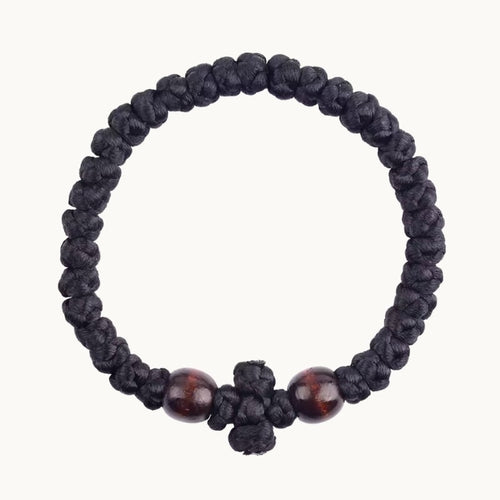
- An Orthodox prayer rope (komboskini) — to accompany the daily Jesus Prayer
FAQ — Frequently asked questions about the Orthodox name day and patron saint
What is an Orthodox name day?
An Orthodox name day is the feast day of the saint whose name you bear. In the Orthodox tradition, this day is celebrated as a spiritual and family feast — often more solemnly than a birthday. It begins ideally with attendance at the Divine Liturgy and the reception of Holy Communion, and continues with welcoming family and friends.
How do I find my Orthodox name day?
Our Orthodox Name Day Finder instantly finds your patron saint and the date of their feast according to your tradition (Greek, Russian, Serbian, Romanian, Bulgarian, Coptic) — in 7 languages. The OCA calendar at OCA.org is also an excellent searchable English resource.
My name is not in the Orthodox calendar — what do I do?
Several options are available. You can choose a saint whose name is similar to yours (in sound or meaning), or freely choose a saint for whom you have a particular devotion and adopt them as patron. At adult baptism or chrismation, the priest will usually help you choose a saint's name. Names without a corresponding saint in the Orthodox calendar celebrate their name day on November 1st (All Saints' Day) by convention.
Is a name day more important than a birthday in Orthodoxy?
In traditionally Orthodox cultures — Greek, Russian, Serbian, Romanian — the name day is generally considered more spiritually significant than the birthday, since it celebrates one's entry into the Church and the patron saint who accompanies the Christian life. In English-speaking Orthodox communities, many families celebrate both; what matters is that the name day be acknowledged as a spiritual occasion, not merely a social one.
What is the Serbian Slava?
The Slava (Krsna Slava) is the feast of the patron saint of the entire Serbian family, inherited from the baptism of ancestors and passed from father to son. Every Serbian family has its own family patron saint, whose feast is observed annually with a special church service, the blessing of the Slavski Kolač (a round ritual bread), and a family meal. The Slava is inscribed in UNESCO's Intangible Cultural Heritage since 2014 and is one of the most distinctive traditions in the Orthodox world.
Can I have more than one patron saint?
Yes — besides the saint whose name you bear, several patron saints may accompany an Orthodox Christian: the saint of the day of their baptism, the patron saints of their parish, the patron saints of their profession (St Luke of Crimea for doctors, St Nicholas for sailors and travellers), and saints to whom they have a particular personal devotion. OrthodoxWiki notes: if your name saint has more than one feast day, usually only one date is chosen as the name day.
To discover your patron saint and name day according to your Orthodox tradition, use our Orthodox Name Day Finder — available in 7 languages for all major traditions: Greek, Russian, Serbian, Romanian, Bulgarian, Coptic.