

Reading time: 8 minutes
1. Who is Saint Nicholas in the Orthodox Church?
Saint Nicholas holds a truly special place in the Orthodox Church. Venerated as the protector of children, sailors, and all those who turn to him, he embodies charity, justice, and compassion. His life and miracles have touched generations of faithful, both in the East and the West.
To this day, Saint Nicholas is invoked to seek his help in difficult times and to thank God for His grace. Many believers keep his icon close to them or wear a pendant bearing his image, as a symbol of protection and living faith. To discover Saint Nicholas is to meet a friend of Christ who never ceases to intercede for each one of us.

Saint Nicholas of Myra, bishop and miracle worker in the Orthodox tradition.
2. History and Origin of Saint Nicholas of Myra
2.1 - His Life in Patara and Myra
Saint Nicholas was born in Patara, in Lycia, a region of present-day Turkey, in the third century. From an early age, he distinguished himself by his deep faith and strong sense of justice. Heir to a wealthy Christian family, he chose to devote his possessions to the poor, heeding Christ's call to charity.
Having become Bishop of Myra, he was a pastor deeply attentive to the needs of his people. He defended the faith against injustice and cared for the most vulnerable. His wisdom and courage earned him the respect of the faithful, who recognized him as a true spiritual father. During the persecutions of Christians, he did not hesitate to risk his life to protect his Church. He also took part in the First Council of Nicaea in 325, where he firmly defended Orthodox doctrine against the heresies of his time.
2.2 - Why is he called "the Wonderworker"?
The title of "Wonderworker" means "one who performs miracles". Many traditions tell of how Saint Nicholas interceded with God to help those who called upon him. He is said to have saved three young women from a forced marriage by secretly providing them with a dowry, and to have calmed the sea to protect sailors in distress. Tradition also recounts that he raised three schoolchildren who had been killed by a butcher, and that he saved the city of Myra from famine by miraculously summoning grain ships to its shore.
These accounts are not merely ancient stories — they bear witness to a spiritual presence that continues to act in the hearts of believers. To this day, people entrust Saint Nicholas with their worries, their families, their travels… and many testify to his help. Through his intercession, Christ manifests His mercy toward those who place their hope in Him.

2.3 - From Myra to Bari: the Journey of the Relics
When Saint Nicholas died on December 6, 343, his relics were kept in Myra, where they quickly became a place of pilgrimage. Orthodox piety even refers to his earthly end as a "Dormition" — a term usually reserved for the Mother of God, a sign of the singular esteem in which the faithful held this great saint. In 1087, during the era of the Crusades, sailors from Bari, Italy, seized his relics and brought them to their city, which has been an international center of pilgrimage ever since. Each year, a fragrant oil — known as the "manna of Saint Nicholas" — is said to flow from his tomb and is collected during the feasts dedicated to him in Bari. A second feast, on May 9, commemorates precisely this translation of the relics of Saint Nicholas.
3. Why is Saint Nicholas so Venerated in Orthodoxy?
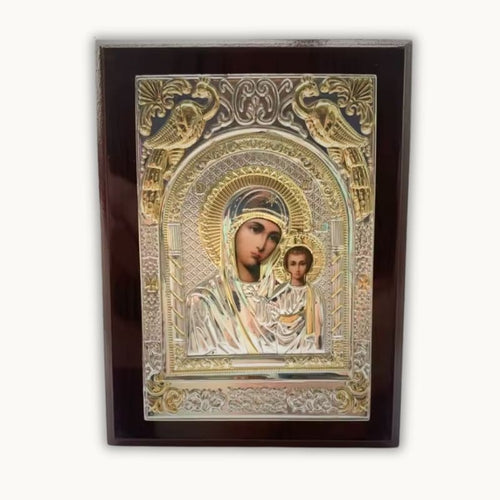
Saint Nicholas holds a truly special place in the spiritual life of Orthodox Christians. He is regarded as a close and benevolent protector, a saint to whom one can turn with confidence. In many families, his icon is present at the heart of the home — a reminder of God's goodness and the importance of daily charity.
His patronages are numerous. He is venerated as the patron saint of children, of sailors, of travelers, of prisoners, and of all those in need. Those who lack justice, who struggle to live with dignity, or who face adversity find in him a faithful support. Saint Nicholas is a friend of the people, a saint who has always placed the protection of the weakest at the center of his mission.
This closeness explains why he is so beloved — he is a witness to divine tenderness, always ready to help when we invoke him with faith. In the Russian Orthodox tradition, Nicholas rose in rank to stand closer to the Mother of God than any other saint — a singular distinction no other figure has attained. On the iconostasis of Russian Orthodox churches, his icon is placed immediately beside Christ and the Theotokos, while other Orthodox traditions typically place Saint John the Baptist in that position. This exceptional placement shows just how deeply the veneration of this saint is rooted in Eastern Christianity.
4. Icons of Saint Nicholas: Symbols and Styles
4.1 - How to Recognize Saint Nicholas on an Icon
In Orthodox iconography, Saint Nicholas is almost always depicted as a bishop. He is easily recognized by his omophorion, the white stole adorned with crosses that symbolizes his pastoral mission. He often holds the Gospel in his left hand, a reminder that he guided his people in the truth of Christ.
His right hand is generally raised in a gesture of blessing, in accordance with Orthodox tradition. His face conveys great gentleness yet also spiritual authority, with fine features and a well-kept white beard.
Every visual element of his icon tells something of his life — fidelity to the Gospel, charity toward the poorest, and constant protection of those who invoke him.

4.2 - Russian, Byzantine, and Modern Icons
The art of depicting Saint Nicholas varies across traditions, while always preserving the same essential symbols.
In the Byzantine style, colors are often deep and features bold, conveying the inner strength of the saint. Russian icons, on the other hand, favor great gentleness in the gaze, offering a sense of welcome and closeness.
Today, more modern icons can also be found, created by contemporary iconographers who seek to uphold tradition while bringing their own artistic sensibility.
Whether ancient or recent, all icons of Saint Nicholas share the same mission: to remind us of God's presence and keep the saint close to us, in our homes and in our prayers.
5. Pendants and Devotional Objects of Saint Nicholas
Wearing a Saint Nicholas pendant means keeping close a tangible sign of his protection. Many faithful choose to wear his medal every day, as a reminder of their faith and the saint's benevolent presence in their lives. It can be a source of strength in moments of doubt, a comfort during a journey, or simply a discreet way of expressing one's spirituality.
These devotional objects do not replace prayer — they accompany it. They invite us to turn to God more often with confidence, asking for Saint Nicholas's intercession for ourselves and for those we love. Offering a pendant or a blessed object dedicated to this saint is also a beautiful way to pass on protection to a child, a friend, or a family member.

6. The Feast Day of Saint Nicholas in the Orthodox Church
In the Orthodox tradition, Saint Nicholas is celebrated on December 6th according to the Gregorian calendar, and on December 19th in Churches that still follow the Julian calendar (such as in Russia or Serbia). Both dates correspond to the same commemoration — giving thanks for the life and miracles of the holy Bishop of Myra.
On this day, the faithful gather in church to take part in the Divine Liturgy and entrust their prayers to Saint Nicholas. In some countries, such as Greece and Russia, processions and blessings of the sea are organized, recalling his protection over sailors.
The feast of Saint Nicholas is also an occasion for acts of charity — thoughts turn to children, families in need, and those lacking support. It is a way of continuing his work of love, with the same compassion that has always guided him.
December 6th falls every year right in the middle of the Nativity Fast, one of the four great fasts of the Orthodox year. A fish dispensation is traditionally granted on this day, regardless of the day of the week — a small respite within the ascetic effort of the Orthodox Advent, as if to honor the memory of the great Wonderworker with due festivity. To better understand how this feast fits into the broader rhythm of fasting before Christmas, you can consult our complete guide to the four great Orthodox fasting seasons.
While Saint Nicholas is one of the most important feasts of the Orthodox winter, Easter remains the greatest of all Orthodox celebrations. To learn more, we invite you to read our article on Orthodox Easter. And if you would like to discover another great Marian feast, less widely known but just as rich in folk tradition, our guide to Pokrov, the feast of the Protection of the Theotokos, will introduce you to a Marian devotion just as profound, celebrated every year in October.
In the English-speaking world, Saint Nicholas occupies a unique and somewhat complicated cultural position. Santa Claus — the gift-giver of American and British Christmas — is a distant cultural descendant of this Orthodox bishop, filtered through the Dutch Sinterklaas tradition before being commercialized far beyond recognition. Many American Orthodox parishes lean into this contrast rather than away from it: the Greek Orthodox Shrine Church of St. Nicholas in Flushing, New York — among the largest parishes of the Greek Orthodox Archdiocese of America — gathers hundreds of faithful each December 6th for a hierarchical Divine Liturgy that tells the real story behind the cultural myth. In many convert and homeschooling families across the United States, December 6th has become a beloved home feast day in its own right: children leave their shoes out the night before, find small gifts and oranges inside by morning, and hear the true account of the bishop who gave his wealth away in secret — a way of teaching, gently and joyfully, who Santa Claus was before he became a marketing image.
7. Popular Prayers to Saint Nicholas
The prayer to Saint Nicholas is very present in Orthodox spiritual life. The faithful turn to him with confidence to ask for protection, support, and peace of heart. Here is a simple example of a prayer to Saint Nicholas that can be said every day:
"Saint Nicholas, good shepherd and protector, watch over me and over those I love. Intercede with God to keep us in peace, health, and the joy of faith. May Christ, through your intercession, grant us His mercy. Amen."
One can pray to Saint Nicholas for a journey, an exam, a difficult situation, or simply to thank God for His blessings.
Some of the faithful place a Saint Nicholas icon in a visible spot in the home or wear a pendant bearing his image, to remember to invoke him regularly.
Prayer does not need to be long or complicated, a few sincere words are enough to open one's heart and ask the saint to accompany us each day.

8. How to Choose a Saint Nicholas Icon or Pendant?
Choosing a Saint Nicholas pendant or icon depends first and foremost on the intended use.
For the home, a slightly larger icon is generally preferred, to be placed in the prayer corner or in a frequently used room. It becomes a point of spiritual focus for the whole family — a reassuring and inspiring presence each day.
For everyday protection, a pendant is a wonderful choice. Worn close to the heart, it recalls the faith and trust placed in the saint's intercession. It accompanies children to school, adults in their work or travels.
Artistic styles vary. Some will prefer the rigor of the Byzantine tradition, others the gentleness of Russian art, or modern icons created by contemporary workshops.
The essential thing is to choose a representation that speaks to your heart and helps your spiritual life to grow.
Offering a Saint Nicholas icon or pendant is also a greatly appreciated religious gift, particularly for a baptism, a birth, or to support a loved one through an important moment in their life.
9. Conclusion
Saint Nicholas continues to be an important presence in the lives of Orthodox Christians. Through his example of charity, he reminds us that faith is lived in the concrete love of our neighbor. And through his intercession, he remains a watchful protector for all those who invoke him with confidence.
Whether one chooses to keep a Saint Nicholas icon in the home or to wear a pendant bearing his image, these signs of devotion accompany us daily and encourage us to walk the path of peace and hope. His feast, celebrated each year in the heart of the Nativity Fast, invites us to rediscover concrete charity as a path toward Christmas — far removed from the commercial figures that have sometimes eclipsed the true face of the Bishop of Myra.

10. Frequently Asked Questions: Saint Nicholas and Orthodoxy
1. What is the difference between Orthodox and Catholic Saint Nicholas?
Saint Nicholas is the same saint for both Orthodox and Catholics — the Bishop of Myra from the fourth century, known for his charity and miracles. What differs is mainly the liturgical tradition and iconography. In Orthodoxy, great emphasis is placed on his role as protector and on the veneration of his holy relics — in the Russian tradition, this veneration reached such intensity that his icon stands on the iconostasis immediately beside Christ and the Mother of God, a place of honor no other saint shares.
2. Why are there two different dates for his feast?
In Orthodoxy, some Churches still follow the Julian calendar — the feast is therefore celebrated on December 6th (Gregorian) or December 19th (Julian).
Both dates commemorate the same event: the memory of Saint Nicholas, Bishop of Myra.
3. Is Saint Nicholas venerated in Protestantism?
Saint Nicholas's place is less prominent in Protestantism, which generally places less emphasis on the intercession of saints. However, some local traditions continue to honor his memory as an example of kindness and care for the most disadvantaged — and many converts to Orthodoxy from Protestant backgrounds describe rediscovering the real Saint Nicholas as one of the first ways they came to understand the Orthodox veneration of saints more broadly.
4. Can an icon be given as a gift?
Yes — it is in fact a deeply symbolic religious gift. Offering a Saint Nicholas icon means wishing protection, peace, and blessing upon the person who receives it. It is a meaningful gesture for a baptism, a feast of Saint Nicholas, a wedding, or to support a loved one.
5. What does the iconography of Saint Nicholas represent?
Icons of Saint Nicholas depict him as the Bishop of Myra, wearing the omophorion and holding the Gospel. His gesture of blessing and his benevolent gaze symbolize mercy and pastoral wisdom.
Every detail expresses his mission: to guide, protect, and serve the weakest.
6. Does December 6th always fall during the Nativity Fast?
Yes. The Nativity Fast, which lasts forty days, begins each year on November 15th and ends on December 24th — the feast of Saint Nicholas on December 6th therefore always falls within it. A fish dispensation is traditionally granted on this day to honor the saint's memory fittingly, without entirely breaking the effort of the fast. To discover the full set of fasting rules and the spiritual meaning of this season, see our complete guide to the Orthodox Nativity Fast.
7. How do Orthodox families in America celebrate Saint Nicholas Day at home?
Many Orthodox families in the United States and Canada keep Saint Nicholas Day as a home feast alongside the parish celebration. A common custom — borrowed and reclaimed from the wider Sinterklaas tradition — is for children to leave their shoes by the door the night before; in the morning they find them filled with small gifts, chocolate coins, and an orange or two. The day is often paired with reading the saint's life aloud, lighting a candle before his icon, and doing an act of charity together as a family, such as donating to a food pantry or making care kits for those in need — small, concrete ways of living the saint's own example of secret generosity.