

Reading time: 10 minutes
Do you feel a calling towards the Orthodox tradition? Converting to Orthodoxy is one of the most profound spiritual decisions a Christian can make — or one of the most natural, for those who discover in it the faith they have always sought without knowing its name. This guide presents all the steps of Orthodox conversion, explains the differences with other Christian denominations, describes the rites of entry into the Church, and gives practical advice for the journey into your new life of faith.
What is conversion to Orthodoxy?
Converting to Orthodoxy means embracing a two-thousand-year-old Christian tradition that has remained faithful to the teachings of the Apostles and the Church Fathers. The Orthodox Church claims an unbroken continuity with the early Church — not only in doctrine, but in liturgy, iconography, sacramental life, and spirituality.
Orthodox conversion is not a mere change of denominational label. It is a metanoia — a turning of the whole being toward God, a deep inner transformation. The ultimate goal is not to belong to an institution, but to progress toward theosis: the deification of the human person, their participation in the divine nature promised by St Peter (2 Pet 1:4) and realised in union with the Risen Christ. This is why the Orthodox Church says of its faith that it is not a religion — it is a way of life.
Unlike Roman Catholicism, Orthodoxy has preserved its decentralised and conciliar structure: there is no universal pope, but autocephalous patriarchates (Constantinople, Moscow, Romania, Serbia, Antioch, etc.) united in the same faith and the same sacraments.

Why become Orthodox?
A tradition preserved from the beginning
The Orthodox Church celebrates today the exact same Divine Liturgy codified by St John Chrysostom in the 4th century. Its icons, chants, liturgical gestures, and theology — everything goes back without interruption or reform to the apostolic and patristic sources. For many converts, it is precisely this lived — not merely claimed — continuity that proves decisive.
An embodied and mystical spirituality
Orthodoxy prioritises the personal experience of God. The Jesus Prayer, the veneration of icons, fasting, prostrations, night vigils — the whole body is engaged in prayer. It is not a religion of the head alone: it is a path of transfiguration of the whole person.
A warm spiritual family
Joining an Orthodox parish means becoming part of a fraternal community that is often richly diverse — Greeks, Romanians, Russians, Serbs, English-speaking converts of every background. New members are generally welcomed with kindness and patience. As one American convert wrote: "I walked in a stranger and within weeks felt I had found my family."
The stages of Orthodox conversion
Stage 1 — The inquiry phase (1 to 6 months)
Everything begins with curiosity and searching. Before making any commitment, the Orthodox Church invites you to inform yourself freely:
- Attend liturgical services — starting with the Divine Liturgy on Sunday morning
- Read introductory works on Orthodoxy (Bishop Kallistos Ware, The Orthodox Church; Alexander Schmemann, For the Life of the World; Frederica Mathewes-Green, Facing East)
- Talk with Orthodox faithful or other converts
- Visit several parishes of different traditions to find your community
- Contact the priest to express your interest — with no obligation whatsoever
This phase carries no formal commitment. The Orthodox Church does not proselytise — it receives those who come to it, but forces nothing. Take the time you need. As St Andrew Greek Orthodox Church puts it: "Participating in a learning programme does not obligate you to join the Church."
Stage 2 — The catechumenate (6 months to 2 years)
When you and your priest both feel the moment has come, you may ask to be enrolled as a catechumen — the term for the candidate for baptism or chrismation who is receiving instruction. The catechumenate is a period of learning and progressive integration into the life of the Church:
- Catechetical instruction — Orthodox theology, sacraments, liturgy, calendar of the great feasts, iconography, fasting rules
- Attendance at services — catechumens attend the Divine Liturgy (until the dismissal of catechumens, announced by the deacon before the Liturgy of the Faithful); regular attendance is the heart of the formation
- Spiritual direction — regular meetings with the priest or a designated spiritual father
- Beginning the practice — daily prayer, Wednesday and Friday fasting, reading the Fathers
The catechumenate typically lasts from nine months to two years in English-speaking Orthodox practice. In the ancient Church it lasted up to three years. It does not end with an exam but with a pastoral discernment shared between you and your priest.
Stage 3 — The Rite of Making a Catechumen
When the priest judges the moment right, he celebrates the Rite of Making a Catechumen — a brief and powerful ceremony, often at Saturday evening Vespers:
- You turn to face west (the direction of darkness in Christian symbolism) to renounce Satan and his works — three times
- You turn to face east (the direction of the Risen Christ, of his Second Coming) to unite yourself with him — three times
- You recite the Nicene Creed — the summary of the apostolic faith
- The priest enrolls you in the book of catechumens and prays over you
As The Eastern Church website describes it: this is "a formal claiming of the person for Christ" — ancient prayers, not dramatic performances.
Stage 4 — Reception into the Church: baptism or chrismation
Orthodox baptism
If you have never been baptised — or if your previous baptism is considered invalid by the Orthodox Church — you will receive baptism by triple full immersion. Each immersion corresponds to a Person of the Trinity. Full immersion signifies death to the old self and resurrection with Christ (Rom 6:3–4). For a deeper exploration of the rite and its meaning, see our guide to Orthodox baptism.
You will choose a new Christian name — the name of an Orthodox saint who becomes your heavenly patron, whose feast day you will celebrate as your own name day.
Chrismation
If you have already been baptised in the name of the Trinity (Catholicism, mainstream Protestantism, Anglicanism), the Orthodox Church generally recognises your baptism as valid and receives you through chrismation alone — the Orthodox sacrament of confirmation. The priest anoints you with holy chrism on your forehead, eyes, nostrils, mouth, ears, chest, hands, and feet, saying at each anointing: "The seal of the gift of the Holy Spirit. Amen." Immediately after you receive Holy Communion for the first time.
Abjuration
Some Orthodox jurisdictions require a formal abjuration of the errors of the former confession before chrismation. This practice varies by patriarchate and parish — your priest will inform you of the practice in your community.

Catholic conversion to Orthodoxy: the doctrinal differences
For a Catholic, converting to Orthodoxy means understanding and accepting several important doctrinal differences:
- The Filioque — Orthodox Christians reject the Latin addition Filioque ("and from the Son") in the Nicene Creed. For Orthodoxy, the Holy Spirit proceeds from the Father alone — this unilateral addition by Rome is considered one of the deep causes of the 1054 Schism.
- Papal primacy — Orthodoxy rejects any universal jurisdiction of the pope. The Bishop of Rome is honoured as first among equals (primus inter pares) — not as the infallible and universal head of the Church.
- The Immaculate Conception — A Catholic doctrine of 1854, not recognised by Orthodoxy. Orthodoxy honours the Theotokos as the most pure of all creatures but does not affirm her exemption from original sin.
- Purgatory — Absent from Orthodox theology; Orthodoxy prays for the departed without defining a distinct intermediate place or state.
- Created grace — For Orthodoxy, divine grace is God's own uncreated energy (the teaching of Gregory Palamas) — not a created reality distinct from God himself.
Choosing your Orthodox parish in the English-speaking world
The different jurisdictions
The English-speaking Orthodox world comprises several jurisdictions, each with its own liturgical culture. For a convert, the choice of jurisdiction is secondary to the quality of welcome and pastoral accompaniment:
- Orthodox Church in America (OCA) — autocephalous; strong convert tradition; many English-language parishes across North America
- Antiochian Orthodox Christian Archdiocese of North America — one of the largest English-speaking jurisdictions; historically very welcoming of converts; many parishes celebrate entirely in English
- Greek Orthodox Archdiocese of America / Greek Orthodox Archdiocese of Great Britain (Ecumenical Patriarchate) — oldest Orthodox presence in the English-speaking world
- Russian Orthodox Church Outside Russia (ROCOR) — known for doctrinal rigour and liturgical traditionalism
- Serbian, Romanian, Bulgarian Orthodox dioceses — present across the US, UK, Canada and Australia
Selection criteria
- The liturgical language — Many English-speaking parishes celebrate the Divine Liturgy entirely in English. For a new convert, understanding the services is essential; a parish that offers English liturgy significantly helps participation and formation.
- Geographical proximity — Choose a parish where you can attend not only on Sundays but also weekday services and major feasts. Regularity is essential.
- The spiritual father — The quality of pastoral accompaniment is the single most important factor. An available priest with experience in welcoming converts makes all the difference.
- Community atmosphere — Observe how newcomers are received and whether converts are present and active in the community.

Spiritual objects for the Orthodox convert
From the beginning of the catechumenate — sometimes even before — some future converts choose to acquire the first Orthodox devotional objects that will accompany their journey:
- An Orthodox cross — worn as a sign of faith and protection. Worn on the body from baptism, it is the outward sign of belonging to Christ.
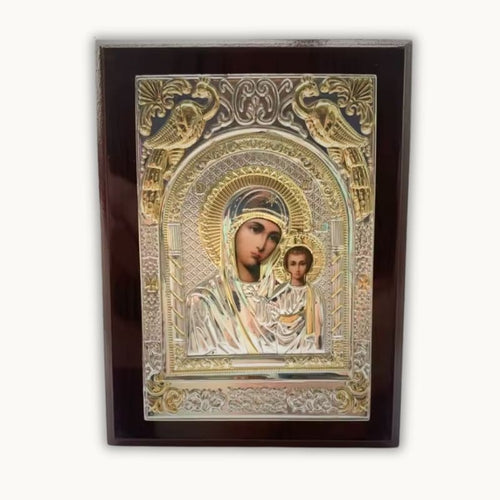
- An Orthodox icon — for the prayer corner at home. The icon of Christ is the first to acquire, followed by the Theotokos and the patron saint.
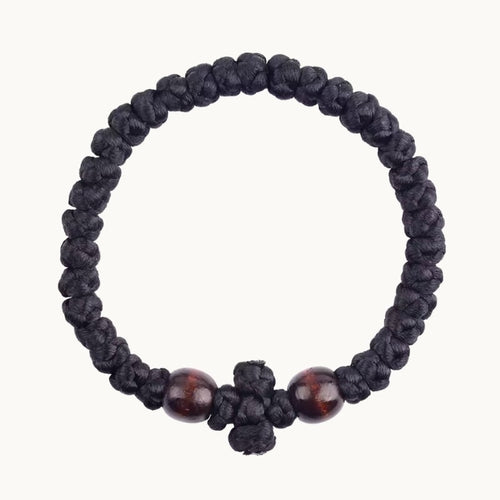
- An Orthodox prayer rope (komboskini) — for the Jesus Prayer: "Lord Jesus Christ, Son of God, have mercy on me, a sinner." The 33-knot prayer rope is the ideal format for beginners.

Common challenges during Orthodox conversion
Lack of understanding from those around you
Converting to Orthodox Christianity can create tensions, especially in a Catholic, Protestant, or secular environment. Be prepared to explain your reasons patiently without getting drawn into controversy. Orthodox converts unanimously recommend not trying to convince those around you — but letting the inner joy and peace speak for themselves over time.
The new liturgical practices
- New prayers — the Jesus Prayer, morning and evening prayer rules, akathists, canons
- Fasting rules — 4 annual fasting periods + Wednesdays and Fridays; our guide to Orthodox fasting explains these rules in full
- Liturgical calendar — movable and fixed feasts, Julian and Gregorian calendars
- Icon veneration — the gestures (prostration, kissing the icon) and their theological meaning
- The language and chants — even in English-speaking parishes, some hymns may remain in Greek or Slavonic; they are learned gradually and become beloved over time
The patience of the process
The catechumenate can feel long. It is meant to — and this is a gift. The Orthodox Church takes care not to rush a decision of this importance. The slowness of the process is a grace: it gives time to integrate the faith gradually, in prayer and practice, and not only in the intellect. As Annunciation Parish in Woburn puts it: "Learning to prioritise the life of Christ and His Church places the catechumen in the divine services to be 'taught by God'."

FAQ — Frequently asked questions about Orthodox conversion
How long does it take to convert to Orthodoxy?
The full process typically takes between 1 and 3 years — from first parish visit to reception by baptism or chrismation. The inquiry phase lasts 1–6 months; the formal catechumenate lasts 6 months to 2 years depending on the parish and the candidate's readiness. The pace is pastoral, adapted to each person.
Do I need to be re-baptised if I am already Catholic?
In most Orthodox parishes in the English-speaking world, a Catholic baptised in the name of the Trinity is received through chrismation alone, without a new baptism. Orthodoxy recognises the validity of Catholic baptism. Some stricter jurisdictions may require baptism by immersion even for Catholics — your priest will inform you of the practice in your parish.
Can I become Orthodox if my spouse is not Orthodox?
Yes — there is no obligation for the spouse to convert. A mixed marriage (with a non-Orthodox partner) is possible in the Orthodox Church under certain conditions, notably episcopal permission and a commitment to baptise children in the Orthodox faith. The family situation is discussed with the priest during the catechumenate.
What is the difference between Orthodoxy and Catholicism?
The principal differences are: rejection of the Filioque (Latin addition to the Creed), refusal of the universal jurisdiction of the pope, absence of the doctrines of the Immaculate Conception and Purgatory, and the theology of the uncreated divine energies (Gregory Palamas) which undergirds Orthodox hesychast spirituality. Liturgically, Orthodoxy has preserved a rite far closer to ancient Byzantine forms, with a strong mystical and eschatological dimension.
Can I convert to Orthodoxy if I am not a Christian?
Yes — a non-Christian (agnostic, atheist, or believer of another religion) can convert to Orthodoxy. In this case they receive baptism by triple immersion without dispensation. The catechumenate is generally longer for a non-Christian, as it includes a full introduction to the Christian faith in addition to specifically Orthodox teaching.
What books should I read to prepare for Orthodox conversion?
The most recommended English-language introductions:
- Bishop Kallistos Ware, The Orthodox Church (Penguin) — the best general introduction in English
- Bishop Kallistos Ware, The Orthodox Way (St Vladimir's Seminary Press) — a more spiritual companion volume
- Alexander Schmemann, For the Life of the World (St Vladimir's Seminary Press) — introduction to Orthodox sacramental theology
- Frederica Mathewes-Green, Facing East — a convert's memoir of her first year in an Orthodox parish; warm and accessible
- The Way of a Pilgrim — the classic 19th-century Russian account of learning the Jesus Prayer; the most beautiful introduction to Orthodox prayer for non-initiates
What objects should I acquire at the start of my Orthodox life?
An Orthodox cross to wear, an icon of Christ for the prayer corner, and a 33-knot prayer rope for the Jesus Prayer — these are the three essential objects that will accompany the beginning of your Orthodox life.
Your conversion to Orthodoxy marks the beginning of a demanding yet deeply enriching spiritual journey. This two-thousand-year-old tradition will accompany you in your quest for holiness and your personal relationship with God. Don't hesitate to contact an Orthodox parish near you to begin this unique path — every conversion is a personal story that God writes with you.