

Reading time: 10 minutes
When English-speaking readers first seriously explore Orthodox Christianity, one book keeps coming up — in forums, podcasts, spiritual direction conversations, and parish reading groups. As one convert wrote on Medium: "When I started seriously exploring Orthodox Christianity, people kept mentioning this book called the Philokalia... I knew that once I absorbed the literature, there was no turning back." This is the Philokalia — and for Orthodox spiritual fathers, it is the most important work of the Eastern mystical tradition after Scripture and the Fathers.
What is the Philokalia?
The Philokalia (φιλοκαλία in Greek) means literally "love of beauty" — not sensible beauty, but divine Beauty, which coincides with Truth and Goodness. As learnofchrist.com describes it: "The single most important anthology of Eastern Orthodox teaching on prayer — for the contemplative tradition centred on the Jesus Prayer, this is the source nearly everything else points back to."
It is a collection of Byzantine spiritual texts written between the 4th and the 15th centuries, dealing with interior prayer, the purification of the passions, watchfulness of the heart (nepsis), and the deification (theosis) of the human person in God.
The Philokalia is not a systematic theology and not a meditation manual. It is a school — a succession of spiritual masters who hand on, from generation to generation, the art of the Christian interior life. Each author stands in a living tradition, received from a spiritual father and passed on to spiritual sons and daughters. To read the Philokalia is to enter this unbroken chain of transmission from the Desert Fathers to the present day.
In his introduction to the original 1782 edition, St Nikodemos himself described the work as "a mystical school of inward prayer", through which "the intellect is purified, illumined and made perfect." The Philokalia is the expression of the hesychast tradition (from the Greek hesychia — stillness, inner quiet, calm). OrthodoxWiki states it plainly: "Like all spiritual readings, the Philokalia should be read under the guidance of a spiritual father as to avoid misinterpretations or malpractice of spiritual remedies."
Who Compiled the Philokalia and When?
The Philokalia in its classical form was compiled and published by two great Greek spiritual figures of the 18th century:
- St Nikodemos of the Holy Mountain (1749–1809) — Athonite monk, prodigious scholar, canonised in 1955 by the Ecumenical Patriarchate. He gathered, edited, and provided introductions and notes for the texts. He was a member of the Kollyvades movement — a reform movement on Mount Athos that called for a return to patristic theology and the frequent reception of Holy Communion.
- St Makarios of Corinth (1731–1805) — Bishop of Corinth, co-editor of the Philokalia, a major figure of the Greek spiritual renewal of the 18th century.
The first edition appeared in Venice in 1782 — in five volumes, in Greek, under the full title Philokalia of the Holy Neptic Fathers (from Greek nepsis: watchfulness, spiritual sobriety). The Grokipedia account notes: it was compiled "amid the Kollyvades controversy, which emphasised traditional liturgical practices and frequent communion, and the collection reintroduced patristic texts on the Jesus Prayer and contemplative asceticism, sparking a widespread spiritual renaissance."
The Philokalia Before the Philokalia: the Precursors
The 1782 Philokalia did not emerge from nothing. It codified a spiritual tradition reaching back to the origins of Christian monasticism:
- 4th–5th century — the Desert Fathers: Evagrios Pontikos (346–399) is the first to systematise nepsis (watchfulness) and the struggle against the logismoi (thoughts). His work penetrates the Philokalia under other names due to his partial condemnation at the Fifth Council.
- 6th century — St John Climacus: Abbot of Sinai, his Ladder of Divine Ascent is a systematic introduction to the spiritual life; closely linked to the philokalic tradition.
- 14th century — St Gregory Palamas: the great defender of hesychasm, whose victories at the Councils of Constantinople (1341, 1347, 1351) made the hesychast tradition the official doctrine of the Orthodox Church. His Triads in Defence of the Holy Hesychasts are the theological foundation of the Philokalia.
The Transmission of the Philokalia: from Venice to the Slavic World
The decisive event in the Philokalia's dissemination is its passage from Greek into the Slavic world, accomplished by one of the greatest reformers of Orthodox monasticism:
St Paisij Veličkovskij (1722–1794) — Ukrainian monk formed on Mount Athos, founder of major monastic communities in Moldavia (Dragomirna, Secu, Neamț). He translated the Philokalia into Church Slavonic and published it in Saint Petersburg in 1793 under the title Dobrotoliubie (literally: "love of goodness"). This translation triggered an extraordinary spiritual renewal in Russian monasticism in the 19th century: the great startzy of Optina Pustyn' (Leonid, Macarius, Ambrose) are its direct heirs.
In the 19th century, St Theophan the Recluse (1815–1894) — a Russian bishop who withdrew into monastic enclosure — translated and expanded the Philokalia into modern Russian in five volumes, adapting it for laypeople and adding texts absent from the Greek edition.
The Content of the Philokalia: Who Are the Authors?
The Greek Philokalia of 1782 contains texts from 36 authors, ranging from the 4th to the 15th century. Among the most important, as The Eastern Church guide notes:
- St Anthony the Great (4th c.) — letters on the spiritual life and self-knowledge; considered the most accessible entry point in Volume 1
- St Mark the Ascetic (5th c.) — treatises on the spiritual law and repentance
- St Hesychios of Sinai (5th–6th c.) — the great master of nepsis: his treatise on sobriety and prayer is one of the densest and most practical texts in the Philokalia
- St Maximus the Confessor (580–662) — the Four Centuries on Love: one of the great works of Orthodox mystical theology; Volume 2 (1981) is largely devoted to him
- St Isaac the Syrian (7th c.) — his homilies on solitude and inner prayer, included in the Russian Philokalia by Theophan, are among the most widely read texts in the English-speaking Orthodox world
- St Symeon the New Theologian (949–1022) — burning mystic of the divine light and personal experience of God
- St Nikephoros the Hesychast (13th c.) — first to describe a physical method for entering the prayer of the heart
- St Gregory of Sinai (1255–1346) — the great transmitter of hesychasm from Sinai to Mount Athos
- St Gregory Palamas (1296–1359) — theologian of the experience of the uncreated light
- St Nicholas Cabasilas (1322–1397) — the remarkable case of a hesychast layman, imperial counsellor in Byzantium, whose Life in Christ shows that the way of deification is open to all the baptised, not only monks
A note worth making: St Seraphim of Sarov, though not himself included as an author in the historic Philokalia, is closely associated with its tradition — his spiritual life embodied everything the Philokalia teaches.
The English Translation of the Philokalia
The standard English edition is the translation by G.E.H. Palmer, Philip Sherrard, and Bishop Kallistos Ware, published by Faber & Faber:
- Volume 1 — 1979 (St Anthony the Great, St Mark the Ascetic, St Hesychios, St Neilos the Ascetic, St Diadochos of Photiki, and others)
- Volume 2 — 1981 (principally St Maximus the Confessor; most of these texts appeared in English for the first time)
- Volume 3 — 1984 (St Theodore of Edessa, St Ilias the Presbyter, St Peter of Damaskos, St Symeon the New Theologian)
- Volume 4 — 1995 (St Gregory of Sinai, St Gregory Palamas, St Nikiphoros the Monk)
- Volume 5 — long awaited; not yet published as of 2025
For beginners, The Eastern Church website recommends starting with a single-volume abridged edition, followed by Volume 1 of the complete text. The complete set runs to approximately £150–200 in the UK and $200–250 in the US (new), though individual volumes are available separately.
Beyond the Palmer-Sherrard-Ware translation, two other English-language works are indispensable entry points:
- The Art of Prayer: An Orthodox Anthology compiled by Igumen Chariton of Valaam (Faber & Faber) — thematic anthology of hesychast texts on prayer, primarily from the Russian tradition; more accessible than the Philokalia itself and an excellent first step
- The Way of a Pilgrim — the anonymous 19th-century Russian classic that brought the Philokalia to a vast lay audience; the story of an ordinary layperson who learns the Jesus Prayer through the Philokalia and discovers its transforming power
The Philokalia and the Jesus Prayer
The Philokalia is inseparable from the Jesus Prayer. In its pages the tradition of the prayer of the heart — "Lord Jesus Christ, Son of God, have mercy on me, a sinner" — was theorised, defended, and transmitted. As the learnofchrist.com review states: "the recurring themes are nepsis, usually translated 'watchfulness' — the sober guarding of the mind and heart — and the practice of unceasing prayer, above all the short invocation of the name of Jesus."
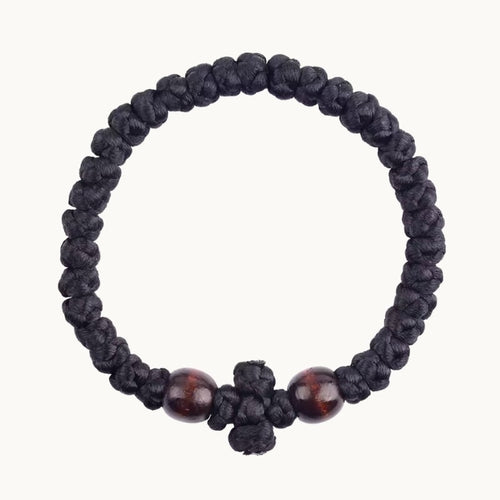
The Orthodox prayer rope — the komboskini or chotki — is the concrete instrument through which laypeople can practise the Jesus Prayer of the Philokalia without being monks.
The Philokalia and Western Christianity
One of the most significant facts about the Philokalia in the English-speaking world is its reach beyond Orthodox communities. Thomas Merton — the Trappist monk whose writings shaped a generation of Western spiritual seekers — engaged deeply with the Philokalia and the hesychast tradition; his engagement is documented in Merton and Hesychasm: The Prayer of the Heart and the Eastern Church (Fons Vitae, 1999). For English-speaking readers from Catholic, Anglican, or Protestant backgrounds, the Philokalia has become a bridge to the Eastern Christian tradition of contemplative prayer.
This reach of the Philokalia into Western Christianity is inseparable from Bishop Kallistos Ware (Metropolitan Kallistos of Diokleia), whose translation work, scholarly writings, and countless talks introduced the hesychast tradition to English-speaking readers across all denominations. His own journey — from Anglican to Orthodox — mirrors that of many English-speaking readers who encounter the Philokalia.
Is the Philokalia Only for Monks?
No — and this is one of the most important points to understand. If the Philokalia was born in the monastic world and its texts address monks first, the Orthodox tradition teaches that the hesychast way is not reserved for monks. Nicholas Cabasilas showed this in the 14th century. Theophan the Recluse showed it in the 19th century by adapting the Philokalia for laypeople. And The Way of a Pilgrim showed it to the entire world: an ordinary layperson can practise the Jesus Prayer of the Philokalia in daily life. What the Philokalia requires is not a monastery — it requires a sincere heart and, where possible, a spiritual father to guide the way.
The monastic tradition that preserved and transmitted the Philokalia continues to live in the English-speaking world — in monasteries like St John the Baptist in Essex (founded by Elder Sophrony, disciple of St Silouan of Athos) and the communities founded by Elder Ephraim of Arizona across North America.
FAQ — Frequently Asked Questions about the Philokalia
What is the Orthodox Philokalia?
The Philokalia is a collection of Byzantine spiritual texts compiled in the 18th century by St Nikodemos of the Holy Mountain and St Makarios of Corinth. It gathers 36 authors from the 4th to the 15th century on interior prayer, nepsis (watchfulness of the heart), and deification. It is the reference work of the Orthodox hesychast tradition and, in the words of Goodreads, has exercised "an influence in the recent history of the Orthodox Church far greater than that of any book apart from the Bible."
What does the word "Philokalia" mean?
Philokalia comes from the Greek philos (love) and kalos (beautiful, good). It means literally "love of beauty" — the divine Beauty that is inseparable from Truth and Goodness. As St Nikodemos described the work itself: it is "a mystical school of inward prayer" through which "the intellect is purified, illumined and made perfect."
Which English translation of the Philokalia should I read?
The standard complete English edition is the Palmer-Sherrard-Ware translation published by Faber & Faber (four volumes, 1979–1995; a fifth awaited). For beginners, a single-volume abridged edition or The Art of Prayer (compiled by Igumen Chariton of Valaam) is a better entry point. The Way of a Pilgrim remains the most accessible introduction to the tradition the Philokalia represents.
Do you have to be a monk to read the Philokalia?
No — the Philokalia addresses every baptised person who seeks to deepen their prayer life. Nicholas Cabasilas in the 14th century and Theophan the Recluse in the 19th century demonstrated that the hesychast way is open to all. The Way of a Pilgrim offered the most popular proof: an ordinary layperson can practise the Jesus Prayer of the Philokalia in daily life. OrthodoxWiki does add: the Philokalia should be read "under the guidance of a spiritual father, to avoid misinterpretations or malpractice of spiritual remedies."
What is the connection between the Philokalia and the Jesus Prayer?
The Philokalia is the book that theorised, defended, and transmitted the practice of the Jesus Prayer in the Orthodox tradition. All its authors speak of this prayer — "Lord Jesus Christ, Son of God, have mercy on me, a sinner" — as the royal path to God's presence. Our complete guide to the Jesus Prayer explores this practice in depth.
What is the connection between the Philokalia and Mount Athos?
Mount Athos is the cradle of the Philokalia: it is where St Nikodemos lived and compiled the texts, and it is in the Athonite monasteries that the hesychast tradition the Philokalia transmits has been lived without interruption since the 14th century. Today the Athos is the place where the Philokalia is lived rather than read. Our guide to Orthodox pilgrimage introduces Mount Athos and how to visit.
Is the Philokalia relevant to non-Orthodox Christians?
Yes — and its reach into Western Christianity is one of the most significant spiritual developments of the 20th century. Thomas Merton, Kallistos Ware (a convert from Anglicanism), and countless spiritual directors from Catholic and Protestant traditions have engaged deeply with the Philokalia. For anyone seeking a contemplative practice rooted in ancient Christian sources — rather than in New Age or Eastern religions — the Philokalia offers the most complete and theologically grounded tradition available.