

Reading time: 12 minutes
In the Orthodox tradition, pilgrimage (proskinima in Greek, palomnichestvo in Russian) is not a tourist trip with religious overtones. It is a metanoia — a turning of the soul toward God — accomplished through physical movement. The pilgrim leaves the comfort of daily life, travels to a place where the grace of God has been made manifest in a particular way, and returns transformed. As the Way of a Pilgrim — the great 19th-century Russian classic of Orthodox pilgrimage literature — demonstrates, the road itself is already prayer: every step a repetition of the name of Jesus.
What is an Orthodox Pilgrimage?
An Orthodox pilgrimage is the visit to a holy place — a church, a monastery, a relic, an evangelical or apostolic site — in a spirit of prayer, veneration, and intercession. It differs from religious tourism in its ascetic and liturgical character: the pilgrim goes to confession and receives communion before departure; participates in the services of the place visited; submits to the prayer rhythm of the monastery or shrine.
The Orthodox tradition teaches that holy places are not mere historical memorials — they are places where the presence of Christ, the Theotokos, or the saints remains active and operative. Venerating relics and wonder-working icons at these sites is an act of faith in the communion of saints — the conviction that those who have died in Christ are alive and interceding for us.
Pilgrimage fits naturally into the Orthodox liturgical year. Our guide to the Orthodox feasts calendar presents the liturgical year within which these pilgrimage sites take on their full meaning.
Mount Athos — the Holy Mountain
Why make a pilgrimage to Mount Athos?
Mount Athos — the "Garden of the Virgin Mary" — is the most important Orthodox pilgrimage site after Jerusalem: a 400 km² peninsula on the Chalkidiki (northern Greece) housing twenty monasteries and approximately 2,000 monks, a UNESCO World Heritage Site since 1988. As GoNOMAD Travel puts it: Athos is "the second most important Christian Orthodox Religious site after Jerusalem." To make a pilgrimage to Athos is to enter a space outside of time where the Orthodox liturgy has been celebrated twenty-four hours a day, without interruption, for over a thousand years.
Notable pilgrims to Athos include King Charles III (who has visited regularly since his days as Prince of Wales), the late Prince Philip, and numerous heads of state. But Athos receives equally — and with the same hospitality — the first-time pilgrim with a backpack as the crowned head of state. The Friends of Mount Athos (athosfriends.org), a UK-based society open to men and women of all faiths, publishes a free annual Pilgrim's Guide and can advise on planning your visit.
Practical information for Mount Athos
- Access — men only (the avaton rule has excluded women for over a millennium). Women are warmly welcomed to visit the Meteora, Ostrog, Valaam, and all other major Orthodox pilgrimage sites.
- The Diamonitirion — the official entry permit, limited to 100 Orthodox and 10 non-Orthodox visitors per day. Apply to the Mount Athos Pilgrims' Bureau in Thessaloniki (open Mon–Fri 9am–4pm, Sat 9am–2pm), several weeks in advance. You will need your passport details and preferred dates.
- Entry points — from Ouranoupolis (the main western entry point, 150 km from Thessaloniki) or from Ierissos (eastern side). Specify your entry point when applying — your diamonitirion will be issued for that point only.
- Duration — the diamonitirion is valid for 4 days (3 nights), renewable once (maximum 8 days)
- Cost — €25 for Orthodox, €35 for non-Orthodox (cash only at collection)
- Note for clergy — ordained clergy of all denominations must additionally obtain an Evlogia (written permission) from His All-Holiness the Ecumenical Patriarch before visiting; write to: Rum Patrikhanesi, Fener-Halic, Istanbul, Turkey
- Byzantine time — Athos keeps Byzantine time: midnight corresponds to sunset. Night offices begin at "midnight" by Athonite reckoning — around 8–9pm in summer
- The traditional welcome — in every monastery, the archontaris (guestmaster monk) receives pilgrims with loukoum, a glass of raki, and a glass of water — an unchanged gesture of monastic hospitality
- What pilgrims do — attend the offices (night Matins, Divine Liturgy, Vespers), venerate relics and wonder-working icons, speak with monks, walk between monasteries, and optionally climb the summit (2,033 m)
- Tamata — small embossed votive offerings left before icons as petitions or thanksgiving; an ancient tradition visitors of all faiths may participate in at Athonite monasteries
Our guide to Orthodox monasticism traces the history of Mount Athos and its twenty monasteries in detail.
Jerusalem and the Holy Land
Why make a pilgrimage to the Holy Land?
Jerusalem is the absolute centre of Christian pilgrimage — the place where Christ lived, preached, suffered, died, and rose again. For the Orthodox Church, the Holy Land is not a museum of faith but a living space of encounter with the Risen Christ. The holy sites are administered by the Greek Orthodox Patriarchate of Jerusalem — one of the oldest Christian institutions in the world, tracing its roots to the Apostle James the brother of the Lord, the first Bishop of Jerusalem.
The principal Orthodox pilgrimage sites in the Holy Land
- The Church of the Holy Sepulchre (Jerusalem) — houses Golgotha (the site of the crucifixion) and the Aedicule (the tomb of Christ). It is the holiest site in Christianity. The Holy Fire — a miraculous luminous phenomenon witnessed for centuries — appears in the Holy Sepulchre on Orthodox Holy Saturday, just before the Paschal Vigil. Pilgrims from across the Orthodox world gather here in their thousands for this event.
- Bethlehem — the Church of the Nativity — the site of Christ's birth, one of the oldest churches in the world in continuous use. The silver star in the grotto marks the traditional birthplace.
- Nazareth — the Greek Orthodox Church of the Annunciation — the Orthodox Church venerates the Well of Mary (Bir Maryam), where tradition places the Annunciation.
- The River Jordan — the site of Christ's Baptism — at Qasr al-Yahud (Israeli side) or Al-Maghtas (Jordanian side, UNESCO World Heritage). Orthodox pilgrims immerse themselves in the Jordan wearing a white robe — a recall of their own baptism. The Theophany feast (6 January) draws thousands of pilgrims to this site.
- Mount Tabor — the traditional site of the Transfiguration of Christ. A magnificent Orthodox basilica crowns the summit.
- The Monastery of Mar Saba — one of the oldest continuously inhabited monasteries in the world (6th century), clinging to the cliffs of the Judean desert. Men only.
Practical information for the Holy Land
- Best time to visit — Orthodox Holy Week and Pascha (to experience the Holy Fire and the Paschal Liturgy in Jerusalem); Orthodox Christmas (6–7 January in Bethlehem); Theophany (at the Jordan River)
- Orthodox accommodation — the Russian Ecclesiastical Mission in Jerusalem operates several pilgrim hospices; the Greek Patriarchate also provides pilgrim accommodation
- From the UK and USA — several tour operators offer Holy Land pilgrimages; for a specifically Orthodox pilgrimage, contact your local Orthodox parish (OCA, ROCOR, Antiochian, Greek Archdiocese) as most organise annual group pilgrimages
The Meteora — Monasteries Between Heaven and Earth
Why make a pilgrimage to the Meteora?
The Meteora (from the Greek meteoron — "suspended in mid-air") are an ensemble of Orthodox monasteries built between the 14th and 16th centuries on the summits of enormous sandstone pillars in Thessaly (central Greece). UNESCO World Heritage since 1988, they are among the most visited and most spectacular sites in Europe. At their height, twenty-four monasteries occupied these rocks; today six remain inhabited and open to visitors. They are the second largest cluster of Orthodox monasteries in Greece, surpassed only by Mount Athos.
It was an Athonite monk — Athanasios — who founded the first monastery on the Meteora rocks in the 14th century, creating a direct historical thread linking the two pilgrimage sites. Graham Speake's authoritative study "Mount Athos: Renewal in Paradise" traces how the Athonite spiritual tradition radiates outward through precisely these satellite foundations.
Practical information for the Meteora
- Access — open to men and women (unlike Athos)
- Dress code — modest dress required: long skirts for women, long trousers for men, shoulders covered. Sarongs may be lent at the entrance.
- Monasteries to visit — Great Meteoro (the largest), Varlaam, Roussanou (convent of nuns), Agios Stefanos, Holy Trinity, Agios Nikolaos Anapavsa
- Getting there — from Thessaloniki: direct train to Kalambaka (3 hrs). From Athens: train or bus (4.5 hrs). From the UK or USA: fly to Thessaloniki or Athens, then train to Kalambaka.
- Best time — avoid July/August (mass tourism). Spring (April/May) or autumn (September/October) for a more contemplative visit.
The Monastery of Ostrog — Montenegro
The Monastery of Ostrog is the most visited pilgrimage site in the Balkans — a Serbian Orthodox monastery built in the 17th century into a sheer cliff face in the mountains of Montenegro. It houses the relics of St Basil of Ostrog (1610–1671), one of the most venerated saints in the entire Slavic Orthodox world. Tens of thousands of pilgrims — Orthodox, Catholic, and even non-Christian — visit each year, drawn by the reputation of extraordinary miracles wrought through the intercession of St Basil. For Orthodox Christians of Serbian heritage in the English-speaking world (significant communities exist in Canada, the USA, and Australia), Ostrog is an important ancestral pilgrimage site.
Valaam — the Athos of the North
The Monastery of Valaam — a lake archipelago on Lake Ladoga (Russia/Finland) — is sometimes called the "Athos of the North." Founded in the 15th century, it was a major centre of Russian Orthodox monasticism and formed generations of saints, including St Herman of Alaska — one of the first Orthodox saints of North America. A monastic community of Valaam also exists in Finland (Heinävesi), welcoming pilgrims unable to travel to Russia.
The Pilgrim's Essential Objects
The Orthodox pilgrim travels with a few essential devotional objects that accompany them to the holy sites and return home sanctified by their contact with relics and icons:
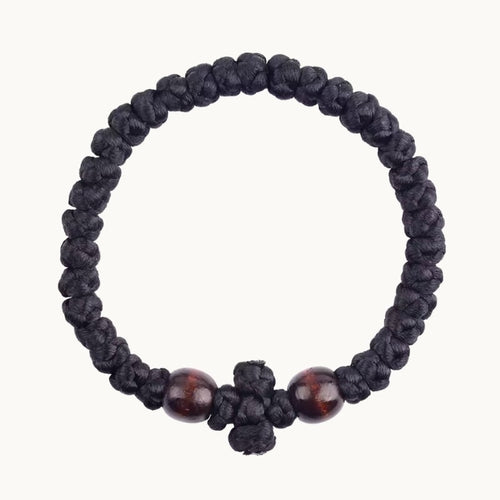
- The komboskini (Orthodox prayer rope) — the instrument of the Jesus Prayer recited continuously on the journey. Many pilgrims bring home komboskini blessed at saints' tombs or by monks in visited monasteries.
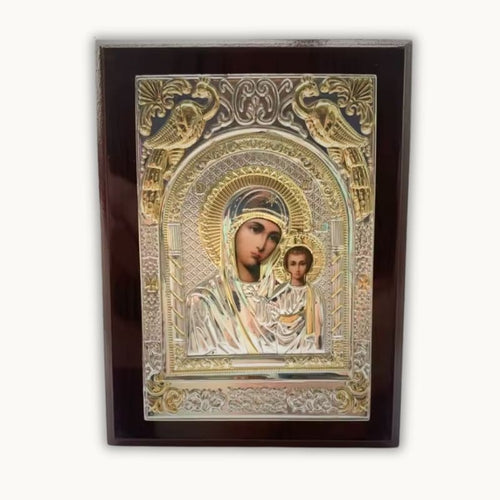
- A small travel icon — carried during the pilgrimage, then placed in the prayer corner at home as a spiritual memento of the site visited
- A small bottle of holy water — from the Jordan, from the Well of Mary in Nazareth, or from the sacred springs of visited monasteries
- A cross — many pilgrims bring home a cross carved from olive wood from Jerusalem or from the wood of Athonite workshops
How to Prepare Spiritually for an Orthodox Pilgrimage
An Orthodox pilgrimage is not a simple excursion — it is a sacrament of the road. Spiritual preparation matters as much as logistics:
- Go to confession and receive communion before departure — the pilgrimage begins in the purified heart
- Fast in the days before leaving — according to tradition and the guidance of your spiritual father or confessor
- Read the lives of the saints of the place you will visit — to arrive not as a tourist but as a pilgrim who knows the person they are going to venerate
- Carry the prayer rope and pray the Jesus Prayer throughout the journey
- Attend the liturgical offices at visited sites — the Divine Liturgy and offices in Orthodox monasteries are of incomparable beauty and spiritual depth
FAQ — Frequently Asked Questions about Orthodox Pilgrimage
Can you visit Mount Athos if you are not Orthodox?
Yes — Mount Athos admits 10 non-Orthodox male visitors per day (in addition to 100 Orthodox). The diamonitirion is available to all adult men regardless of faith. The sacred character of the sites must be respected: appropriate dress, silent attendance at services, reverent behaviour. As the Friends of Mount Athos note, the visit should be made with genuine spiritual or religious interest.
How do you get the Diamonitirion for Mount Athos?
Apply to the Mount Athos Pilgrims' Bureau in Thessaloniki by email or phone, several weeks in advance (several months for summer and Holy Week). You will need your passport number and preferred dates. The fee is €25 for Orthodox, €35 for non-Orthodox, payable in cash at collection. The Friends of Mount Athos (athosfriends.org) publish a free, regularly updated Pilgrim's Guide with full application instructions — the best English-language resource available.
Can women make an Orthodox pilgrimage?
Yes — the restriction applies only to Mount Athos. All other major Orthodox pilgrimage sites are open to women: Jerusalem, the Meteora (including the convent of Roussanou), Ostrog, Valaam, and the monasteries of Greece, Romania, Serbia, and Russia. The Holy Land pilgrimage is particularly rich for women, with numerous sites connected to the Theotokos and the holy Myrrhbearers (the women who discovered the empty tomb).
What is the best time to visit Jerusalem for an Orthodox pilgrimage?
The most spiritually intense period is Orthodox Holy Week and Pascha — when tens of thousands of pilgrims from across the Orthodox world gather at the Holy Sepulchre for the Paschal Liturgy and the Holy Fire. This period requires very early planning (hotels fully booked a year in advance). Orthodox Theophany (6 January) at the Jordan River is another particularly significant date. Note that Orthodox Easter often differs from Western Easter — always check the Orthodox calendar.
Is there an English-language guide to Mount Athos pilgrimage?
Yes — the Friends of Mount Athos (athosfriends.org) publish an annual Pilgrim's Guide, available as a free PDF download, covering the application process, the monasteries, practical arrangements, and spiritual preparation in full detail. Graham Speake's "Mount Athos: Renewal in Paradise" (Yale University Press) is the standard English-language scholarly reference. The website mount-athos.org offers interactive maps, transport planning, and monastery information.
Can you make an Orthodox pilgrimage without speaking Greek or Russian?
Yes. In most major monasteries on Mount Athos and the Meteora, some monks speak English. In Jerusalem, Orthodox Greek services are celebrated in Greek, but prayer books are often available in multiple languages. Your local Orthodox parish (OCA, ROCOR, Antiochian, Greek Archdiocese, Serbian, Romanian) will often organise annual group pilgrimages with English-speaking guides and full logistical support — the simplest and most spiritually prepared way to make your first Orthodox pilgrimage.