

Reading time: 10 minutes
"Lord Jesus Christ, Son of God, have mercy on me, a sinner." Eight words. A sentence that millions of Orthodox Christians have been repeating for sixteen centuries — in the cells of Egyptian desert monks, in the monasteries of Mount Athos, on construction sites, in prisons, in the trenches, in kitchens. The Jesus Prayer is one of the least known and most profound treasures of the Eastern Christian tradition. This guide traces its origins, theological meaning, and concrete practice.
What is the Jesus Prayer?
The Jesus Prayer — also called the Prayer of the Heart or the prayer of unceasing prayer — is a short, repetitive invocation whose canonical form is: "Lord Jesus Christ, Son of God, have mercy on me, a sinner." It is called the Prayer of the Heart because its ultimate aim is not simply to say words with the mouth or repeat them mentally, but to bring the prayer down into the heart — to make it the permanent, spontaneous movement of the soul oriented toward God.
The Jesus Prayer is not a magic formula or a meditation technique: it is an act of faith addressed to a person. Every element of the sentence is a profession of faith: "Lord" (Kyrie) acknowledges his divinity; "Jesus Christ" names the incarnate one; "Son of God" confesses the Trinity; "have mercy" petitions in the evangelical word eleison; "on me, a sinner" is the humble acknowledgment of our actual condition. It is in this sense the Creed and the act of contrition united in eight words.
Note that the phrase "a sinner" was not part of the original formula — it was added later. The oldest form was simply: "Lord Jesus Christ, Son of God, have mercy on me." As St. Gregory of Sinai observed, you may also say "have mercy on us" rather than "on me." The one essential and unvarying element is the Name of Jesus. As he also warned: "Trees which are repeatedly transplanted do not grow roots" — choose a form and stay with it.
The Biblical Roots of the Jesus Prayer
The Jesus Prayer was not invented — it was distilled from the Gospel itself. Its scriptural roots are multiple and precise:
- Blind Bartimaeus (Mk 10:47) — sitting by the roadside, he cries out to Jesus: "Son of David, have mercy on me!" Jesus stops, calls him, and he receives his sight. This is the Gospel prototype of the Jesus Prayer: a persistent invocation, cried out despite all obstacles, that obtains mercy.
- The Publican in the Temple (Lk 18:13) — he does not dare to raise his eyes to heaven and says simply: "God, be merciful to me, a sinner." Jesus says that it is he — not the Pharisee — who goes home justified. The humility of the formula is directly evangelical.
- The ten lepers (Lk 17:13) — they cry out together: "Jesus, Master, have mercy on us!" and are healed.
- Peter sinking on the water (Mt 14:30) — as he begins to sink, he cries: "Lord, save me!" — the shortest form of the prayer, and the one Jesus answers immediately.
- The prayer in Gethsemane (Mt 26:36-46) — Christ in his agony repeats the same prayer three times, embodying himself the repeated prayer as a path toward the Father.
Hesychasm: the Tradition that Carries the Jesus Prayer
The Jesus Prayer cannot be understood outside of hesychasm (from the Greek hesychia — stillness, quiet, inner calm). Hesychasm is the great mystical tradition of the Orthodox Church, rooted in the practice of the Desert Fathers (4th century) and systematized on Mount Athos from the 14th century onward. It denotes both a way of life (solitary withdrawal into silence) and a method of unceasing inner prayer aimed at becoming aware of the presence of Christ in the depths of one's being.
As St. Michael Antiochian Church puts it: "You're not trying to empty your mind like some generic meditation practice. You're filling it with Christ's presence. You're guarding your heart against the junk that usually clutters it — the resentments, the anxieties, the mental chatter. Orthodox tradition calls this watchfulness, or nepsis."
The key historical stages of hesychast transmission:
- 4th–5th century — the Desert Fathers — Evagrius Ponticus and Pseudo-Macarius lay the foundations of interior prayer; the formula is not yet fixed but the practice exists.
- 6th–7th century — John Climacus — abbot of the Sinai monastery, he systematizes the teaching on the prayer of the heart in the Ladder of Divine Ascent (Klimax), a foundational intermediate link between the Desert Fathers and Athos.
- 13th century — St. Nicephorus the Hesychast — a hermit on Mount Athos, one of the first to describe a physical method for entering this prayer. The OCA quotes him directly: "When your mind becomes established in the heart, it must not remain idle, but it should constantly repeat the prayer: 'Lord Jesus Christ, Son of God, have mercy on me!' and never cease. For this practice, keeping the mind from dreaming, renders it invincible against all suggestions of the devil and every day leads it more and more to love and longing for God."
- 14th century — St. Gregory Palamas — Archbishop of Thessaloniki and the great theologian of hesychasm, he defends against the rationalists the reality of deification and the genuine possibility of seeing the divine uncreated light — the same light the apostles saw on Mount Tabor at the Transfiguration. His victories at the Councils of Constantinople (1341, 1347, 1351) make hesychasm the official doctrine of the Orthodox Church.
- 18th century — the Philokalia — Nikodemos of the Holy Mountain publishes in Venice (1782) the Philokalia, a collection of hesychast texts. Paisius Velichkovsky translates it into Church Slavonic and disseminates it across the Orthodox Slavic world, triggering an extraordinary spiritual renewal in Russia and Romania.
- 19th century — The Way of a Pilgrim — the anonymous account of a Russian wanderer who sets out in search of "unceasing prayer" and discovers its secret in the Philokalia and the Jesus Prayer; translated worldwide, it brought this tradition to a broad lay audience.
The Philokalia: the Great Book of the Prayer of the Heart
The Philokalia (φιλοκαλία — love of beauty) is the foundational work of the hesychast tradition. Compiled by Nikodemos of the Holy Mountain and Makarios of Corinth in the 18th century, it gathers Byzantine spiritual texts from the 4th to the 15th century on interior prayer. The Philokalia is not a technique manual — it is an initiation into life in God, a progressive path of purification of the heart, illumination of the mind, and deification of the soul. The Philokalia calls this vigilant interior work phylaxis tes kardias — "guarding the heart" — the active, watchful silence that is the opposite of mindless repetition. It is available in a complete English translation (Palmer, Sherrard, and Ware).
How to Practice the Jesus Prayer
The practice of the Jesus Prayer is simple in form and profound in its demands. The Fathers insist on one fundamental point: this is not a technique — it is a gift of God. Our efforts create the conditions; grace does the rest. Theophan the Recluse warned that breathing techniques, pursued without grace, led people to succeed only "in ruining their lungs." Body posture and breath control, often mentioned in the Athonite tradition, are secondary aids — never an end in themselves.
The formula
The full form is: "Lord Jesus Christ, Son of God, have mercy on me, a sinner." Shorter forms are legitimate: "Lord Jesus Christ, have mercy on me", or simply "Lord Jesus". The one indispensable element is the Name of Jesus. Do not change the formula too often — stability fosters internalization, as St. Gregory of Sinai reminded us.
The prayer rope as a support
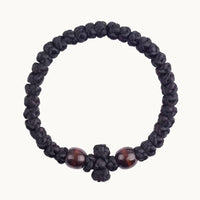
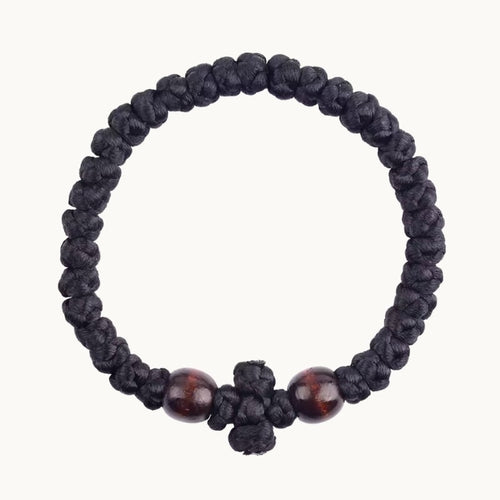
The komboskini — the knotted Orthodox prayer rope, called tchotki or chotki in Russian — is the traditional instrument of the Jesus Prayer. Each knot corresponds to one repetition; after each invocation you move one knot forward. This allows you to pray without counting mentally, freeing attention for the prayer itself. Our 33-knot prayer rope — recalling the 33 earthly years of Christ — is the most common format for daily practice, while the chotki bracelet can be worn on the wrist as a constant reminder. For the full history and symbolism of this object, see our guide to the Orthodox prayer rope.
Posture and place
Tradition recommends praying seated or standing in a quiet place, before the icons of the prayer corner. The Jesus Prayer can also be practiced while walking, driving, or working — it has the unique advantage of requiring neither book nor particular place. The long-term goal is to make the Jesus Prayer as natural and continuous as breathing or heartbeat — the "unceasing prayer" Paul calls for in 1 Thessalonians 5:17. The Way of a Pilgrim gives practical instructions: sit quietly with head bowed, eyes closed, repeat the prayer without hurrying, and when the mind wanders, gently return.
The role of the spiritual father
The hesychast tradition strongly insists on the necessity of a spiritual father (starets) to guide the practice of the Jesus Prayer, especially in its advanced stages. The OCA states plainly: "To practice the hesychast method of prayer requires always and without exception the guidance of a spiritual guide. To use this method without guidance or humble wisdom is to court spiritual disaster, for the temptations that come with it are many." Spiritual deception — called prelest in Russian — is a real danger for those who pursue the prayer without accountability. For beginners, the prayer can be practiced alone with great fruit; pastoral guidance remains the recommended path for deeper stages.
The Jesus Prayer and the Uncreated Light
Orthodox theology teaches that the prolonged and pure practice of the Jesus Prayer can lead to the experience of the divine uncreated light — the same light seen by the apostles at the Transfiguration on Mount Tabor. St. Gregory Palamas teaches that this light is neither a creature nor an allegory: it is God himself, communicating himself to the purified soul in his divine energies. This doctrine — upheld by Orthodox councils — distinguishes Orthodox mysticism fundamentally from any form of pantheism or illuminism. The essence-energies distinction resolved by Palamas is what allows Orthodox theology to say both that God is entirely unknowable in his essence and genuinely encountered in prayer.
To understand the connection between this light and the feast of the Transfiguration, our guide to the Orthodox great feasts traces the Transfiguration's place in the liturgical year and its theological link to the prayer of the heart.
The Jesus Prayer in Orthodox Daily Life
The Jesus Prayer is not reserved for monks. It is meant for every baptized person — child or adult, layperson or clergy. In the Orthodox tradition it is recommended:
- On waking and before sleep, as a frame for the day
- During travel — walking, commuting, driving
- In moments of waiting and repetitive tasks
- In moments of trial, anxiety, or temptation — as an inner anchor
- During the Divine Liturgy — as an interior accompaniment to the chants and prayers
- As preparation for Holy Communion — the Fathers recommend it especially in the days preceding the reception of the Holy Gifts
The Jesus Prayer also naturally accompanies the fasting seasons, supporting the ascetic effort with interior prayer.
The Jesus Prayer and the Icon
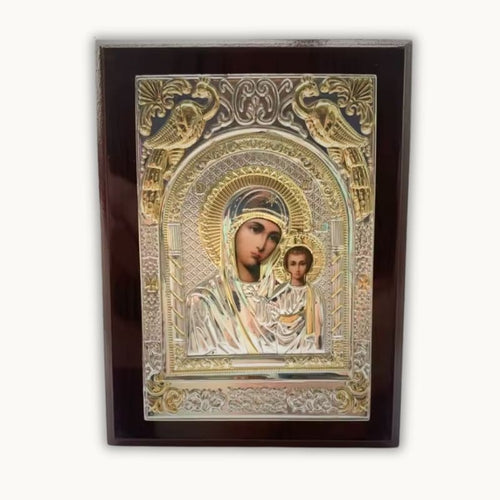
There is a deep connection between the Jesus Prayer and the veneration of icons. Both aim at the same goal: encounter with the living person of Christ. The icon is a visual presence; the Jesus Prayer is an interior and audible presence. Praying before an icon of Christ while repeating the Jesus Prayer — gaze resting on the iconographic face, lips and heart pronouncing his name — is one of the most deeply rooted forms of prayer in the Orthodox tradition. For the theology of the icon, see our complete guide to the Orthodox icon.
FAQ — Frequently Asked Questions about the Jesus Prayer
What is the Orthodox Jesus Prayer?
The Jesus Prayer is the formula "Lord Jesus Christ, Son of God, have mercy on me, a sinner", repeated continuously as a path toward the interior presence of Christ. Also called the Prayer of the Heart, it is the central instrument of the Orthodox hesychast tradition, practiced from the Desert Fathers (4th century) to the Athonite monks of today.
How do you practice the Jesus Prayer?
Repeat the formula slowly and attentively — aloud, whispered, or interiorly — counting repetitions on an Orthodox prayer rope (komboskini). The goal is not speed but presence to the Name being pronounced. The Fathers recommend beginning with several dozen daily repetitions and increasing gradually. A spiritual father is recommended for advanced stages.
What is hesychasm?
Hesychasm (from the Greek hesychia — stillness, quiet) is the Orthodox mystical tradition of unceasing interior prayer. It aims to establish the soul in the stillness of thoughts and to become aware of Christ's presence within it. Rooted in the Desert Fathers, systematized on Mount Athos, theologically defended by Gregory Palamas in the 14th century, it is the official spiritual doctrine of the Orthodox Church.
What is the Philokalia?
The Philokalia is a major anthology of Orthodox spiritual texts on interior prayer, compiled in the 18th century by Nikodemos of the Holy Mountain. It gathers texts from the 4th to the 15th century on the prayer of the heart, the purification of the passions, and deification. It is the reference work of the hesychast tradition, available in a complete English translation by Palmer, Sherrard, and Ware.
Is the Jesus Prayer only for monks?
No — the Orthodox tradition offers it to every baptized person. Monks make it the center of their life, but laypeople are equally invited to practice it in their daily lives. The Way of a Pilgrim — a classic 19th-century work — tells precisely the story of an ordinary layperson who integrates it into their wandering life.
What prayer rope should I use for the Jesus Prayer?
The traditional Orthodox prayer rope (komboskini or tchotki) is the instrument of choice. The 33-knot prayer rope is ideal for daily practice; the 100-knot model is used for longer sessions. The chotki bracelet can be worn on the wrist as a constant reminder and used discreetly in any situation.
What is the difference between the Jesus Prayer and Buddhist meditation or yoga?
The surface similarity — repetition, breath, posture — is misleading. The Jesus Prayer is an act of faith addressed to a divine person, not a relaxation technique or self-suggestion. It presupposes the grace of God, received through the sacraments of baptism and the Eucharist. Theophan the Recluse warned that breathing techniques pursued without grace led only to physical harm. The Athonite Fathers are unanimous: what matters primarily is divine grace and humility of heart — not technique. As St. Michael Antiochian Church puts it: you are not trying to empty your mind; you are filling it with Christ's presence.