

Reading time: 12 minutes
Of all the relics in the Christian tradition, none is as singular as the Belt of the Theotokos. The relics of martyrs and saints are the bones of those who lived for Christ — witnesses of the faith. The Holy Cincture of Mary is different: it is the only material object linked to the earthly presence of the Mother of God herself — which is why it is also called the Holy Girdle of the Virgin Mary. It touched her body. It bears the trace of her life. That is why the Orthodox tradition regards it not as the relic of one saint among others, but as the relic of the Theotokos — a direct physical connection with the one who carried the Son of God in her womb. For English-speaking converts and the diaspora, the Holy Belt is often an astonishing discovery: that Orthodoxy preserves not just icons and doctrines about Mary, but a physical object woven by her hands, still visible and tangible, two thousand years later.
What is the Holy Belt of the Theotokos?
The Holy Belt of the Theotokos (Greek: Αγία Ζώνη, Agia Zoni — "Holy Belt" or "Holy Cincture") is, according to Orthodox tradition, the only material object connected to the earthly life of the Virgin Mary to have been preserved to our day. According to the sacred tradition and history of our Church, the Most Holy Theotokos rose three days after her Dormition and ascended bodily to heaven. During her ascension, she gave the Apostle Thomas her Holy Belt.
The Belt is kept at the Monastery of Vatopedi on Mount Athos — the second monastery in the Athonite hierarchy and one of the richest in relics and miraculous icons of all Orthodox Christianity. The Holy Belt constitutes evidence for our Church of the resurrection and ascension of the Theotokos bodily to heaven and, in a word, of her transmigration. It is not merely an object of veneration — it is a living theological argument in favour of the Orthodox doctrine of the Dormition.
The origin of the Holy Girdle of the Virgin Mary — from Jerusalem to Constantinople
The Theotokos weaves the Belt
The Holy Belt was made according to tradition by the Virgin Mary herself with camel hair. This detail — camel hair — is significant in the biblical tradition: it is the same material as the garment of John the Baptist, the Forerunner of Christ. The Theotokos entrusted the Belt to the Apostle Thomas at her Assumption, as the troparion of the feast testifies: «In ascending to glory, O Immaculate One, give your all-venerable Belt to the Apostle Thomas.»
The keeping in Jerusalem
The Holy Belt was entrusted to two poor pious women in Jerusalem, who took care of the Theotokos. The work of preservation from generation to generation was continued by a pious virgin from this family. For several hundred years, up to the fourth century, the relic did not leave Jerusalem.
The transfer to Constantinople
Arcadius, son of Theodosius the Great, brought to Constantinople the girdle of the most Blessed Virgin Mother of God, from Jerusalem, where it had till then been preserved by a certain virgin, and deposited it for public veneration in an elegant shrine which was called the "Holy Urn." The deposit took place on 31 August — the date that would become the liturgical feast of the Deposition of the Belt. Empress Pulcheria, daughter of Arcadius, built a church to safeguard the Belt, which she adorned with golden thread. In 458 AD the Belt was moved to the Blachernae Church. Over time it was fragmented, and parts were distributed to various churches of Constantinople. After the sack of Constantinople by the Crusaders in 1204, some pieces were taken by the barbaric and uncivilised conquerors and transported to the West.
The miracles of the Holy Belt
The healing of Empress Zoe
The most celebrated miracle of the Holy Belt is that of Empress Zoe, wife of Emperor Leo VI the Wise (886–912). The empress had a vision that she would be healed of her infirmity if the Belt of the Mother of God were placed upon her. The emperor then asked the Patriarch to open the coffer. The Patriarch removed the seal and opened the coffer in which the relic was kept, and the Belt of the Mother of God appeared completely whole and undamaged by time. The Patriarch placed the Belt on the sick empress, and immediately she was freed from her infirmity.
In gratitude for her miraculous healing, Empress Zoe, the wife of Emperor Leo VI the Wise, embroidered the Holy Belt with golden threads. Today, the belt is partitioned into three sections. The golden threads of Empress Zoe from the 9th century are still visible on the relic today.
Fertility and motherhood miracles of the Agia Zoni
The Belt of the Theotokos is particularly famous for its miracles related to fertility and motherhood. Thanks to these small pieces of cloth, a great number of miracles has been performed. Among other things, there are numerous cases of couples who were unable to have a child and who, thanks to the Virgin Mary, managed to become parents. Testimonies of fertility healings have been collected at Vatopedi Monastery for centuries and continue to arrive from the faithful throughout the world.
Miracles against illness
These days, the monks of Vatopaidi Monastery hand out small ribbons consecrated on the Cincture of the Theotokos to the believers. These ribbons are known for helping those who suffer from cancer or face infertility. They also help people in suffering trusting in the help of the Mother of God. The Patriarch of Constantinople Germanos I (715–730) lyricaly states that the Holy Belt eternally preserves the divine fragrance of the healings it performs, delighting those who approach.
The Belt at Vatopedi — how it came to Mount Athos
After the fall of Constantinople to the Turks in 1453, the fate of the different parts of the Belt became uncertain. Thus, the only surviving part is the one kept at the Holy Monastery of Vatopedi, having arrived there through extraordinary circumstances.
According to tradition, it was given by John VI Kantakouzenos in 1354, after he resigned from his office to become a monk. John VI Kantakouzenos — one of the most cultured and devout Byzantine emperors of the 14th century — abdicated in 1354 to take monastic vows under the name Joasaph. His act of gifting the Belt to Vatopedi Monastery is one of the most remarkable acts of devotion of the entire late Byzantine period.
Another part of the belt was gifted by Serbian ruler Lazar Hrebeljanović, and it is stored in the main church's altar. Lazar of Serbia — who died as a martyr at the Battle of Kosovo in 1389 and is venerated as a saint by the Serbian Orthodox Church — is thus connected to the most precious relic of the Holy Mountain.
Description of the relic today
Today, the belt is partitioned into three sections. It is kept in a silver reliquary depicting the monastery alongside its donor, Emperor John VI Kantakouzenos. The golden threads embroidered by Empress Zoe in the 9th century are still visible on the relic — making it one of the rare objects in the world that can be precisely dated to more than eleven centuries of antiquity and that preserves the visible traces of the hands that have touched it.
The Holy Belt "inexhaustibly" preserves the grace of the Most Holy Theotokos, because it was connected with her person and life and because the saints are spirit-bearing not only during their lives, but also after their repose. The same phenomenon is mentioned in the shrouds and semi-cinthia of the Apostles, which performed miracles, because they had the Grace of the saints who wore them. This theological formulation — from the official website of Vatopedi Monastery — is the key to understanding Orthodox relic veneration in general and the Belt in particular.
The feast of 31 August — Deposition of the Belt
The liturgical feast of the Deposition of the Venerable Belt of the Most Holy Theotokos is celebrated on 31 August in the Orthodox calendar. During the 12th century, at the reign of Emperor Manuel I Komnenos, the Holy Belt of Theotokos was established to be honored on August 31.
The 31st of August is also the last day of August — a month entirely consecrated to the Theotokos in the Greek Orthodox tradition, which begins with the feast of the Dormition on 15 August and closes with the Deposition of the Belt on 31 August. This is one of the most important Theotokos feasts of the summer in the Greek, Romanian, and Serbian traditions.
The processions of the Belt in the world
The Belt of the Theotokos very rarely leaves the Monastery of Vatopedi. The cincture is divided into three parts and very rarely leaves the monastery. The most spectacular procession of recent history was that of autumn 2011, when the relic was brought to Russia for the first time.
In St. Petersburg it attracted a two kilometre-long line of people to the Resurrection Nunnery on Moskovsky Prospect, virtually blocking automotive traffic on adjacent streets, totalling 200,000, with Vladimir Putin being among the first ones. The reception of the relic in Moscow, Kiev, Minsk and other cities attracted millions of pilgrims within a few weeks — one of the most massive religious events in contemporary Orthodox history.
Similar processions have taken place in Greece, Romania, Serbia, and Cyprus. In the English-speaking world, Vatopedi Monastery's official website (vatopedi.gr) maintains a calendar of any future processions outside Greece, and blessed ribbons can also be obtained by post from the monastery for those unable to travel.
How to obtain the blessed ribbon of the Holy Cincture — and how to wear it
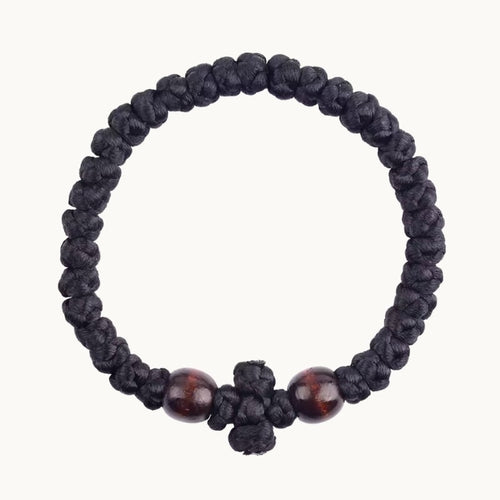
In the Holy Monastery of Vatopaidi there is a tradition of preparing a small piece of cloth with a blessing from the Holy Belt of the Virgin Mary. Those are given to pilgrims who wish to take her grace with them. These ribbons — sometimes called «little belts of the Theotokos» — are blessed on the reliquary of the Belt and distributed free of charge to pilgrims who come to the monastery.
It is advisable to wear the ribbon constantly, taking it off only when necessary, taking into account the fact that it is not recommended to wash it. Some tie it on their head or wrist. The most common tradition is to wear it around the waist — in direct reference to the Belt itself. For women seeking to conceive a child, the ribbon is worn around the waist day and night.
Blessed ribbons are also distributed during processions of the Belt in various countries. For the faithful who cannot travel to Mount Athos — access being restricted to men — Vatopedi Monastery also provides blessed ribbons by mail upon request at vatopedi.gr. Some Orthodox monasteries in the English-speaking world also occasionally distribute ribbons blessed on copies of the relic during patronal feasts.
How to venerate the Holy Belt
Veneration of the Holy Belt follows the general rules of relic veneration in the Orthodox tradition — with a sign of the Cross, three bows, a kiss of the relic or its reliquary, and a brief personal prayer. Before approaching the relic, it is customary to go to confession and, if possible, to receive Communion at the morning Divine Liturgy.
For those who cannot travel to Vatopedi, an icon of the Holy Belt can be placed in the family prayer corner. A specific prayer to the Holy Belt is available in Orthodox prayer books and on the official website of Vatopedi Monastery (vatopedi.gr). The OCA and Antiochian Archdiocese websites also publish the troparion and kontakion of the feast of 31 August in English.
FAQ — Frequently asked questions about the Holy Belt of the Theotokos
What is the Holy Belt of the Theotokos (Agia Zoni)?
The Holy Belt (Αγία Ζώνη — Agia Zoni) is the only relic preserved from the earthly life of the Virgin Mary. Woven by the Theotokos herself from camel hair, it was entrusted to the Apostle Thomas at the Assumption, then kept in Jerusalem before being transferred to Constantinople by Emperor Arcadius (395–408). Since the 14th century it has been kept at the Monastery of Vatopedi on Mount Athos.
Where is the Holy Belt?
The main part of the Holy Belt is kept at the Monastery of Vatopedi on Mount Athos (Greece), in a silver reliquary. Other parts are kept in monasteries in Serbia and Georgia. Access to Mount Athos is restricted to men holding a diamonitirion (Athonite pilgrimage permit).
When is the feast of the Holy Belt?
The feast of the Deposition of the Venerable Belt of the Theotokos is celebrated on 31 August in the Orthodox calendar. It is the last day of August — a month entirely consecrated to the Theotokos in the Orthodox tradition, beginning with the Dormition on 15 August.
What miracles does the Holy Cincture of the Virgin Mary perform?
The Holy Belt is invoked particularly for fertility and motherhood — hundreds of testimonies from couples who conceived a child after venerating the relic or wearing a blessed ribbon are kept at Vatopedi. It is also invoked for serious illnesses (cancer, chronic conditions), mental afflictions, and all urgent needs of life.
How do I obtain a blessed ribbon of the Holy Cincture from Vatopedi?
Blessed ribbons are distributed free of charge to pilgrims who visit the Monastery of Vatopedi on Mount Athos. They are also distributed during processions of the Belt in various countries. Vatopedi Monastery (vatopedi.gr) also provides blessed ribbons by mail. The ribbon is worn around the waist, or around the head or wrist, continuously. It is recommended not to wash it.
What makes the Holy Belt unique among relics?
The Belt of the Theotokos is unique in the Christian tradition: it is the only relic directly connected to the body of the Virgin Mary herself. Other relics are bones or objects of saints. The Belt touched the body of the one who carried the Son of God — giving it an incomparable theological dimension in the Orthodox tradition. It is also theologically significant as a witness to the Dormition: the Belt was in Mary's possession at the moment of her bodily Assumption, and was given to Thomas as evidence of what he had witnessed.
Is the Holy Belt (Agia Zoni) the same as the Holy Cincture or Holy Girdle?
Yes — «Holy Belt», «Holy Cincture», and «Holy Girdle» all refer to the same relic. The Greek term Agia Zoni (Αγία Ζώνη) translates variously as Belt, Girdle, or Cincture depending on the translator. All three terms are used interchangeably in English-language Orthodox sources. «Girdle» is more common in older texts; «Belt» and «Cincture» are more common in contemporary usage.