

There is something paradoxical about the Dormition Fast. It is the shortest of the four great Orthodox fasts — only fourteen days. And yet it is one of the two strictest of the year, equal to Great Lent in its ascetic demands. It is a summer fast, in the middle of August, when the natural world is at the height of its warmth and abundance. And it prepares a feast that the Orthodox tradition calls the "Pascha of Summer" — the Dormition of the Mother of God, the greatest of all Marian feasts. Fourteen days of intense sobriety to reach the greatest Marian joy: this is the logic of the Dormition Fast.
For Orthodox Christians in the English-speaking world — Americans, Canadians, Britons, Australians, whether lifelong faithful or recent converts — the Dormition Fast is often the least familiar of the four great fasts. It falls in summer, when attention is elsewhere. It lacks the cultural scaffolding of Great Lent. And it prepares a feast — the Dormition of the Theotokos — that Western Christianity barely knows. This guide presents it in full: its fixed dates, its historical origins, its theological meaning, its defining liturgical service (the Paraklesis), its detailed fasting rules, and the particular experience of keeping it in the English-speaking world.
Table of contents
- Dates and structure of the Dormition Fast
- Historical origins: a fast with ancient roots
- Theological meaning: preparing the "Pascha of Summer"
- The Paraklesis: the defining service of the Dormition Fast
- August 6: the Transfiguration at the heart of the fast
- August 15: the Dormition of the Mother of God
- The fasting rules in detail
- The Dormition Fast in the English-speaking world
- FAQ — Frequently asked questions about the Dormition Fast
Dates and structure of the Dormition Fast
The Dormition Fast is one of the two fixed great fasts of the Orthodox year — its dates never change. It always begins on August 1 and ends on the evening of August 14, the eve of the feast of the Dormition.
| Calendar | Fast begins | Fast ends | Feast of the Dormition | Duration |
|---|---|---|---|---|
| Revised Julian calendar (Greek, Romanian, Antiochian…) |
August 1 | Evening of August 14 | August 15 | 14 days |
| Julian calendar (Russian, Serbian, Georgian…) |
August 13 (Gregorian) | Evening of August 27 (Gregorian) | August 28 (Gregorian) | 14 days |
The Dormition Fast is also framed by two great feasts of the Lord that fall within or at its boundaries:
- August 1: the feast of the Procession of the Precious Cross — celebrated particularly in Slavic traditions, marking the entry into the fast with a blessing of waters with the Cross
- August 6: the feast of the Transfiguration of the Lord — the only day of fish dispensation during the entire fast
- August 15: the feast of the Dormition of the Mother of God — the feast that crowns and justifies the entire fast
Historical origins: a fast with ancient roots
The Dormition Fast has one of the most complex and instructive histories of any Orthodox fast. Unlike Great Lent, whose roots reach back to the early centuries of Christianity with remarkable consistency, the Dormition Fast knew very different forms across churches and eras before settling into its current shape.
Variable origins across churches
The earliest mentions of an August fast connected to the Dormition date to the 9th century. But at that time, neither the time of year nor the duration was the same from church to church: one day at Antioch, four days at Constantinople, eight days at Jerusalem. Some fasted in August, others in September, some churches did not fast at all, considering that the Dormition was an occasion for great festivity. This fragmented picture reveals how much this fast grew out of a gradual local devotion rather than a universal decree.
The Council of Constantinople of 1166
It was the Council of Constantinople of 1166, under Patriarch Luke Chrysoberges, that definitively established the two-week duration for the Dormition Fast and unified it across the entire Byzantine Church. From that point on, the fast from August 1 to 14 became the norm for all churches of the Byzantine rite — a relatively late decision in Orthodox liturgical history, which explains the diversity of practices in the preceding centuries.
A double fast?
Some understand this fast as double in purpose: oriented toward the Transfiguration and toward the Dormition. We thus prepare two feasts — the one that gives us the Light, and the other that manifests divine mercy toward us. This dual reading is theologically rich: the fourteen-day fast is traversed at its midpoint by the Transfiguration (August 6), the great feast of light, and culminates in the Dormition (August 15), the great feast of mercy and passage. The fast is thus framed by two different revelations of God: his transfiguring glory and his maternal tenderness.
Theological meaning: preparing the "Pascha of Summer"
The Dormition Fast prepares what the Orthodox tradition calls the "Pascha of Summer." Why this name? And what does the Dormition, which this fast prepares, mean theologically?
The Dormition as Marian Pascha
The Dormition of the Mother of God is not a mourning — it is a passage. The Orthodox tradition teaches that Mary died a real death, as every human being does, but that her body knew no corruption: on the third day after her death, the Apostles gathered miraculously from all parts of the world found her tomb empty, filled with flowers. Her soul was received by Christ Himself at the moment of her death — the classic icon of the Dormition shows Christ holding the soul of Mary in His arms in the form of a swaddled newborn, surrounded by all the Apostles.
This mystery is called "Pascha of Summer" because it reproduces the structure of Pascha: real death, empty tomb, resurrection — but lived by the Mother of the Risen One. The Dormition says that the Resurrection of Christ is not an isolated event: it opens a path that His own can walk. Mary is the first after her Son to enter the glory of the risen Kingdom — and the greatest Marian feast of the year is the one that celebrates not her birth or her role in the Incarnation, but her death and her passage.
Why is this fast as strict as Great Lent?
The proportion between the severity of the fast and the greatness of the feast is maintained: a feast of the importance of the Dormition deserves a preparation of the severity of Great Lent, even if shorter. Fourteen days as strict as Great Lent for a feast called "Pascha of Summer": the logic is that of every great vigil in the Orthodox tradition — the greater the light, the more significant the darkness that precedes it.
The Paraklesis: the defining service of the Dormition Fast
The Dormition Fast is the only one of the four great Orthodox fasts that possesses a liturgical service entirely its own: the Paraklesis (Greek: Paraklèsis, "supplication, comfort"). This service is sung every evening during the fourteen days of the fast — and its unique character deserves careful attention.
What is the Paraklesis?
The Paraklesis is a supplicatory canon addressed to the Mother of God — a prolonged, poetic and musically beautiful prayer in which the Church lays its sufferings, needs and fears at the feet of the Theotokos and asks for her intercession. It exists in two versions: the Small Paraklesis (shorter, attributed to the monk Theostiriktos, 9th century) and the Great Paraklesis (longer, attributed to Emperor Theodore II Laskaris, 13th century). In practice the two often alternate during the fourteen evenings of the fast.
The theology of the Paraklesis
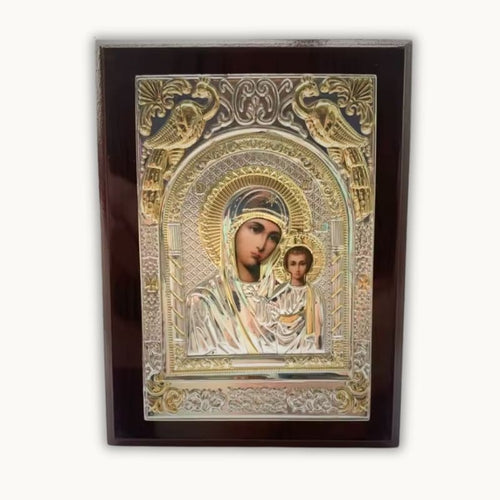
The Paraklesis expresses a fundamental Orthodox theological conviction: the Mother of God intercedes for the living. She is not a figure of the past, honored for what she did two thousand years ago — she is a living intercessor, present with her Son in heavenly glory, who hears the prayers of her children and carries them before God. The Paraklesis transforms the fourteen August evenings into a time of filial trust directed at the one who is closest to the Son.
The central troparion of the Paraklesis captures this theology with striking economy: "Do not commit my supplication to men, O all-holy Mother, but receive my prayer and grant me what I need, for you are our only hope." This prayer, repeated every evening for two weeks, is not a formula — it is a school of trust in the intercession of the Theotokos.
The Paraklesis and converts in the English-speaking world
For many Orthodox converts in America, Canada and the UK, the Paraklesis is one of the most unexpected discoveries of their first years in the Church. Nothing in most Western Christian backgrounds prepares for it: a two-week cycle of evening prayer services dedicated entirely to asking the Mother of God's intercession, sung in the middle of August with a musical beauty that is difficult to describe in words. Many converts report that the Paraklesis — precisely because it is quiet, summer, and lacks the dramatic framing of Holy Week — is where their relationship with the Theotokos becomes real and personal for the first time. In the Dormition Fast, many converts find themselves genuinely praying to the Mother of God, not performing a liturgical obligation.
August 6: the Transfiguration at the heart of the fast
The Transfiguration of the Lord, celebrated on August 6, falls exactly at the midpoint of the Dormition Fast — and it is the fast's only day of fish dispensation. This position is not incidental: it says something important about the spiritual structure of the fast.
The Transfiguration is the feast on which Christ reveals His divine nature before Peter, James and John on Mount Tabor: "His face shone like the sun, and his clothes became white as light" (Mt 17:2). It is the feast of the Uncreated Light — the divine light that is not of this world, which the Apostles beheld in anticipation of the Resurrection. The fast prepares two feasts: the one that gives us the Light, and the other that manifests divine mercy.
The Transfiguration says, in the middle of the fast: you are not fasting in darkness — you are fasting toward the light. The body is deprived of food so that the soul may become capable of receiving the Taboric light that the saints contemplate in prayer. And the fish dispensation on this day is the Church's way of saying: rejoice, even in the midst of effort — the glory is already there.
In the United States, August 6 also carries a solemn civic resonance: it is the anniversary of the atomic bombing of Hiroshima in 1945. Some Orthodox communities in America — particularly those with a strong peace and justice witness — observe a moment of prayer for peace on this day, noting the striking paradox that the feast of the revelation of divine light falls on the anniversary of the unleashing of nuclear fire. The Transfiguration becomes for these communities a feast of prayer for the conversion of human power toward life rather than destruction.
August 15: the Dormition of the Mother of God
The Dormition Fast prepares the Dormition of the Mother of God, celebrated on August 15 — the greatest Marian feast of the Orthodox liturgical year and one of the Twelve Great Feasts of the Dodekaorton.
The account of the Dormition
The account of the Dormition is not found in the canonical Gospels — it belongs to the living Tradition of the Church, transmitted through ancient apocryphal texts (notably the Transitus Mariae) and developed in hymns and iconography. The Mother of God, warned of her imminent death by the Archangel Gabriel, gathers herself in prayer. The Apostles, scattered throughout the world, are miraculously assembled at her bedside. She dies peacefully, her soul received by Christ Himself. Three days later, Apostle Thomas arriving late asks to see her body — and the tomb is found empty, filled with flowers.
The classic icon of the Dormition is one of the theologically densest in all Orthodox art: the Mother of God lies on her funeral bier, surrounded by all the Apostles; at the center stands the risen Christ, holding the soul of His Mother in His arms in the form of a swaddled newborn — a striking image that inverts the Nativity motif: now the Mother is the child in the arms of her Son.
Dormition and Assumption: the Orthodox difference
For Orthodox Christians in the English-speaking world — many of whom come from Catholic or Protestant backgrounds — the Dormition is often the feast that most clearly illuminates the theological difference between Eastern and Western Christianity. The Orthodox tradition insists on the real death of Mary: she died as every human being dies — before being glorified. It is not a bodily assumption but a passage following the path of her Son: death, then resurrection. Mary is fully human to the end — and it is precisely this that makes her glorification a concrete hope for all mortal humans. The Catholic doctrine of the Assumption, defined as dogma in 1950, speaks of Mary being taken body and soul into heaven, not necessarily affirming her prior death. For converts from Catholicism, understanding this distinction is often a significant moment of theological clarity.
The fasting rules in detail
The Dormition Fast observes the same rules as Great Lent — with one exception: fish is permitted only once, on August 6 (Transfiguration), compared to twice during Great Lent.
| Day of the week | Fasting rule |
|---|---|
| Monday, Wednesday, Friday | Strict fast: dried vegetables, legumes, grains, bread, water. No oil, no wine, no fish |
| Tuesday, Thursday | Cooked vegetables with oil and wine permitted. No fish |
| Saturday, Sunday | Oil and wine permitted. No fish |
| August 6 (Transfiguration) | Fish, oil and wine permitted — regardless of the day of the week |
| Evening of August 14 | End of the fast: from the evening Liturgy of August 14, all restrictions are lifted |
Forbidden throughout the entire Dormition Fast: meat, poultry, dairy products (cheese, butter, milk, cream), eggs, fish (except August 6).
Always permitted: fresh and cooked vegetables, legumes, grains, bread, egg-free pasta, rice, fresh and dried fruit, nuts, mushrooms, olives, shellfish and seafood (mussels, shrimp, squid — according to tradition), water, herbal tea, coffee.
A note on shellfish: according to the Byzantine Typikon, invertebrate seafood without a backbone (mussels, shrimp, octopus, squid) is generally permitted even on strict fast days. This rule is more broadly applied in Greek and Antiochian practice. In the Slavic traditions (Russian, Serbian, Romanian) the interpretation is sometimes stricter.
The Dormition Fast in the English-speaking world
Keeping the Dormition Fast in the United States, Canada, the United Kingdom or Australia presents a specific set of challenges and opportunities that distinguish it sharply from the experience in Orthodox-majority countries or even in Catholic-majority countries like France and Italy.
August 15 is not a public holiday anywhere in the English-speaking world
Unlike France, Italy, Belgium and Austria — where August 15 (the Catholic feast of the Assumption) is a national public holiday — August 15 is an ordinary working day everywhere in the English-speaking world. There is no civic support for the feast of the Dormition in the US, Canada, the UK or Australia. Orthodox Christians who wish to attend both the August 14 evening Vespers and the August 15 morning Liturgy must take annual leave, arrange an early start or find an evening Liturgy. In most American and British cities, the festive Liturgy of the Dormition is celebrated on the nearest Sunday to August 15, or as an early morning weekday service that working faithful can attend before the office. In the English-speaking world, celebrating the Dormition is an act of deliberate personal commitment — there is no cultural tide carrying you to church.
The feast that Western Christianity forgot
For many Orthodox converts in America and Britain, the Dormition is the feast that most reveals how much was lost in the West's departure from the ancient tradition. Most Protestant backgrounds have no feast of the Dormition — Mary barely features in the liturgical calendar after Christmas. Most Catholic backgrounds know August 15 as a holy day of obligation for the Assumption, but the theology is different and the feast is rarely accompanied by the Dormition Fast's two weeks of strict preparation. When converts encounter the Dormition for the first time — the icon, the Paraklesis, the theological teaching about Mary's real death and bodily resurrection, the connection to Pascha — it is often described as one of the most theologically rich discoveries of their Orthodox journey. Many converts report that the Dormition fast and feast are where their devotion to the Theotokos moves from intellectual assent to genuine personal relationship.
The Paraklesis in English-speaking parishes
In American, Canadian and British Orthodox parishes, the evening Paraklesis services during the Dormition Fast have become increasingly well-attended in recent decades — a sign of the growing seriousness with which converts and lifelong faithful alike approach the fast. In Greek Orthodox Archdiocese parishes across the US, the Paraklesis is often sung in both Greek and English, making it accessible to mixed congregations. In Antiochian Orthodox parishes — which tend to have high convert populations and fully English services — the Paraklesis is one of the most beloved services of the liturgical year. In OCA parishes, it is increasingly observed. In cities with large Orthodox populations — New York, Chicago, Boston, Los Angeles, Houston, Toronto, London — it is not difficult to find a Paraklesis service every evening of the fast.
Fasting food in the English-speaking summer
Practically, the Dormition Fast is entirely manageable in the culinary context of an English-speaking August. Farmers markets across the US, Canada and UK in August overflow with exactly the produce the fast calls for: tomatoes, zucchini, eggplant, peppers, green beans, corn, fresh basil. The American tradition of summer grilling adapts naturally to Orthodox fasting: grilled vegetables, corn on the cob, grilled portobello mushrooms, fresh salads. The growing availability of excellent plant-based foods in American and British supermarkets — lentil dishes, chickpea stews, grain bowls — makes the non-fish days straightforward even for those new to the practice. On August 6 (Transfiguration), the only fish day of the fast, American summer offers grilled salmon, fresh shrimp, clam chowder, fish tacos — a considerable range. The Dormition Fast fits the English-speaking summer kitchen with less difficulty than one might expect.
The Dormition Fast and the convert experience
The Dormition Fast occupies a particular place in the convert journey through the Orthodox liturgical year. Great Lent is the great crucible — everyone knows about it, its liturgical drama is overwhelming, the community intensity is high. The Dormition Fast is quieter, smaller, less known. And precisely for this reason it is often where the fasting discipline, and the relationship with the Theotokos, become most personal. Many converts describe the August fast as the point where they stopped keeping the Orthodox rule because they were supposed to and began keeping it because they wanted to — because the evening Paraklesis had become something they genuinely looked forward to, because the light of the Transfiguration on August 6 had become genuinely meaningful, because the Dormition on August 15 had become their feast too. For many Orthodox Christians in the English-speaking world, the Dormition Fast is where Orthodoxy stops being a religion they practice and starts being the air they breathe.
FAQ — Frequently asked questions about the Dormition Fast
What are the dates of the Dormition Fast?
The Dormition Fast has fixed dates. For churches of the Gregorian calendar (Greek Orthodox, Romanian Orthodox, Antiochian Orthodox), it runs from August 1 to 14, every year without exception. For churches of the Julian calendar (Russian Orthodox, Serbian Orthodox, Georgian Orthodox), it runs from August 13 to 27 of the Gregorian calendar.
Can you eat fish during the Dormition Fast?
No — with one single exception: on August 6, the feast of the Transfiguration of the Lord. On that day fish is permitted regardless of the day of the week. On all other days of the fast, fish is forbidden — even on Saturdays and Sundays. This is the strictest rule of this fast and what most distinguishes it from the Apostles' Fast (where fish is permitted on almost every day).
Why is the Dormition Fast as strict as Great Lent?
Because it prepares one of the most important feasts of the Orthodox liturgical year — the Dormition of the Mother of God, the "Pascha of Summer." The proportion between the severity of the fast and the greatness of the feast is maintained: a feast of this importance deserves a preparation of corresponding severity, even if shorter than Great Lent.
What is the Paraklesis and when is it sung?
The Paraklesis is a supplicatory canon addressed to the Mother of God, sung every evening during the fourteen days of the Dormition Fast. It is the liturgical service proper to this fast — no other great fast possesses such a daily service. It exists in two versions (Small and Great Paraklesis) that often alternate during the fourteen evenings.
What is the difference between the Orthodox Dormition and the Catholic Assumption?
The Orthodox tradition teaches that Mary died a real death, then was raised and glorified by her Son. Her tomb was found empty three days after her death — the same pattern as Christ's own Resurrection. The Catholic doctrine of the Assumption, defined as dogma in 1950, speaks of Mary being taken body and soul into heaven, without necessarily affirming her prior death. For the Orthodox, insisting on Mary's real death is theologically essential: she is fully human to the end — and her glorification is a concrete hope for all mortal humans. This distinction is often one of the most clarifying moments of theological formation for converts from Catholic backgrounds.
Is August 15 a public holiday in English-speaking countries?
No. August 15 is an ordinary working day in the United States, Canada, the United Kingdom and Australia. Orthodox Christians must take annual leave or arrange an early service to celebrate the feast of the Dormition. This is in contrast to France, Italy and other Catholic-majority countries where August 15 is a national public holiday.
I'm a convert — how should I approach the Dormition Fast?
The Dormition Fast is an excellent context for deepening your practice after Great Lent. Its shorter duration and fixed summer dates make it more predictable to plan for. Start with the food fast — eliminating meat and dairy for the two weeks, observing the fish abstinence except on August 6. If possible, attend at least a few evening Paraklesis services: this is the experience that most transforms the fast from a dietary practice into a genuine spiritual encounter. Attend the August 15 Liturgy — even if it means taking a personal day from work, the effort is itself part of the feast. Speak with your priest about a fasting rule suited to your situation.
The shortest fast for the most luminous feast
The Dormition Fast is, in the structure of the four great Orthodox fasts, the most intense in proportion to its duration. Fourteen days as strict as Great Lent — but carried by the evening Paraklesis, traversed by the light of the Transfiguration, and opening into the greatest Marian feast of the year. It is a fast that says much in little time: that death does not have the last word, that she who bore the Son of God in her womb has passed through death as He did and now reigns in glory, and that every Christian who fasts in August shares something of that hope.
In the English-speaking world, where August 15 passes without public recognition and the Dormition is largely unknown to the surrounding culture, keeping this fast is a quiet act of counter-cultural faithfulness. The faithful who observe it do so without cultural reinforcement, without a national holiday, without the societal pressure that makes fasting easier in Orthodox-majority countries. They fast because they have come to love the Theotokos, because the Paraklesis has become part of their August evenings, because the "Pascha of Summer" has become their feast. And in that quiet fidelity, the tradition lives.