


-
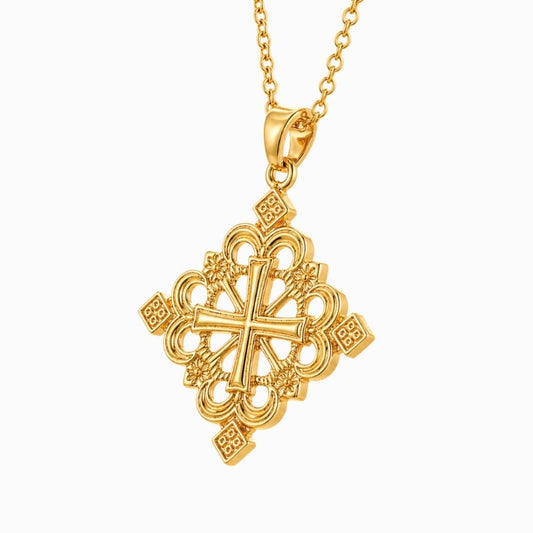
Ethiopian Cross Pendant in Gold Finish
Regular price 24,90€Regular price 24,90€ Sale priceUnit price per -
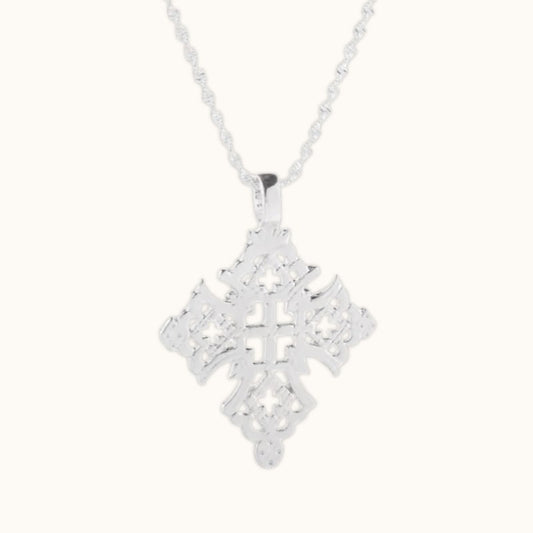
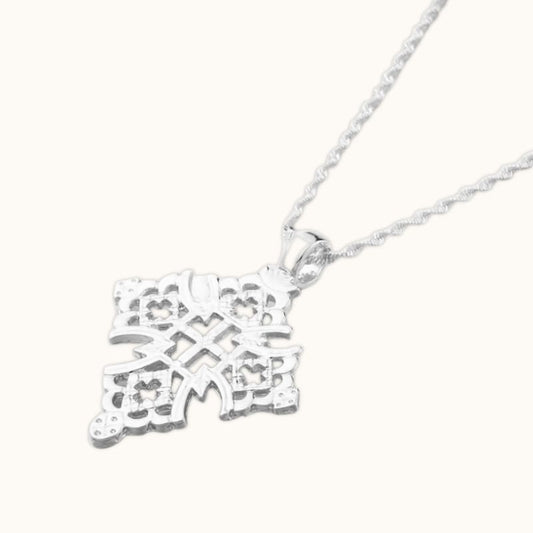
Ethiopian Cross Pendant in Silver
Regular price 24,90€Regular price 24,90€ Sale priceUnit price per -
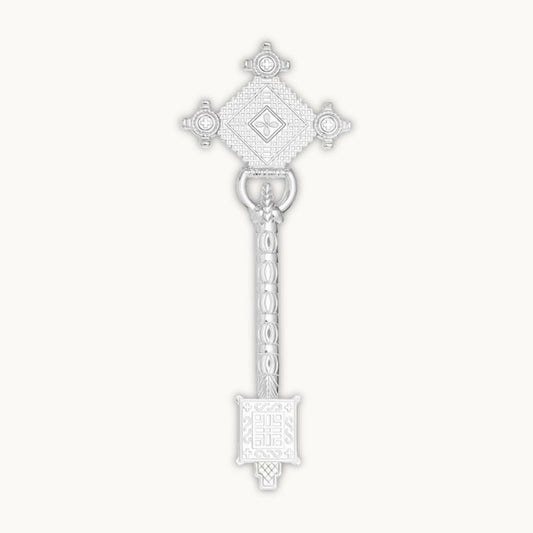
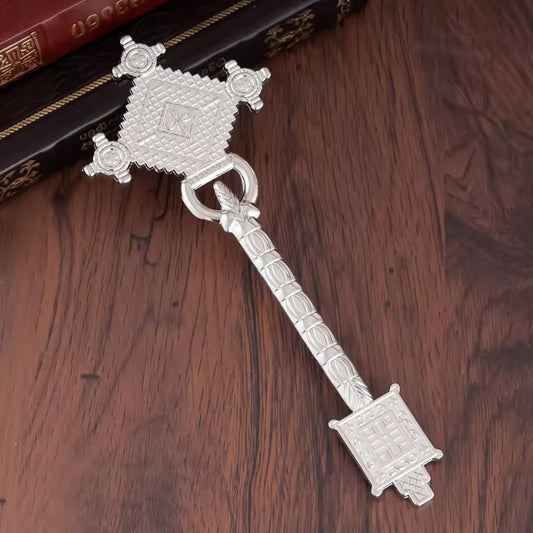
Ethiopian Orthodox Blessing Cross
Regular price 34,90€Regular price 34,90€ Sale priceUnit price per -
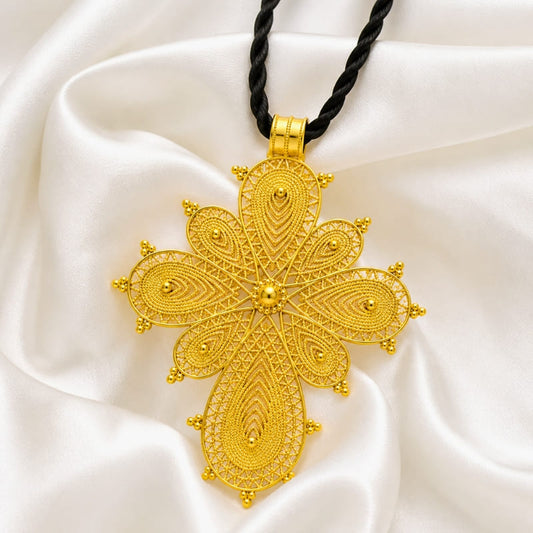
Golden Ethiopian Orthodox Cross Pendant with Floral Design
Regular price 29,90€Regular price 29,90€ Sale priceUnit price per


Introduction to the Ethiopian Cross
Origin and spiritual significance
The Ethiopian cross is much more than a simple religious object: it represents the faith, identity, and spiritual heritage of the Ethiopian people. Rich in ornamentation and complex geometric patterns, it is distinguished by its unique aesthetic that combines biblical symbolism and artisanal craftsmanship.
When one delves into the meaning of the Ethiopian Coptic cross, one discovers that it embodies divine light, the victory of life over death, and the spiritual protection of believers. Each motif—whether it be crosses, interlacing patterns, or solar shapes—carries a sacred message. Wearing or owning an Ethiopian cross is therefore an affirmation of one's faith while connecting with a millennia-old tradition.
His role in the Ethiopian Orthodox Church
In the Ethiopian Orthodox Church , the cross holds a central place. It is used in liturgies, religious processions, and major feasts such as Timkat (Epiphany). Priests and deacons often carry large, richly decorated processional crosses, blessing the faithful and symbolizing the divine presence within the community.
Unlike the more understated crosses of the West, the Ethiopian Orthodox cross is characterized by its visual richness and its communal use. It is both an object of veneration and a ritual instrument that accompanies every stage of spiritual life: baptism, marriage, blessings, and funeral ceremonies. This omnipresence illustrates the fundamental importance of the cross in Ethiopian religious and cultural identity.
The different Ethiopian crosses
The Cross of Lalibela
The Lalibela Cross is undoubtedly the most famous cross in Ethiopia. It takes its name from the holy city of Lalibela, renowned for its monolithic churches carved into the rock. Richly decorated, it features interlaced motifs representing infinity and the union of heaven and earth. The Lalibela Cross is considered a symbol of divine blessing and protection, and is often used in major liturgical ceremonies.
The Cross of Gondar
Originating from the former imperial capital of Ethiopia, the Gondar Cross testifies to the golden age of local religious art. It is distinguished by its complex, sometimes openwork, geometric forms, reminiscent of the region's architecture and decorations. The Gondar Cross embodies the power of the Orthodox faith and the royal heritage of Christian Ethiopia.
The Ethiopian Rasta cross
The Ethiopian Rastafarian cross has become a powerful symbol of identity within the Rastafarian movement, which considers Ethiopia a sacred land. Inspired by traditional Orthodox crosses, it is often worn as a sign of faith, spiritual resistance, and attachment to African roots. More than just a piece of jewelry, it expresses a unique cultural and religious link between Africa and the diaspora.
The Axum Cross
The Axum Cross takes its name from the ancient city of Axum, the cradle of Ethiopian civilization and a major center of Christianity in Africa. This design is renowned for its refined style, blending Coptic and Byzantine influences. A symbol of unity and continuity, the Axum Cross recalls the long history of Christianity in Ethiopia and remains one of the most revered and sought-after designs.
How to wear an Ethiopian Orthodox cross?
A spiritual and protective everyday jewel
The Ethiopian Orthodox cross is not only a religious symbol, but also worn as a true talisman. The faithful consider it a protection against evil and a source of blessing in daily life. Whether made of gold, silver, or wood, it accompanies prayer, but can also be worn discreetly under clothing to maintain this spiritual connection in all circumstances. In Ethiopia, as well as in the diaspora, it remains a marker of identity and a living expression of faith.
Ethiopian cross for men, women, and family tradition
The Ethiopian cross is often passed down from generation to generation, marking important moments in religious life such as baptism or marriage. Among men, larger models in silver or steel are frequently seen, asserting a strong and symbolic presence. Women sometimes prefer thinner or more delicate versions, adorned with refined details. In many Ethiopian Orthodox families, giving a cross to a child symbolizes their entry into the faith and their belonging to an ancient spiritual community.
Choosing your Ethiopian cross
Ethiopian cross in gold
The nec is a prestigious and timeless choice. It embodies divine light and is often given as a gift during major religious celebrations such as baptisms or weddings. In addition to its spiritual value, gold adds a luxurious and lasting dimension, making it a piece of jewelry to be cherished for a lifetime.
Discover our collection of Ethiopian gold crosses to find a model that suits your tastes and traditions.
Ethiopian silver cross
Widespread in Ethiopia and among the diaspora, the Ethiopian silver cross pendant Captivated by its authenticity and powerful symbolism, silver, a metal associated with purity and wisdom, highlights the geometric patterns and interlacing typical of these crosses. It's the ideal choice for those seeking a spiritual, accessible, and historically rich piece of jewelry.
Browse our silver models to find the one that suits you.
Other materials and styles
Besides gold and silver, many Ethiopian crosses are made of wood, brass, or steel. In addition to pendants, you can also find handcrafted Ethiopian crosses. These artisanal versions reflect the deep roots of Ethiopian religious art and are often inspired by the crosses worn by priests in churches. Some are hand-engraved, others carved with traditional symbols passed down through centuries. Each piece, whether simple or elaborate, tells a unique story of faith and culture.
Giving an Ethiopian cross as a gift: a gift full of meaning
The perfect gift for a baptism, communion, and religious celebrations.
Giving an Ethiopian cross at a baptism, communion, or other religious celebration is a deeply rooted tradition in the Ethiopian Orthodox Church. This gesture symbolizes the transmission of faith and divine protection through generations. Each cross, whether made of gold, silver, or wood, becomes a spiritual marker to be kept and cherished throughout one's life.
A symbol of protection and faith
Far more than just a piece of jewelry, the Ethiopian cross is seen as a true protective talisman. It accompanies the wearer in their daily life, reminding them of the strength of faith and God's blessing. To offer one is to share a message of trust, peace, and love, while also giving a sacred object that unites spirituality and cultural heritage.
Where can I buy an authentic Ethiopian cross?
Our collection of Orthodox crosses
To find an authentic, high-quality Ethiopian Orthodox cross, it's essential to consult specialists in religious articles. In our collection of Orthodox crosses , you'll discover not only traditional Ethiopian designs but also a variety of crosses from other Orthodox traditions. Each piece is carefully selected to respect spiritual heritage and offer a piece of jewelry that is both aesthetically pleasing and meaningful.
Discover our collection of Orthodox crosses now
Fast delivery and satisfaction guaranteed
We place great importance on customer satisfaction. All our Ethiopian crosses are guaranteed to be of high quality and are carefully inspected before shipping. Thanks to our tracked delivery service, you can receive your spiritual jewelry safely and directly at home, and give it as a gift or wear it immediately.